

At a glance
- Client
- Anonymous, a navigation app
- App category
- Navigation and travel
- Industry
- Travel
- Channels
- Meta and Apple Ads, with custom product pages
- Period
- 2025 -
- Markets
- Worldwide, United States primarily
- Key results
- cost per purchase down 64% and CPM down 45% on Apple Ads. Cost per tap down 11.3% and average CPA down 5%. The same creative had already cut cost per tap 41% on Meta
The challenge
We were already running paid acquisition for this client across several channels, and the Apple Ads account was the one with room in it: custom product pages were available and under-used.
Alongside that sat a question worth testing properly rather than assuming. A creative that wins on one channel is usually treated as a channel-specific win. But if what makes it work is the message rather than the placement, it should travel. Nobody on the team could say which it was, and the answer decides how a creative library is built.
What we did
1. Found the outlier before looking for a hypothesis. Running Meta campaigns, the team identified one video ad performing well beyond the rest of the set. It had cut cost per tap 41%, which is far enough outside the usual spread to be worth more than a budget shift.
Reasoning and learning: the best test ideas come out of live accounts rather than out of planning. An outlier is a finding, and the question to ask of it is what it is evidence of.
2. Treated the win as a hypothesis about the message, not the placement. If a creative outperforms because of what it communicates, the same asset should work where the user's intent is comparable, even on a different surface with a different format.
3. Moved the creative into the App Store through a custom product page. The winning Meta creative replaced the first screenshot of the custom product page served by the Apple Ads campaign. That is the closest equivalent to an ad placement that the store offers: the first screenshot is what the user sees before deciding.
Reasoning and learning: the custom product page is where paid acquisition and the store listing stop being separate disciplines. A creative that wins in the feed and a screenshot that wins in the store are answering the same question for the same person, moments apart.
4. Read the result down the funnel, not at the top. Tap and impression metrics move first and mislead most, so the test was judged on cost per purchase.
Results
Shortly after launch the upper-funnel metrics moved, and the downstream numbers followed. Cost per purchase fell 64% and CPM fell 45%. Cost per tap improved 11.3% and average CPA 5%.
The shape of those numbers is the finding. The upper-funnel gains were modest; the purchase-level gain was not. The creative was not buying cheaper traffic, it was bringing the right traffic and preparing it before the tap.
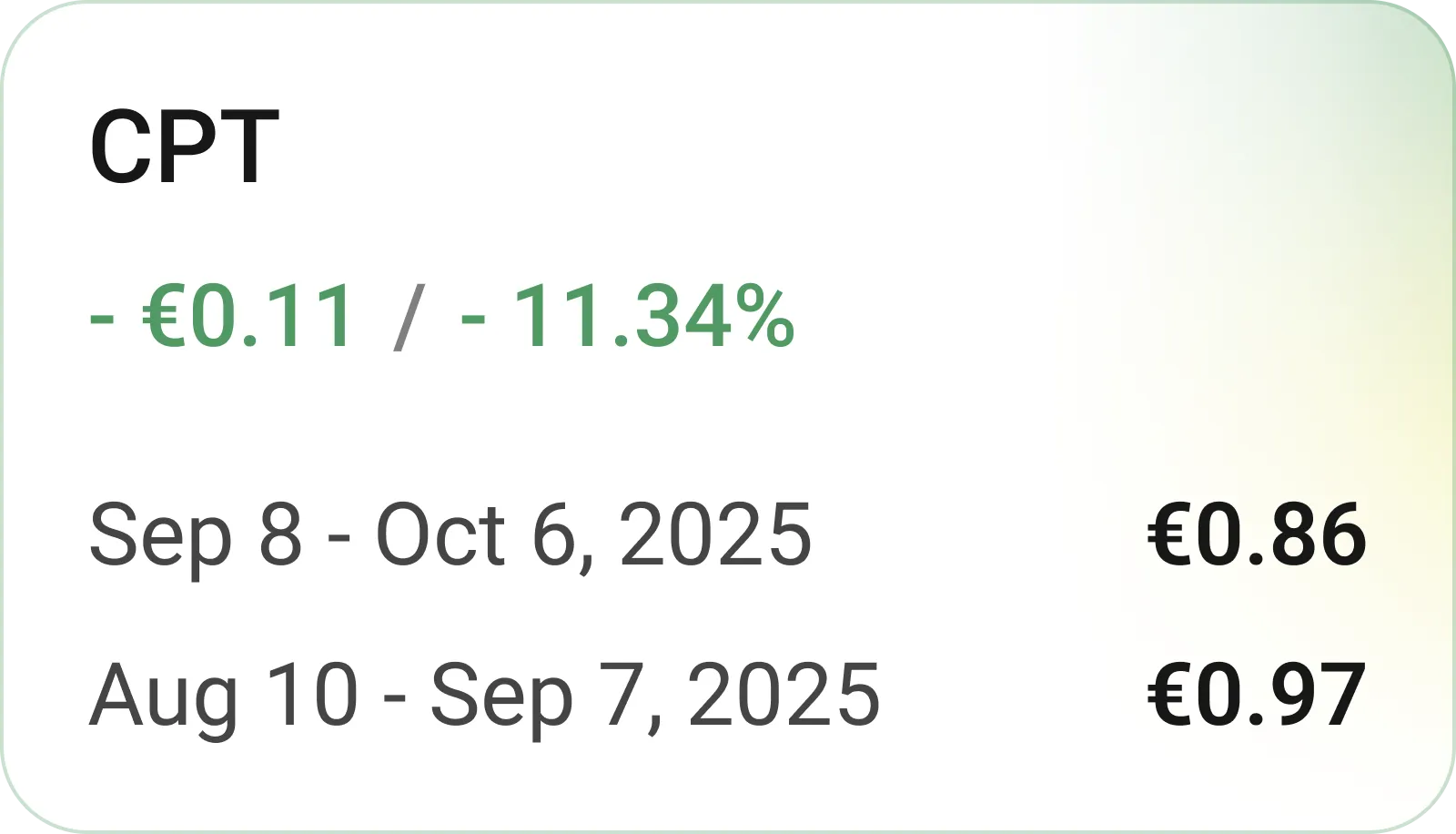
CPT improvement
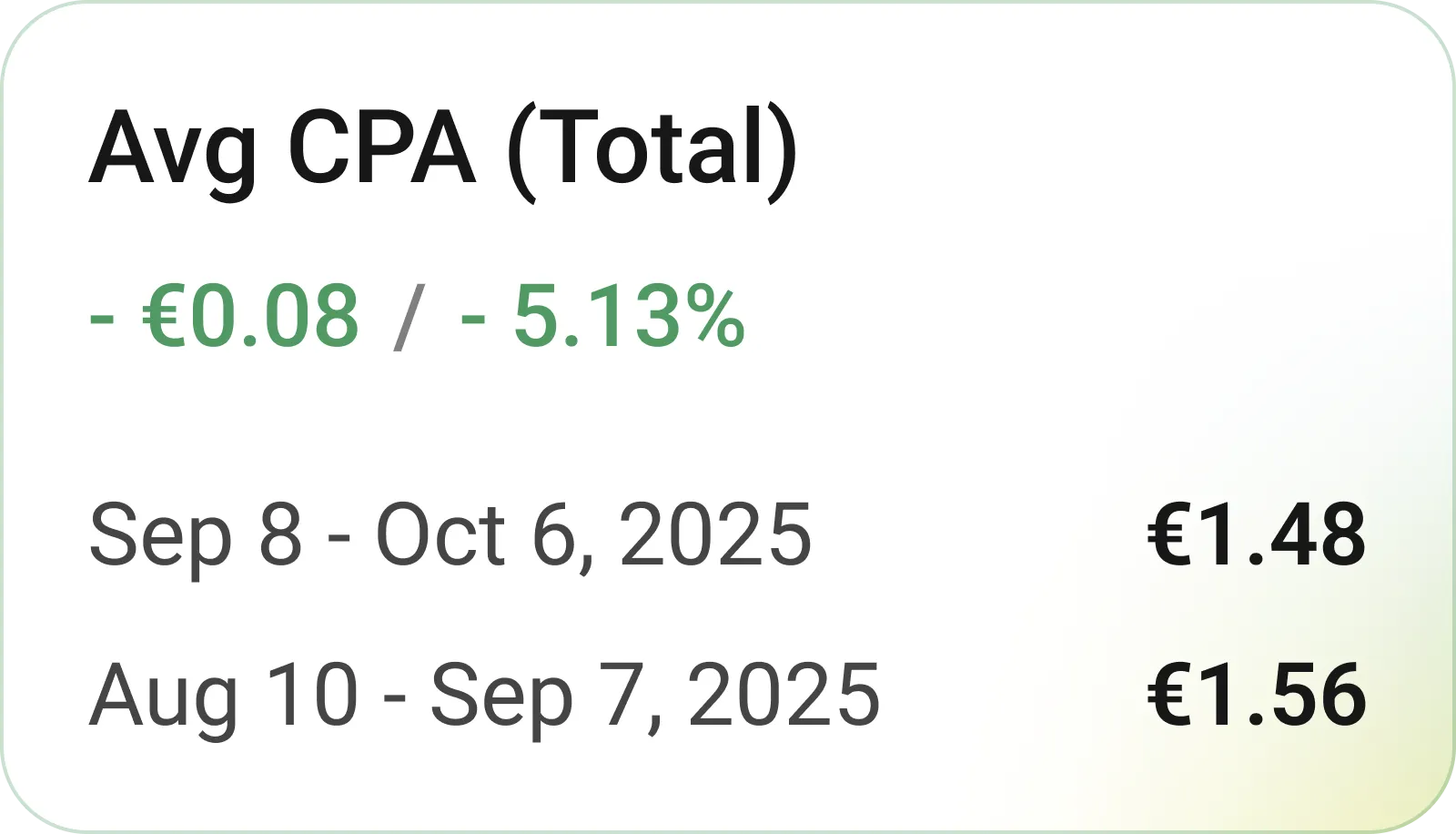
Avg CPA improvement
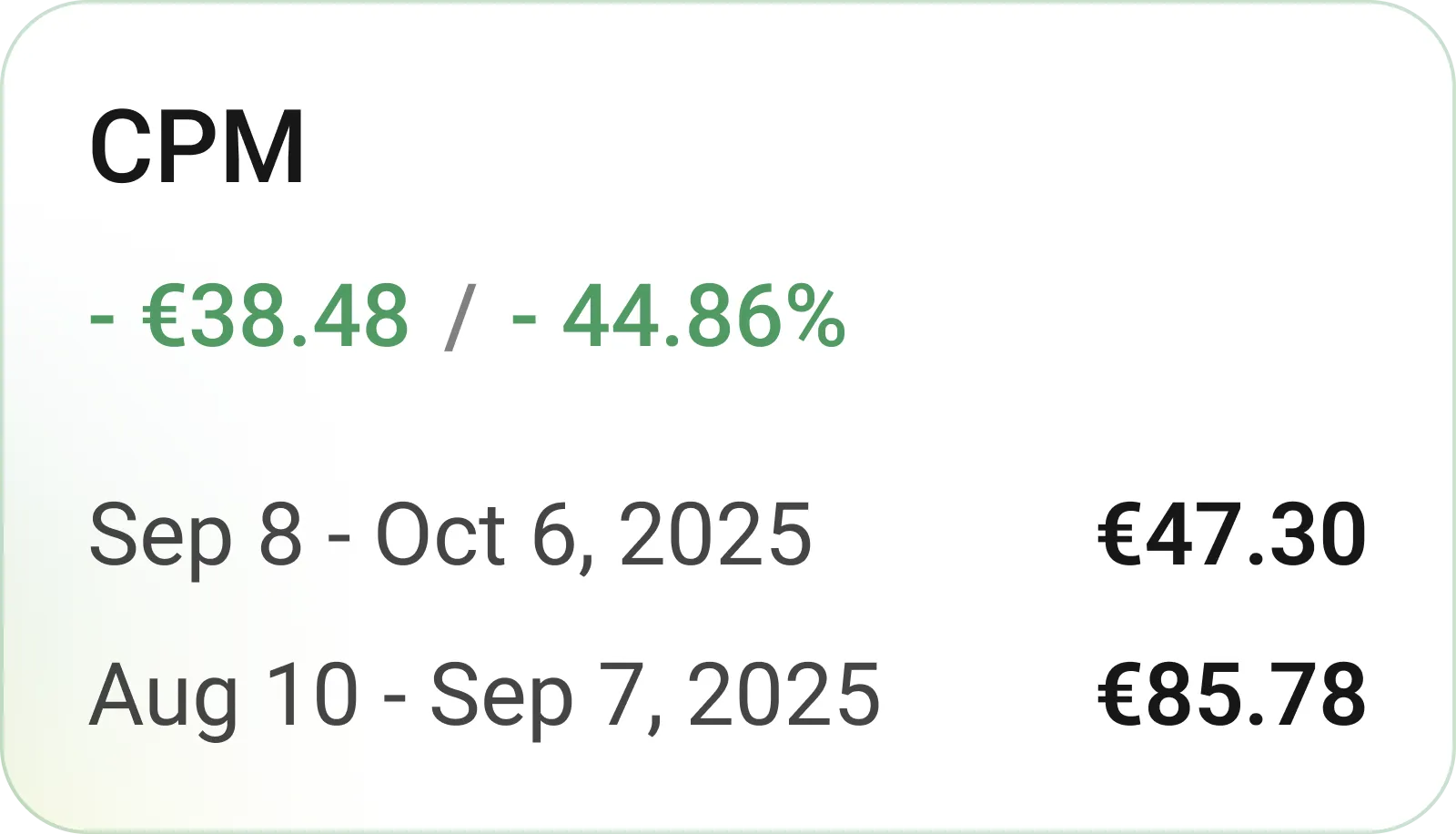
CPM improvement
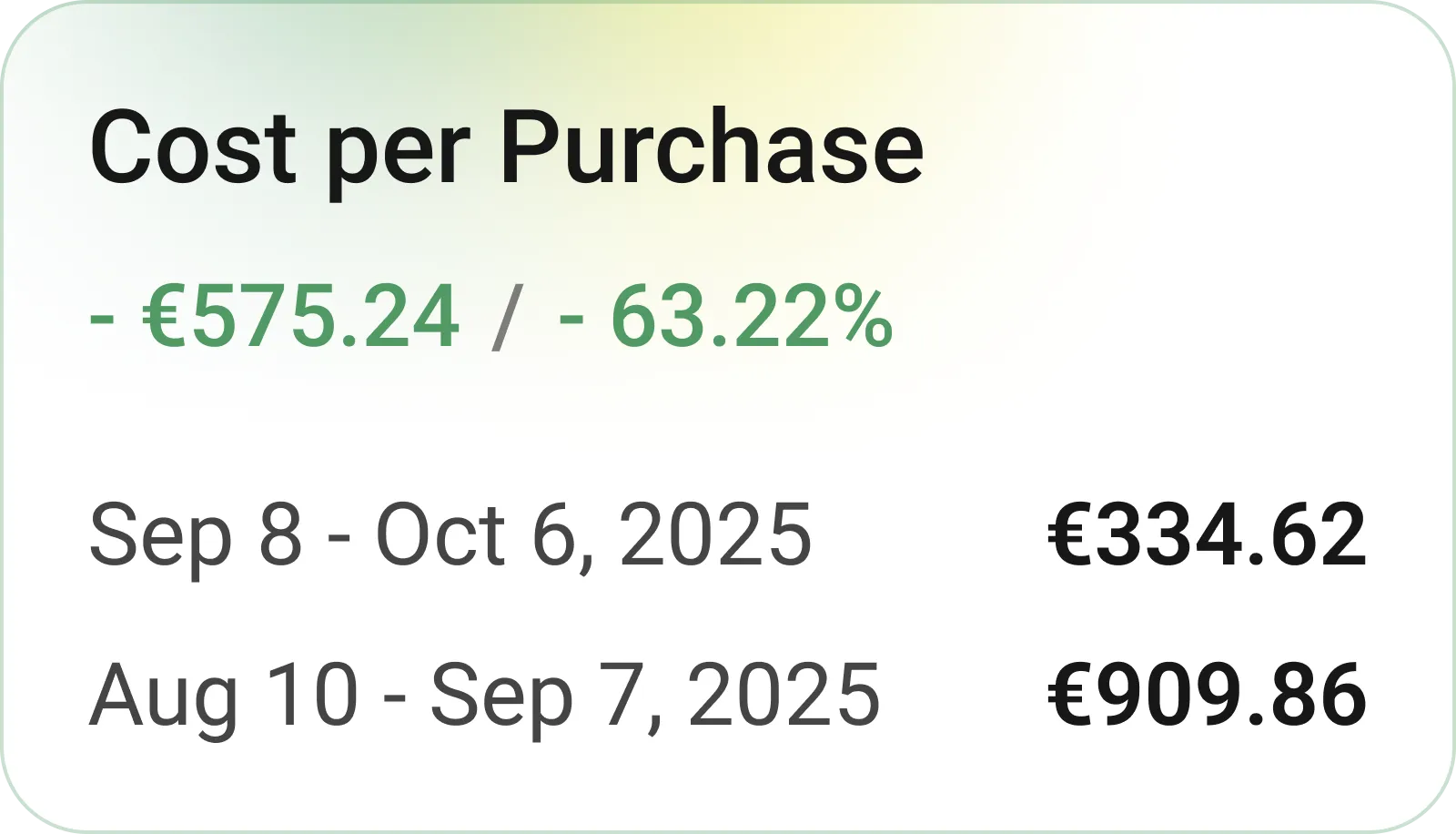
Cost per Purchase improvement
↓ 64%
Cost per Purchase
↓ 45%
CPM
Key learnings
A winning creative is a message, and messages travel. Testing a Meta winner inside the App Store cost one screenshot swap and returned a 64% improvement on the metric that matters.
The first screenshot is an ad. It is the last thing a user sees before installing, and it is usually the piece of the funnel nobody is testing.
Judge creative tests on purchase, not on taps. Here the upper-funnel improvement was small while cost per purchase more than halved. Reading it at the top would have called it a minor win.
Conclusion
One creative already proven in Meta, moved into a custom product page, cut cost per purchase 64%. The work was not production, it was noticing that acquisition and the store listing are the same conversation and acting on it.
More on our mobile user acquisition and app store optimization.