In the six weeks between Google I/O 2026 and WWDC 2026, both mobile stores went AI-native — and McKinsey now expects around $750 billion in US revenue to funnel through AI-powered search by 2028, with unprepared brands facing 20–50% declines in traditional search traffic. Off-store discovery is already shifting: Adobe's research on ChatGPT as a search engine found that 77% of US consumers have used ChatGPT for search, and 36% discovered a new product or brand through it. The shift the industry has been calling "AEO" stopped being abstract — and the AEO vs ASO question got sharper overnight.
AEO vs ASO isn't a contest between two optimization disciplines — it's a brand-strategy question meeting an in-store conversion question, because AI agents recommend apps with clearly articulated USPs that resonate, while the App Store still converts the install. That's the frame this guide will defend.
The real failure most teams have isn't getting the definitions right. It's treating either as a tactical optimisation problem when both sit downstream of brand-strategy work most teams haven't done. We'll set up the clean comparison first, then explain why the comparison itself is the wrong place to focus.
What is AEO vs ASO?
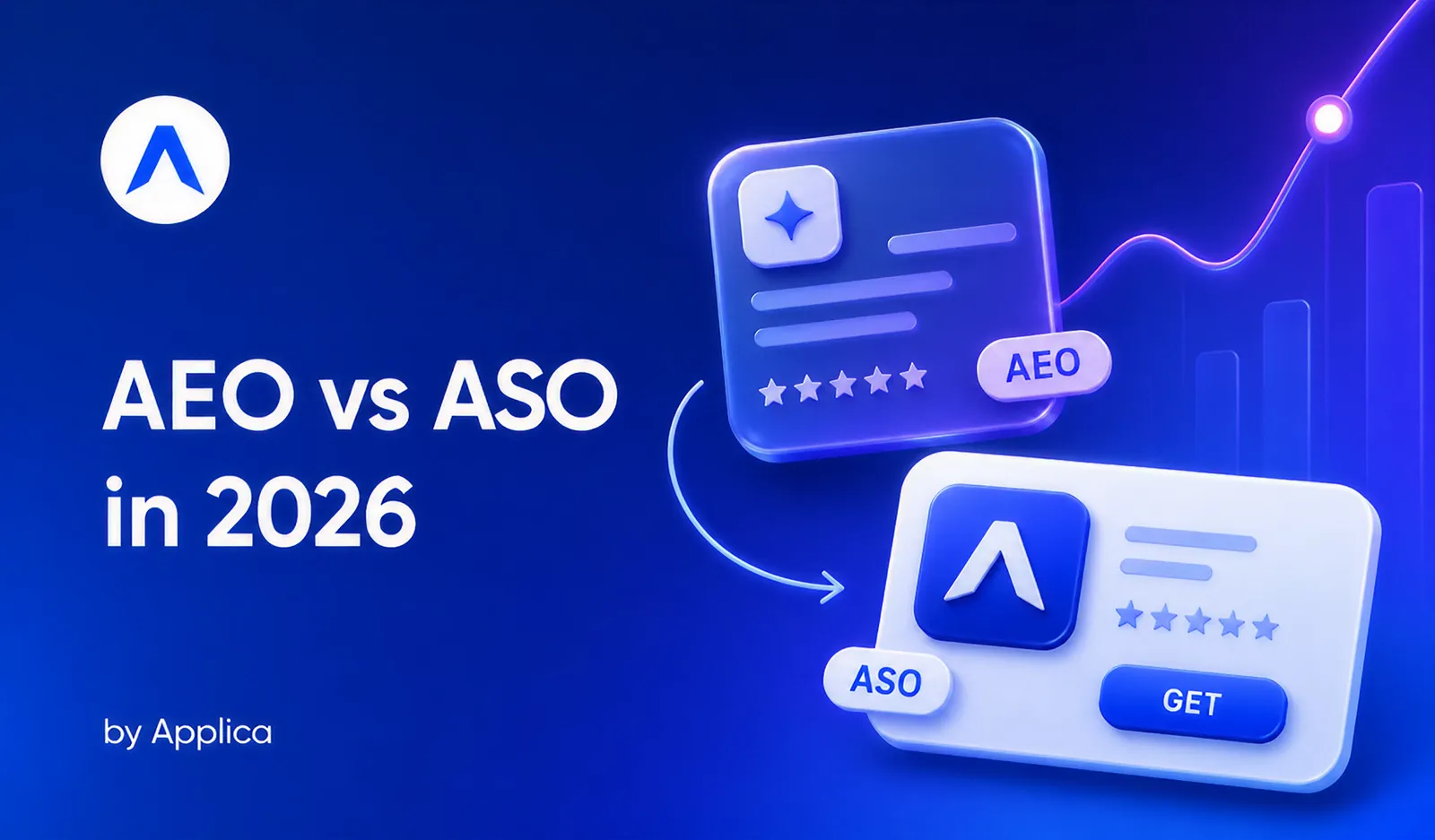
AEO (Answer Engine Optimisation) is the discipline of being recommended by AI agents — ChatGPT, Gemini, Perplexity, Google AI Overviews — and, increasingly, the app stores themselves, when a user asks for an app to solve a specific need. ASO (App Store Optimisation) is the discipline of being found, ranked, and converted inside the Apple App Store and Google Play.
The two operate on different surfaces of the same journey. AEO shapes which apps a user considers before they reach the store. ASO wins, or loses, the install once that user lands on a product page.
AEO vs ASO compared across six dimensions — surface, journey stage, signals, and measurement
| Dimension | ASO | AEO |
|---|---|---|
| Surface | Apple App Store + Google Play | AI agents (ChatGPT, Perplexity, Gemini, AI Overviews) + AI-native store surfaces |
| Journey stage | Decision | Consideration |
| What you optimise | Keywords, metadata, icon, screenshots, ratings | Brand consistency, off-store mentions, structured signals |
| Primary signals | Store algorithm relevance + conversion rate | Multi-source consensus + third-party authority |
| Who controls ranking | Apple + Google store algorithms | The model's training data + live retrieval index |
| Measurement | Store impressions, conversion rate, installs | Recommendation share of voice, citations, sentiment |
That's the comparison the searcher came here for. The rest of the article is what to do once the comparison stops being useful.
Why AI agents recommend apps with sharp USPs, not just good metadata
Most teams treat AEO as a new technical ranking algorithm to optimise for. That instinct — find the new checklist and tick it — is what produced a decade of thin, indistinguishable SEO content. Repeated against AI agents, it produces apps the agents have nothing distinctive to say about.
The structural gap is wider than most leadership teams realise. Only 16% of companies currently track their AI search performance, McKinsey reports, even as their data shows traditional search traffic for unprepared brands eroding fast. The category is structurally young, but the cost of inattention compounds quickly.
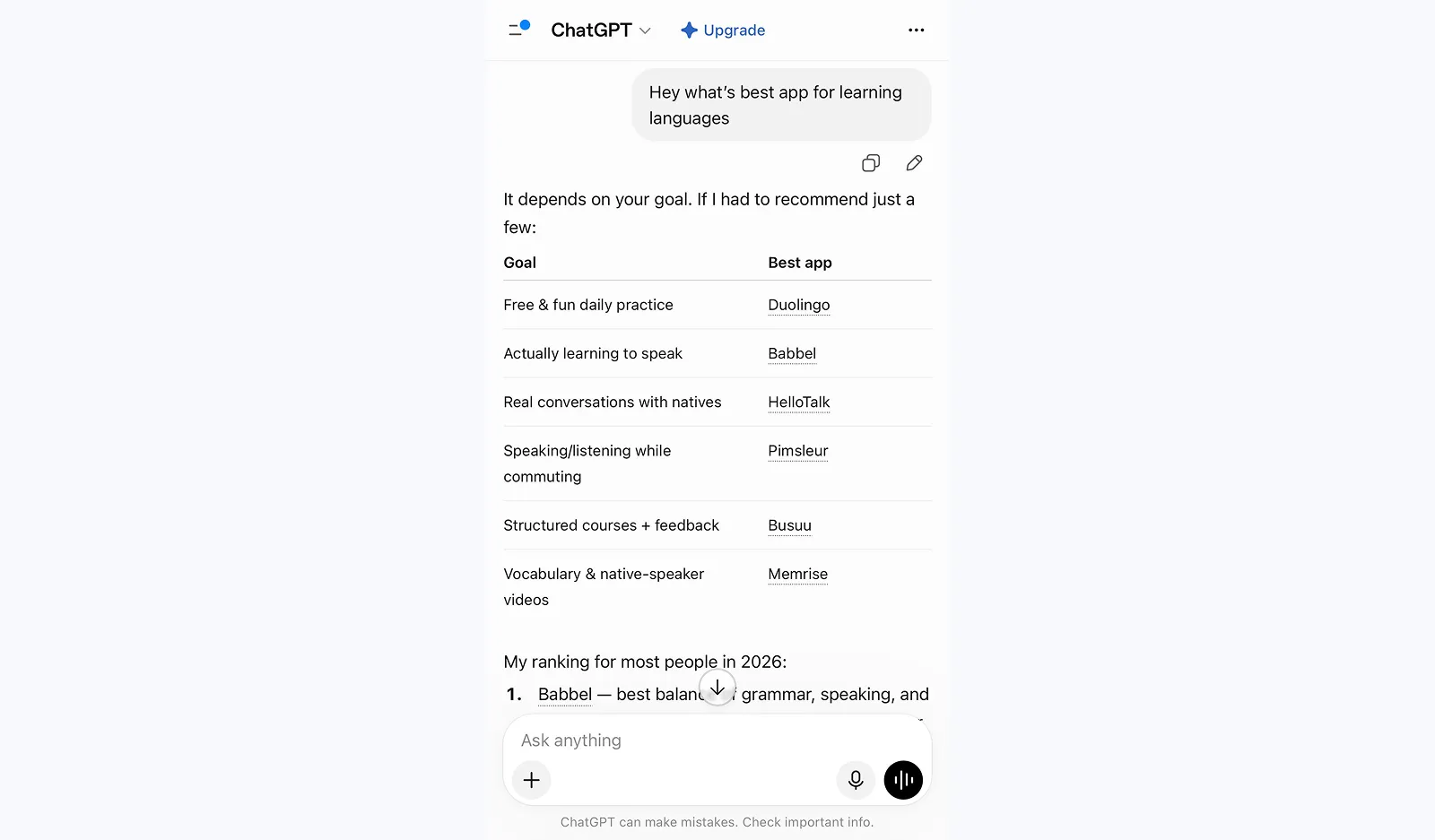
The mechanism is less mysterious than the hype suggests. AI agents recommend by consensus. They cite apps that show up consistently across reviews, comparison content, community discussion, and editorial coverage — all roughly agreeing on what the app actually is and who it is for. Apps with sharp USPs make that consensus easy for a model to assemble. Apps without them get smoothed into the noise of every other app in the category.
"Right now, we recommend that our clients pay more attention to brand strategy and clearly articulated USPs that help them stand out in AI agents and resonate with the right audience."
© Mykyta Haidaienko, ASO Lead at Applica Agency
The operational consequence: optimising your metadata for "best fitness app" when fifty other apps are doing the same will not move you in front of an AI agent. What moves you is being the app a reviewer or community describes in a sentence the model can paraphrase distinctively. "The 5-minute fitness app for people who hate gym wear" is a USP a model can cite. "Get fit fast with personalised workouts" is not.
This is also why AEO isn't best treated as a separate discipline acquired from a separate tool. It's an output of brand-strategy work the team has either done or hasn't — and AI agents are simply the surface where that work newly gets graded.
How app discovery actually changed in 2026
Three concurrent shifts make the brand-strategy frame concrete.
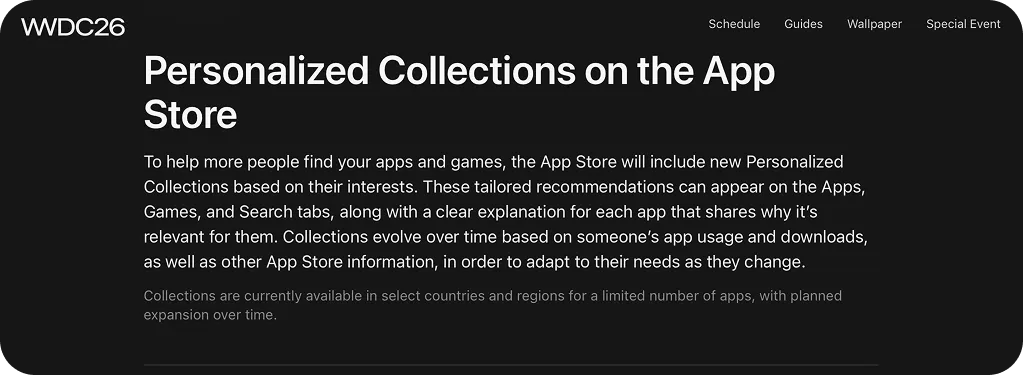
The App Store became affinity-based. Apple's WWDC 2026 App Store guide introduced Personalized Collections and App Notes — recommendations like "Because You Play Backyard Birds → Mellow Atmospheric Games," with a one-sentence editorial note explaining why each app belongs there. The recommendation engine reads what the user already installs, plays, and engages with. The unit of selection moved from a keyword the user typed to an inferred affinity the system computed.
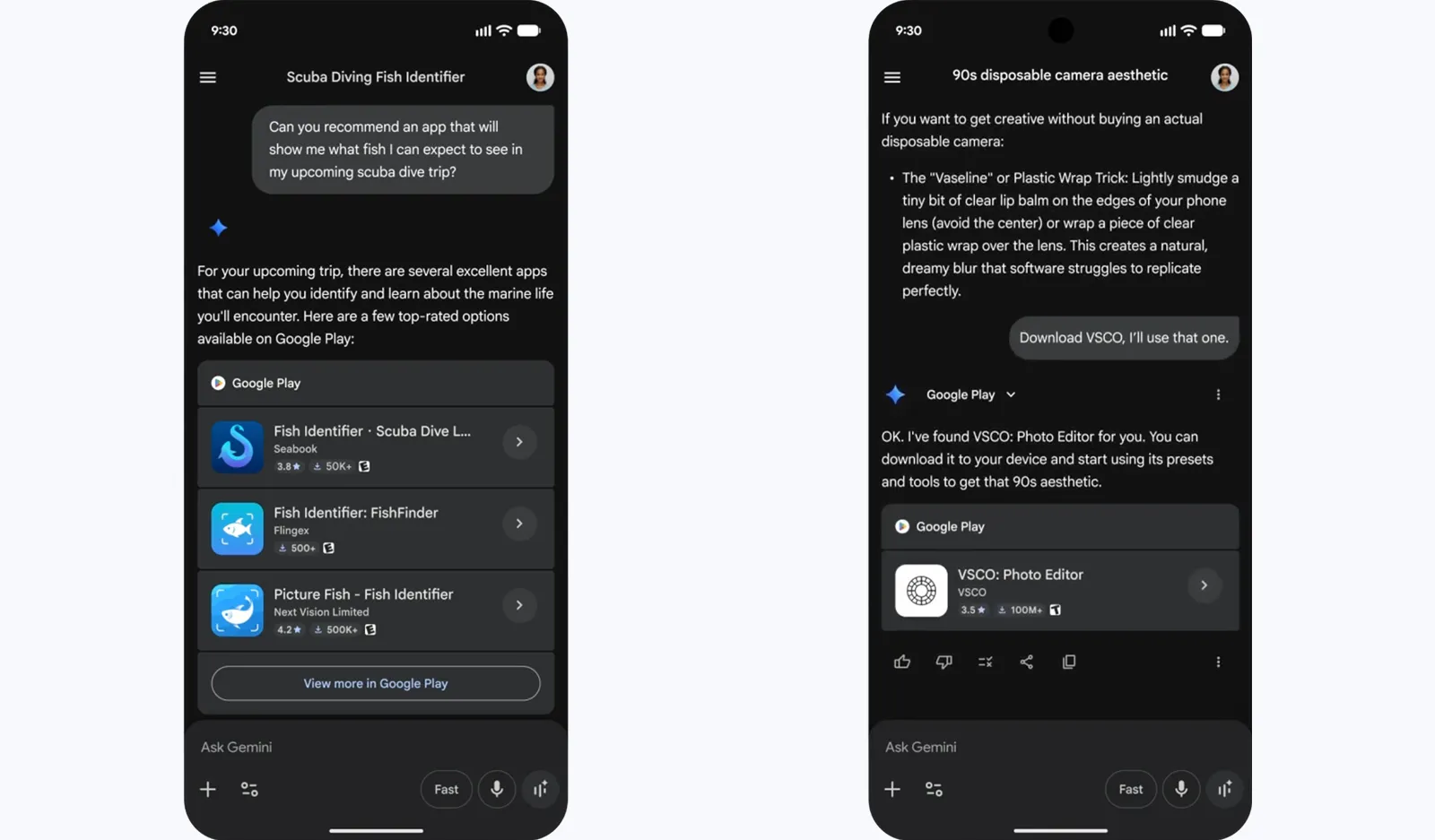
Google Play stopped being the only Android entry point. Google announced at I/O 2026 that the standalone Gemini app would become more agentic, and as AppTweak's Google I/O 2026 breakdown notes, Android users can now ask Gemini for an app, get a conversational recommendation, and install it without ever opening Google Play. The store still matters — but a meaningful share of intent now flows past the store search bar entirely.
Off-store discovery kept compounding. Beyond the headline 77% ChatGPT-as-search figure, Adobe's research found the rate climbs to 47% for Gen Z. The next cohort of paying users is forming purchase intent in conversation with an AI before they ever touch an app store search bar. The behavioural change isn't speculative anymore; it's the baseline.
Stack the three together and the conclusion follows: AEO vs ASO isn't a contest between two optimisation disciplines — it's a brand-strategy question meeting an in-store conversion question, because AI agents recommend apps with clearly articulated USPs that resonate, while the App Store still converts the install. Both surfaces are downstream of the same upstream work.
Do you need both AEO and ASO?
For most subscription apps in 2026, yes — but they sequence differently. ASO is the foundation that converts the install once an AI agent has done the recommending; AEO is the off-store consensus layer that decides whether your app gets recommended in the first place.
ASO has to come first because the install still happens in the store. An AI agent can name your app as the answer to a user's question — but the moment that user lands on a thin product page with stale screenshots and an unclear value proposition, the recommendation leaks. The conversion gate is still where revenue is won or lost, which is why structured creative testing for ASO and App Store conversion-rate work remain foundational. Strong app metadata practice is necessary, not sufficient.
AEO has to come second — but not as an afterthought. It is the slower-compounding layer: earned reviews, comparison content, community presence, consistent entity signals, and the kind of brand consistency that makes a model confident in citing you. It rewards patience because consensus takes time to accumulate across independent sources.
A sibling piece — "ASO vs Apple Search Ads — one system" [TODO-INSERT-ASO-VS-ASA-URL-WHEN-LIVE] — runs the same one-system framing for paid plus organic inside the store. The pattern is the same: the surfaces appear to compete for budget; they actually compound when treated as one motion.
The brand-strategy layer most teams skip
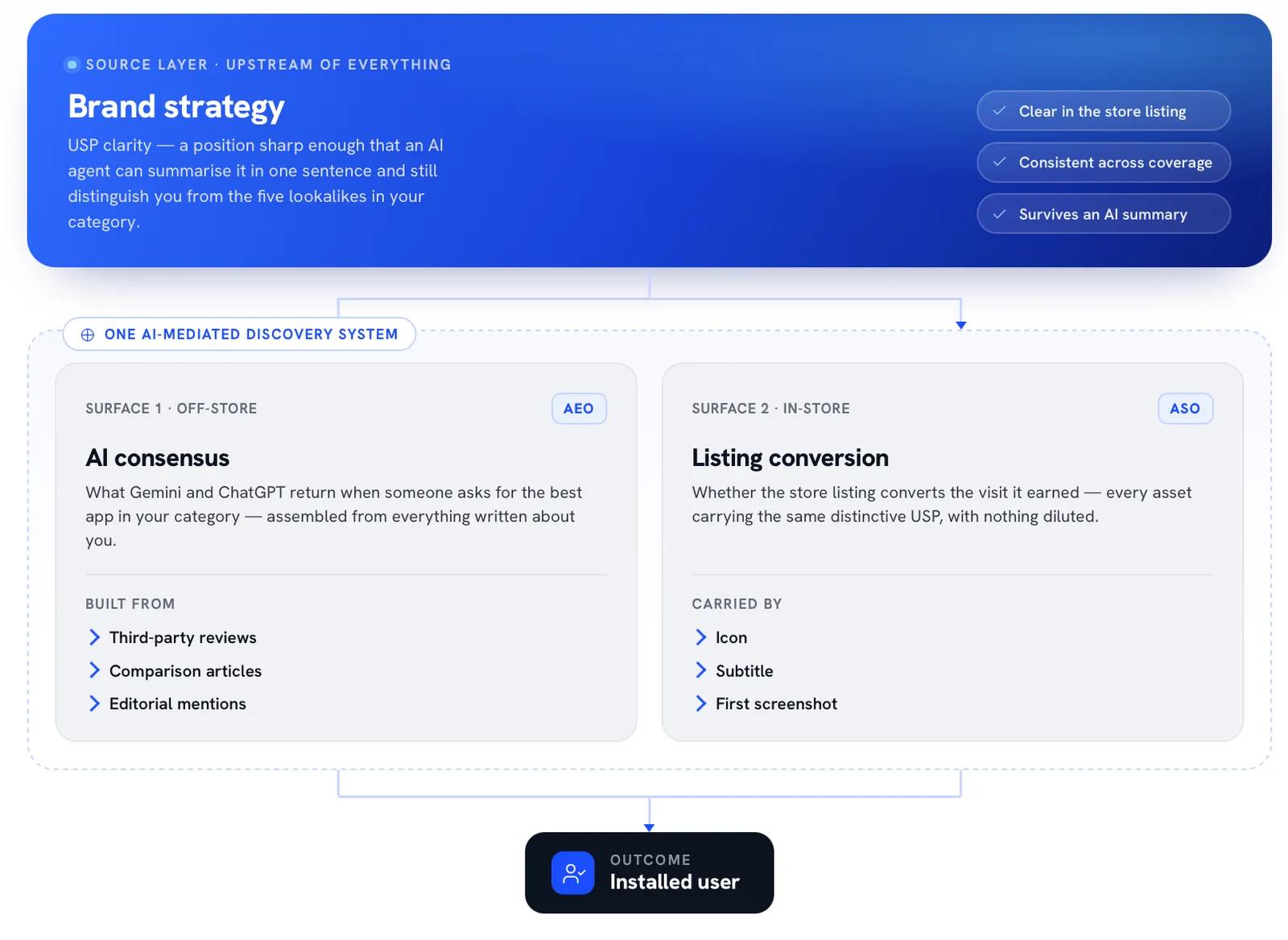
The diagnostic question that exposes the real gap is uncomfortable. Type "best [your category] app for [specific use case]" into Gemini or ChatGPT today. Does your app come up? If not, the gap is rarely metadata. It is almost always USP sharpness — the inability of an AI agent to summarise your app in a way that distinguishes it from the five lookalikes also competing in the category.
What that means operationally is less glamorous than a new tooling investment. It means USP clarity in the store listing itself — the icon, the subtitle, the first screenshot. It means USP consistency across third-party coverage — reviews, comparison articles, editorial mentions saying roughly the same thing about you. And it means a USP that survives an AI summary: when the model paraphrases your positioning into a sentence, the distinctive part has to make it through.
McKinsey's 20–50% traditional search-traffic decline for unprepared brands isn't a forward-looking risk for laggards. It is already underway. The window to harden the brand layer before AI-mediated discovery becomes the dominant referral path is still open, but it is closing.
This sharpens the position Applica Agency staked out earlier in 2026 in "Is ASO Dead? App Growth Strategy in 2026 (AI, AEO & UA Explained)": ASO is not dead — it is one layer in a discovery system that now includes AEO and AI-native store surfaces. The piece you are reading sharpens the argument to a single decision: invest in USP clarity now, or pay the AI tax later.
The takeaway
AEO and ASO are not rivals and not successive eras. AEO vs ASO is a brand-strategy question meeting an in-store conversion question, and the teams that win 2026 will be the ones who built USP clarity before treating either as an optimisation surface. Three things follow.
First, ASO is still the foundation — AI-earned recommendations leak through weak product pages and unclear value propositions. Second, AEO rewards brand clarity, not new technical tricks; the apps that AI agents cite are the apps third parties already describe consistently. Third, the failure mode is treating either as pure optimisation when both are downstream of brand strategy.
If your team is treating AEO as a new ranking algorithm to game — or treating ASO as a metadata exercise now that AI agents started recommending — that's where to start. Explore how Applica Agency approaches App Store Optimization as one discovery system →