A growth lead spends two years lifting average revenue per user (ARPU) inside a wellness app. The paywall sequence is tuned, the trial length is calibrated, the annual plan converts. Then they move to a fintech product, port the same playbook move for move, and watch it stall — conversion soft, refunds climbing, the experiments that had compounded barely registering. Nothing in the playbook was wrong; it was simply tuned to one vertical's psychological profile, and that tuning failed to cross the category line.
This is the most expensive misconception senior operators carry into a new vertical: that subscription monetisation is a portable craft, and a tactic that worked in one category will transfer if implemented faithfully enough. The surface evidence supports the illusion — the paywall types, the trial mechanics, and the lifetime value (LTV) maths are all the same. What changes underneath is what the user must overcome before paying.
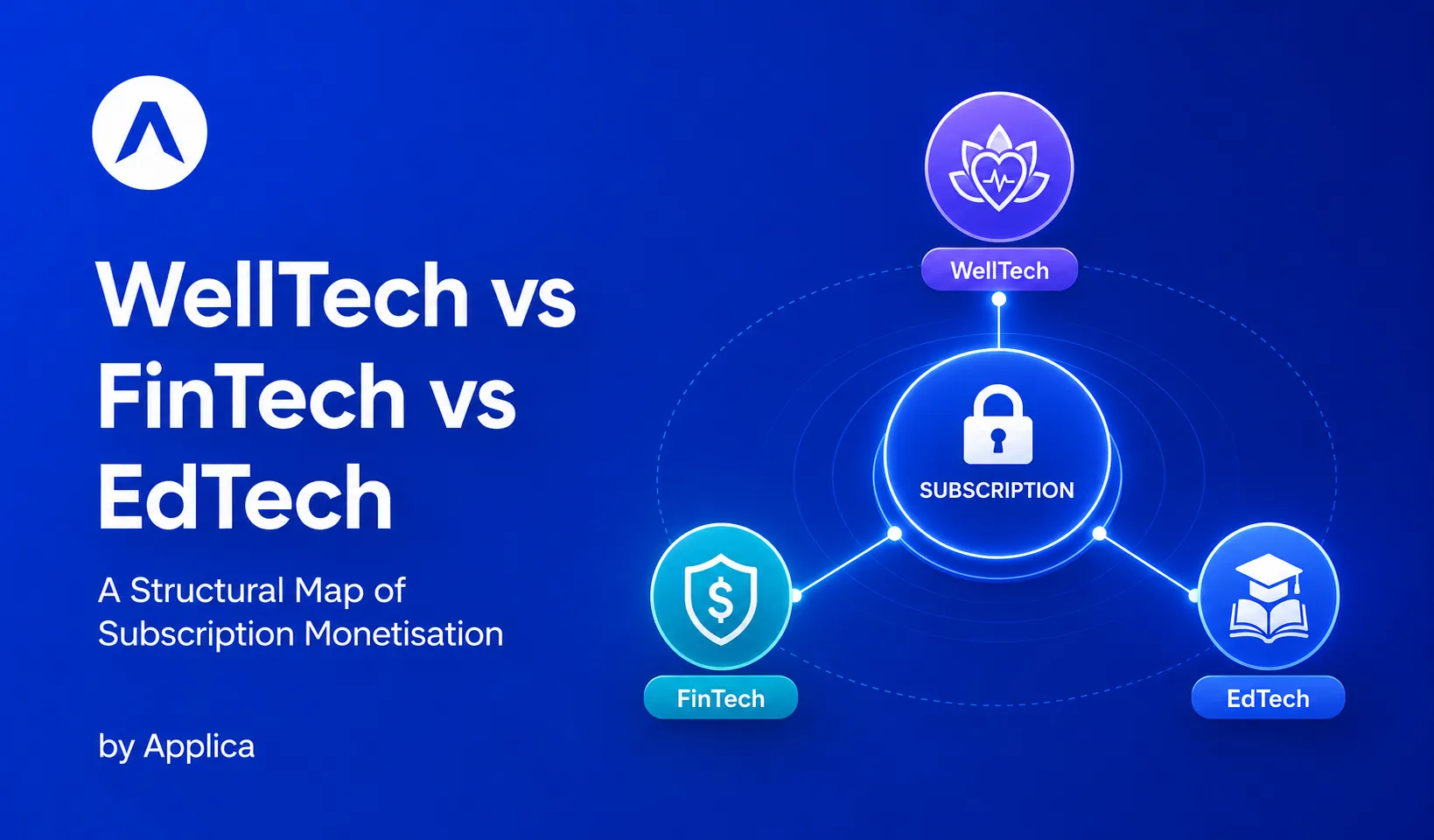
This piece maps that difference across the three verticals Applica Agency works in most deeply — WellTech, FinTech, and EdTech — on 5 structural dimensions that drive real monetisation decisions, then resolves them into a transfer matrix of which moves port across categories and which break. It is the per-vertical demonstration of a broader argument: that context, not best practice, determines whether a tactic transfers [the context-fit framework for product strategy][TODO-INSERT-TASK-13-URL-WHEN-LIVE].
Why monetisation tactics look universal but rarely are
The portability illusion survives because the levers genuinely are shared: every subscription app chooses between weekly, monthly, and annual plans, runs a hard or soft paywall, offers a trial or doesn't, and tracks the same metrics. At the level of mobile subscription monetisation mechanics there is one toolkit — and it produces wildly different category strategies. RevenueCat's 2026 benchmarks show one subscription model splitting into incompatible category playbooks: gaming sells 82% of revenue on weekly plans, productivity 77% on monthly, and health and fitness 68% on annual. Same toolkit, three different answers.
So the question is never which tactic is best but what each tactic is being asked to do in a given category — set by what the user has to overcome before payment feels rational. Not a universal playbook, but a vertical-tuned one. A WellTech user is fighting their own motivation; a FinTech user is deciding whether to trust an app with money and identity; an EdTech user is gambling on whether they'll actually progress. The tactic is downstream of the psychology, and the psychology is set by the category — the starting point for any team thinking about how to structure mobile product monetisation. Get the order wrong and you optimise a paywall that was never the constraint.
The 5 dimensions where verticals diverge
A useful comparison needs named axes. The differences that actually change monetisation decisions cluster into 5 dimensions, each landing differently across the three verticals.
The 5 dimensions on which WellTech, FinTech, and EdTech subscription monetisation diverge
| Dimension | WellTech (motivation) | FinTech (trust) | EdTech (progress) |
|---|---|---|---|
| Trust threshold — credibility needed before payment feels safe | Low — personal, rarely financial data | Highest — money and identity at stake | Moderate |
| Willingness-to-pay shape — what the payment anchors to | Habit and identity; annual default | Verified, legible value | Perceived progression and outcome |
| Value-perception cadence — when value lands | Fast, re-felt daily | Delayed — a saved fee, a better rate | Slowest — weeks to months |
| Churn driver — the category's failure mode | Motivation decay | Trust rupture | Progress failure |
| Acquisition profile — channel mix and intent quality | Seasonal; intent-rich installs | Paid, brand-led, regulation-shaped | Organic discovery; long evaluation |
Trust threshold is the one most underestimated on import, because it's invisible until violated — the move that reads as confident in a low-threshold category reads as presumptuous in a high one. It's also where the difference between a "painkiller" and a "vitamin" changes the maths, since a painkiller can demand trust faster the vitamin-versus-painkiller mismatch. The next three sections walk each vertical through all 5 dimensions — what works, and what breaks when it's ported elsewhere.
WellTech: monetising motivation
The psychological cargo in WellTech is motivation. The user already wants the outcome — to sleep better, move more, feel calmer — so the monetisation job is less about earning trust than about converting existing, often urgent, intent before it fades.
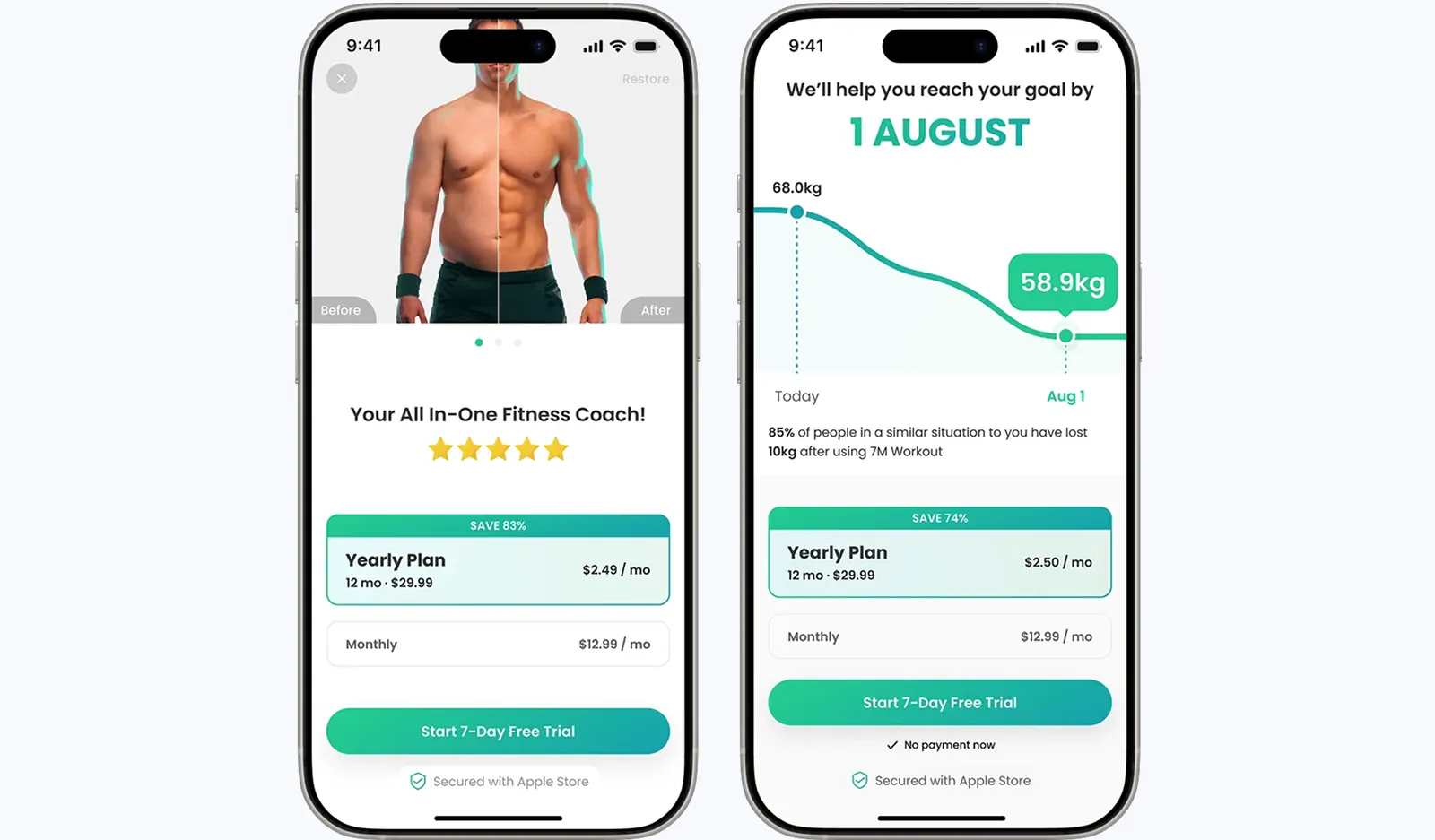
That intent shows up in the numbers. Adapty's health and fitness benchmark finds the install-level lifetime value gap between health and fitness and the lowest-performing category running more than 2x — attributed directly to intent, since someone downloading a fitness app arrives already motivated in a way an entertainment-app user doesn't. On trust threshold, WellTech sits low: the data shared is personal but rarely financial, so the credibility bar to first payment is reachable inside the first session.
The willingness-to-pay shape is habit-anchored and tilts hard toward annual commitment. Health and fitness is, per Adapty's 2026 data, the only category where annual plans dominate revenue, at 60.6% — and the annual plan is priced at a meaningful multiple of monthly, with one read of the benchmark data putting the health and fitness annual plan at roughly 3.8x the monthly price. The value-perception cadence is fast and recurring: value lands on day 1 and is re-felt daily, which is what makes the annual bet feel safe.
The churn driver is the dark side of motivation: it decays. Fitness apps carry one of the steepest churn curves of any consumer category — one analysis puts monthly churn around 9.2% and finds loss of motivation or goal abandonment accounts for roughly 38% of cancellations. Business of Apps data shows the same decay structurally, with activation falling from around 26% on day 1 to 10% by day 28. The acquisition profile carries a seasonal signature no other category matches — the January spike and February collapse — and paid-acquisition cohorts in fitness tend to retain worse than organic ones.
What works here: a confident, early paywall (intent supports it), an annual default, and trial-length experiments — which, per the health and fitness data, can improve first-renewal retention by anywhere from 8% to 60% depending on plan type. What transfers poorly out of WellTech is the foundational assumption: that the user arrives motivated enough to commit early. That assumption is native to wellness and false almost everywhere else. The patterns Applica sees most often in WellTech engagements concentrate on protecting the annual bet against motivation decay — not on lowering a trust barrier that was never the binding constraint. For teams operating here, the real constraint is retention and lifecycle design rather than trust signalling — the core of the WellTech growth problem.
Why do WellTech apps lean so heavily on annual plans?
Because the willingness-to-pay shape is anchored to identity and habit, not a discrete event. Subscribing to a wellness app is buying a commitment device — the annual plan is part of the product, a way of pre-committing to the outcome the user wants. Ported to a vertical where the user hasn't yet decided whether the product works, that same annual-first default reads as a demand for commitment before value — precisely how it fails in EdTech and FinTech.
FinTech: monetising trust
The psychological cargo in FinTech is trust — the heaviest load of the three. Before paying, a finance user resolves two anxieties at once: whether the app is safe with their money and identity, and whether its incentives align with theirs. Ignore either and monetisation stalls, however good the product.
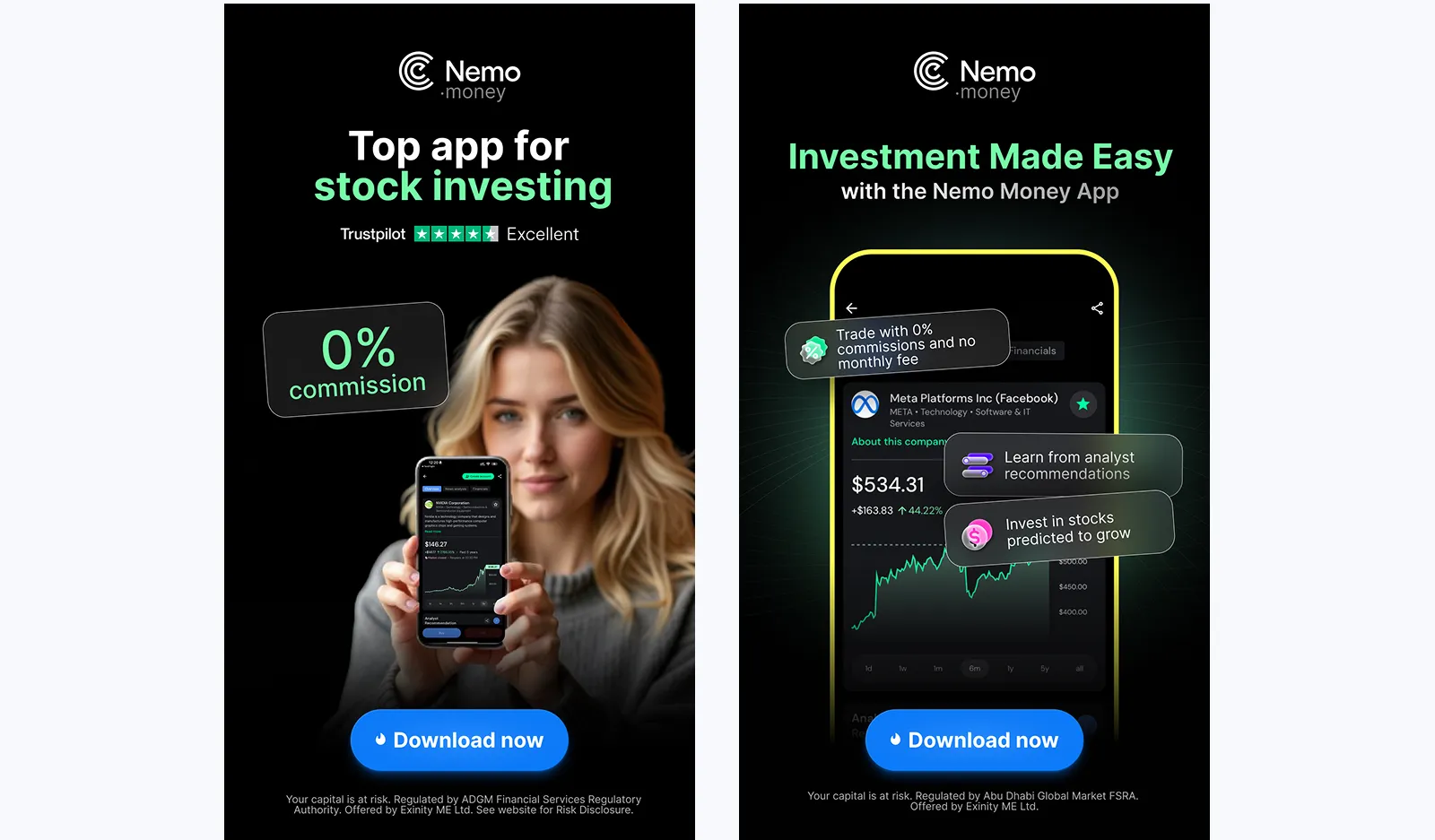
This is the highest trust threshold of the three verticals. CleverTap's analysis of finance app conversion finds a direct-install rate around 31% for the finance category — a signal of brand reputation, since finance users seek out a name they already recognise rather than browsing. The same analysis records a roughly 14% activation rate and only about 4.5% retention after 30 days for fintech apps, and notes that finance apps convert store views to downloads on Google Play at around 19.7% against a 27.3% all-category average — getting a finance user to an activated payment is hard at every step, because trust has to be rebuilt at each one.
The willingness-to-pay shape is gated by verified, legible value: users pay once they can see the app working and understand how it makes money, since opacity reads as risk. The value-perception cadence is often delayed — the payoff (a better rate, a saved fee) arrives later than day 1, which is why a free tier that defers payment until value is proven fits better than an immediate hard paywall. One survey of monetisation strategy puts it directly: when the payoff takes longer — as in fintech and health-data products — a subscription with a free tier outperforms a trial, because trials expire before the value registers.
The churn driver is trust rupture — a confusing fee, an opaque pricing change, a moment where incentives feel misaligned. (Once earned, that trust makes retention durable: one benchmark puts personal finance monthly churn around 7.9%, lower than fitness, and finance apps tend to overperform on retention.) The acquisition profile is paid-heavy, brand-led, and shaped by regulation: finance apps face some of the highest cost-per-tap rates globally and organic conversion that swings enormously by market, from highs above 13% in the US to lows under 2% in parts of Europe — making localisation a trust lever, not a translation chore. Compliance is a structural cost; one estimate puts regulatory compliance at 10–15% of operational budgets for many fintech startups.
What works here: a free tier that earns the right to charge, transparent pricing, and a phased rollout that builds trust before introducing revenue features. What breaks on import is the WellTech-style early hard paywall — demanding payment before trust is earned, against a skeptical rather than motivated user. The interaction between pricing and paid channel is also starkest in FinTech, where a pricing change doesn't just move conversion but reshapes the economics of the channel feeding it [how pricing decisions retrain your paid acquisition][TODO-INSERT-TASK-09-URL-WHEN-LIVE]. The patterns Applica sees most often here cluster around the first-deposit and verification moments — the trust chokepoints where monetisation is actually decided. For teams scaling, the discipline is spending that protects trust while controlling cost, the heart of scaling a finance app without overspending and the broader FinTech growth problem.
Why does a hard paywall underperform in FinTech?
Because the trust threshold hasn't been cleared when a hard paywall demands payment. In WellTech an early paywall works — the user arrived motivated and the data shared is low-stakes. In FinTech the user arrived skeptical and is asked to trust the app with money and identity before seeing it work; the paywall demands commitment before the trust account has any balance in it, converting the few already sold and repelling the majority who needed value first. The free tier lets value accrue until paying feels low-risk rather than a leap of faith.
EdTech: monetising progress
The psychological cargo in EdTech is progress — the user's uncertainty about whether they'll actually follow through and improve. An education user isn't primarily worried about trust or fighting acute motivation decay; they're betting on a future self who completes the course, learns the language, passes the exam. Monetisation either supports that bet or quietly undermines it.
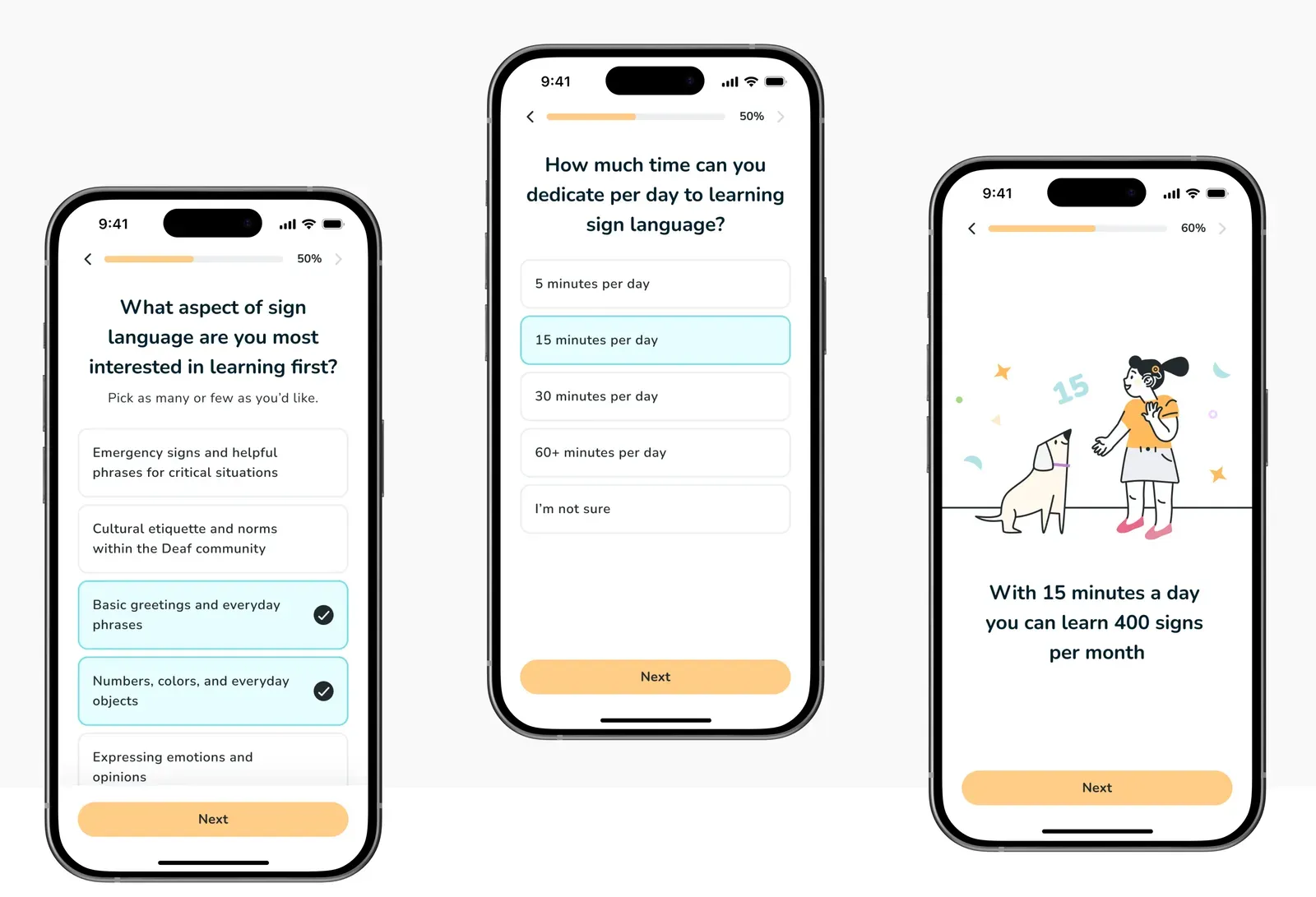
The trust threshold is moderate — higher than WellTech, lower than FinTech — but the value-perception cadence is the slowest of the three, the defining fact of the category. Real value (measurable progress) compounds over weeks and months, colliding with subscription economics. The consequence shows in retention: Business of Apps data puts education app retention at around 2% by day 30, one of the lowest figures across all app sectors, with many education apps keeping most of their value behind a paywall — raising the stakes on the store listing. One edtech free-trial analysis is explicit on the unit economics: an LTV-to-customer-acquisition-cost (LTV:CAC) ratio above 3x becomes defensible only if learners are retained well past month 12.
The willingness-to-pay shape is anchored to perceived progression and outcome, not a daily habit or acute event, and prices accordingly — one read of the data puts the education annual plan at roughly 5.4x the monthly price, the steepest annual-to-monthly multiple of the three. The churn driver is the most counter-intuitive and most dangerous to mishandle: progress failure, not lack of time. A detailed churn analysis of an education product found 92% of cancellations attributed to being "too busy" were actually driven by stalled progress, and that surfacing how much work remained created overwhelm rather than urgency; adding more reminders increased guilt and accelerated churn.
The acquisition profile leans on organic store discovery, and the reliance on longer evaluation is visible in trial design: education and health and fitness apps run the longest trial durations, most lasting five to nine days or more, reflecting how much content a user needs before judging whether they'll progress. The same RevenueCat data records education apps among the highest refund rates, around 4.86% — a downstream symptom of the value-cadence mismatch.
What works here: value framing anchored to progress rather than features, longer trials that let progress become felt, and completion mechanics tying advancement to the renewal moment. What backfires on import is the WellTech reminder-and-streak cadence — where the churn driver is progress failure, aggressive notifications amplify guilt — and the annual-first default, which demands a long commitment before the user has evidence they'll progress. Which future self the learner is buying for is a research question worth interviewing for rather than assuming [why user interviews come before any redesign][TODO-INSERT-TASK-06-URL-WHEN-LIVE]. The patterns Applica sees most often in EdTech engagements concentrate on making early progress legible before renewal — the centre of the EdTech growth problem.
Why is Education-app retention structurally lower than other categories?
Because the value-perception cadence is fundamentally misaligned with the billing cadence. A learner pays now for a benefit — measurable progress — that, by the nature of learning, arrives weeks or months later, so education apps show some of the lowest day-30 retention of any sector even when the content is strong. The category trap is misreading the churn driver: cancellations that present as "I'm too busy" are usually stalled-progress cancellations, and the instinctive fixes (more reminders, surfacing the work remaining) make it worse by converting motivation into guilt. The monetisation work in EdTech is largely the work of compressing time-to-felt-progress so value perception catches up to billing.
The transfer matrix: what ports and what doesn't
The same five moves, mapped across the three verticals — where each ports cleanly, breaks, or holds only conditionally. It's not a difficulty ranking; every category here is large and winnable.
The transfer matrix — which monetisation moves port across verticals and which break.
| Monetisation move | WellTech | FinTech | EdTech |
|---|---|---|---|
| Early hard paywall | Ports — motivated intent supports it | Breaks — demands payment before trust is earned | Conditional — only after early progress is felt |
| Annual plan as default | Ports — habit-anchored, identity purchase | Conditional — works once trust is established | Breaks — asks long commitment before progress is proven |
| Aggressive trial + reminder cadence | Ports — re-cues a decaying habit | Conditional — must not read as pressure | Breaks — amplifies guilt, accelerates progress-failure churn |
| Free tier to defer payment | Conditional — can dilute urgent intent | Ports — lets trust and value accrue first | Ports — buys time for slow value cadence |
| Radical pricing transparency | Helpful — rarely the binding constraint | Ports — load-bearing, trust depends on it | Helpful — supports the progress-outcome bet |
The trap is that the moves are legible across categories: a growth lead who succeeded with an early hard paywall in WellTech can explain why it worked, port it to FinTech with full conviction, and be wrong — because the reasoning was correct only for the cargo it was built against.
The operating implication: treat your playbook as a hypothesis
The discipline for any team expanding across a vertical line is this: the playbook that worked in your last category is a hypothesis, not a directive. Every move encodes an assumption about trust, motivation, or progress that was true in the old vertical and may be false in the new one, and the expansion fails quietly when those assumptions are imported as settled facts rather than re-tested. It's the per-vertical face of a more general principle: a practice is only as good as its fit to context, and "best practice" with the context stripped out is just someone else's local optimum why best practices break.
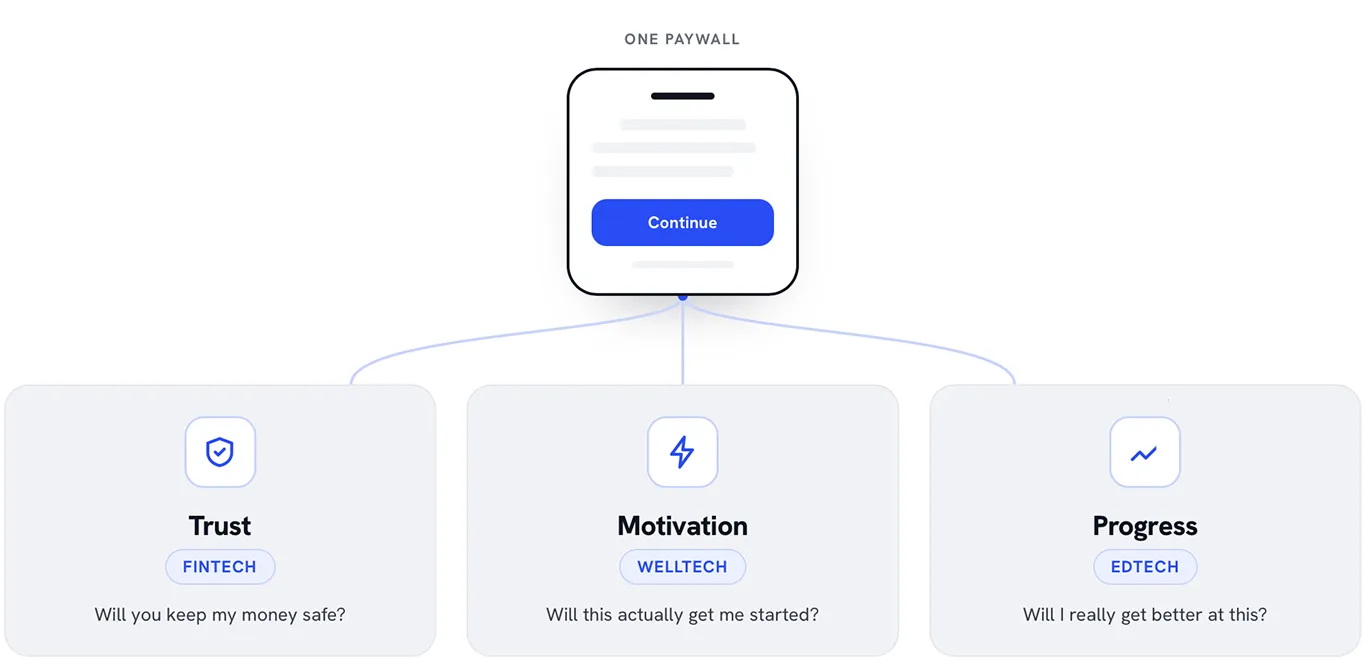
So the sequence that survives the crossing starts by re-validating the imported playbook against the new profile before any of it ships: which of the five dimensions has changed, and which moves were quietly depending on the old values? At Applica, that re-validation is the first move of any cross-vertical engagement — the teams that scale cleanly aren't the ones with the best playbook but the ones who treated it as a set of hypotheses and let the new category tell them which still held.
Frequently asked questions
How does subscription monetisation differ by app category?
It differs less in the available tactics than in what each is asked to overcome. The toolkit is shared — plans, paywalls, trials, free tiers — but the binding constraint changes. WellTech works against motivation that decays, so it rewards capturing intent early and protecting an annual commitment. FinTech works against a high trust threshold, so it rewards deferring payment until value and legibility are established. EdTech works against a slow value cadence and a progress-failure churn driver, so it rewards longer trials and progress-anchored framing. The category sets the psychology; the psychology sets which tactic fits.
Which monetisation tactics transfer across verticals?
Few transfer cleanly, and the ones that do are trust-and-patience moves, not urgency moves. A free tier that defers payment ports well from FinTech to EdTech, since both have delayed value cadences, and radical pricing transparency travels everywhere (load-bearing only in FinTech). The moves that break are the urgency tactics tuned to WellTech's motivated user — early hard paywall, annual-first default, aggressive reminder cadence — all assuming an intent level other categories don't supply. Treat any move as vertical-tuned until proven otherwise.
Why doesn't a FinTech onboarding flow work in EdTech?
Because the two carry different psychological cargo and optimise onboarding for different things. A FinTech flow front-loads credibility, security signalling, and legible value because the user arrived skeptical and needs trust established fast. An EdTech learner arrived uncertain about their own follow-through, not the app's trustworthiness — a trust-forward flow does nothing for that, and deferring value behind verification is exactly wrong where the user needs to feel early progressto justify a subscription against a slow value cadence. The flow isn't bad; it's solving the wrong problem.
If you're carrying a monetisation playbook into a new vertical and want to pressure-test which assumptions still hold before committing budget, let's talk — Applica Agency's Conversion Rate Optimization engagements start by diagnosing where the leverage actually sits in your specific category, not by assuming the last map still applies.