


At a glance
- App category
- Fitness
- Industry
- WellTech
- Channels
- in-app onboarding, paywalls and win-back offers. No paid media in scope
- Period
- 2024 -
- Markets
- United States
- Key results
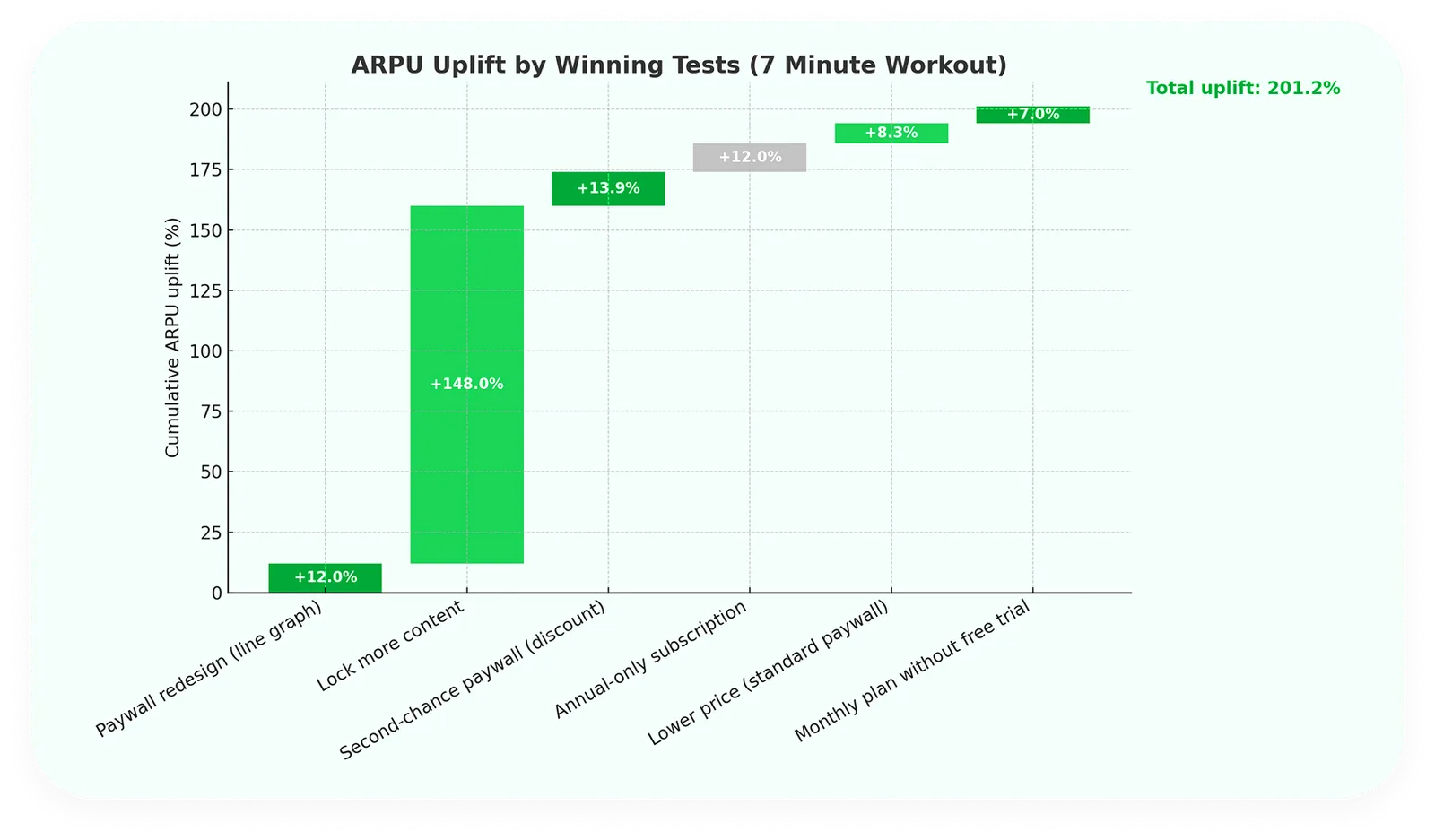
- six winning tests out of 27, adding up to a 201.2% ARPU uplift. 50% ARR growth. The strongest single test, tightening the line between free and paid, lifted ARPU 148%

The challenge
7 Minute Workout is one of the most trusted names in quick, at-home fitness, and its revenue had stopped growing. The problem sat after the install rather than before it: users were not moving from free to paid, and too many left in the first days.
Three things held conversion down.
Onboarding did not land the value story before the paywall. Users met the ask before they understood what they were being asked to pay for, which turns a price into a cost rather than a trade.
The paywall offered too many choices. Every extra plan is another decision, and decisions are where intent leaks. A user comparing options is no longer a user deciding to start.
A dismissed paywall was never followed by a second ask. Closing a paywall is rarely a final no. It usually means the offer did not fit that person at that moment, and there was nothing in the app to make a different one.
In subscription fitness the free alternative is doing nothing at all, so intent is fragile and short-lived. Those three gaps compound against it.
What we did
We ran conversion optimization as a program rather than a project: 27 tests across onboarding, paywalls and retention, each one a hypothesis with a success threshold agreed before launch, shipped or scrapped on the result. Six won. Those six are below.
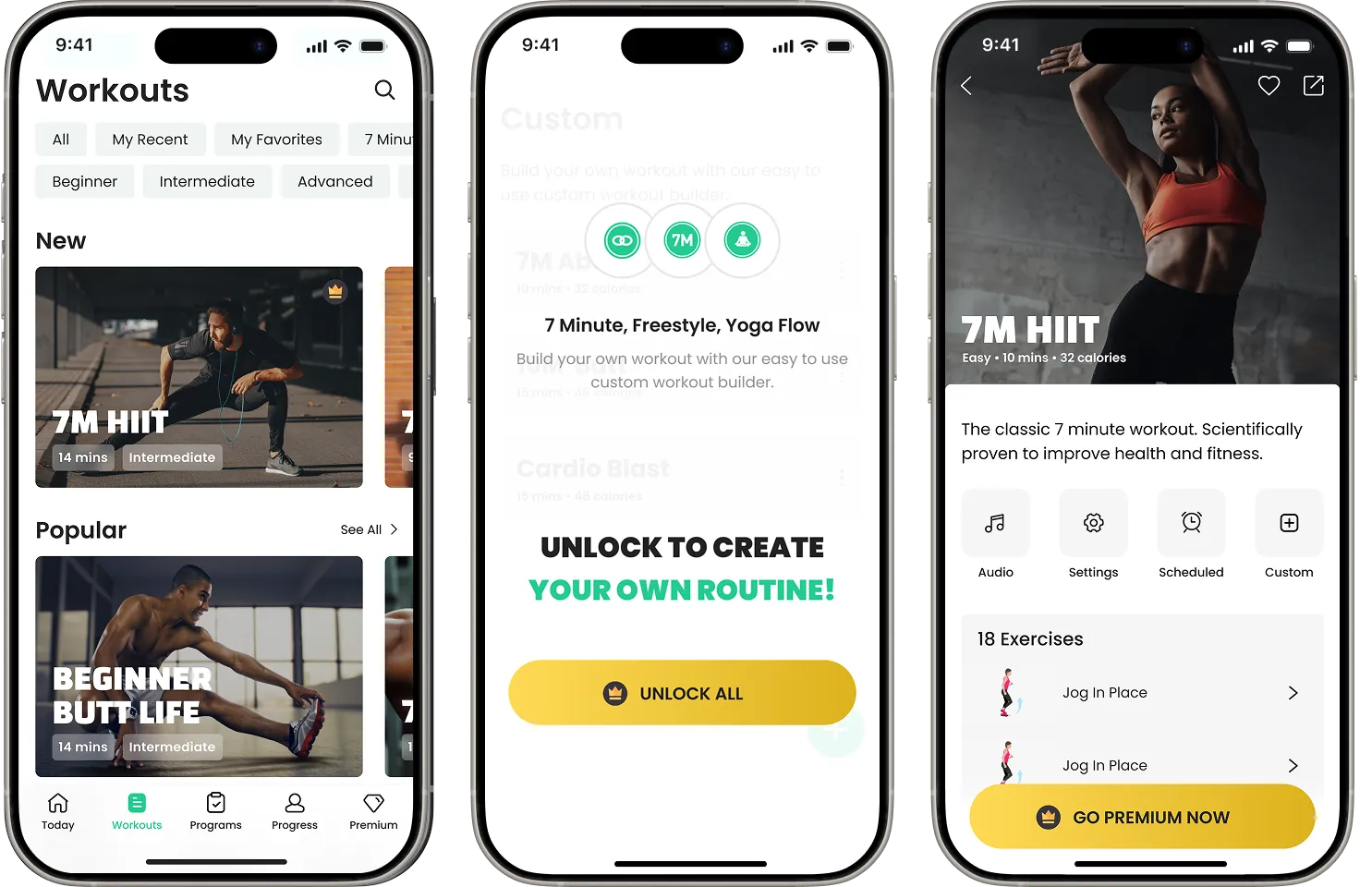
1. Tightened the line between free and paid. We moved more of the product behind the subscription so the reason to upgrade was unmistakable rather than inferred. This was the strongest single test in the program and lifted ARPU 148%.
Reasoning and learning: a free tier that already does the job does not create a funnel, it replaces one. The upgrade has to answer a question the free experience leaves open.
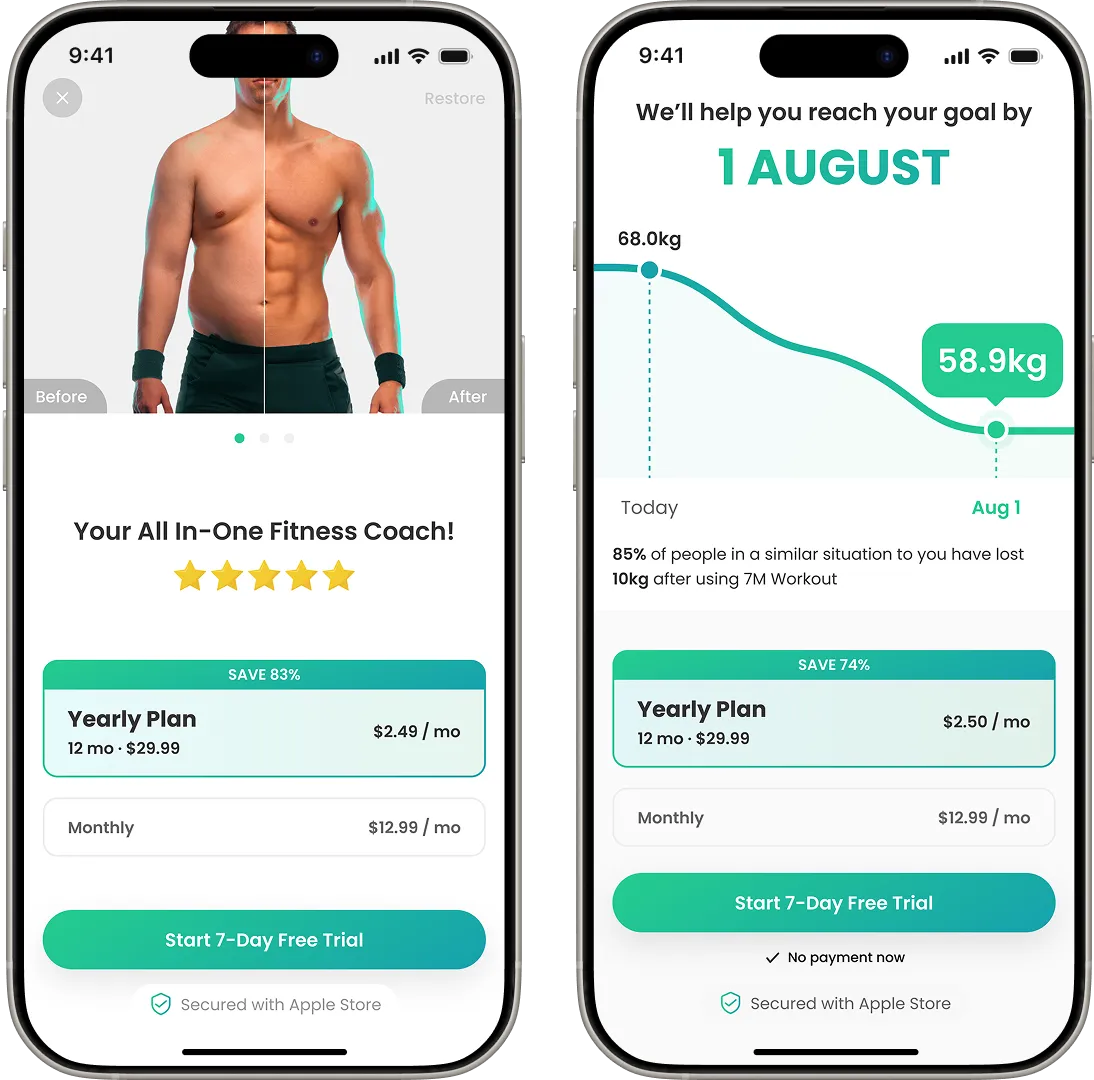
2. Rebuilt the paywall around outcomes, not features. A weight-loss progress graph replaced the feature list, so the user saw where the product takes them instead of what it contains.
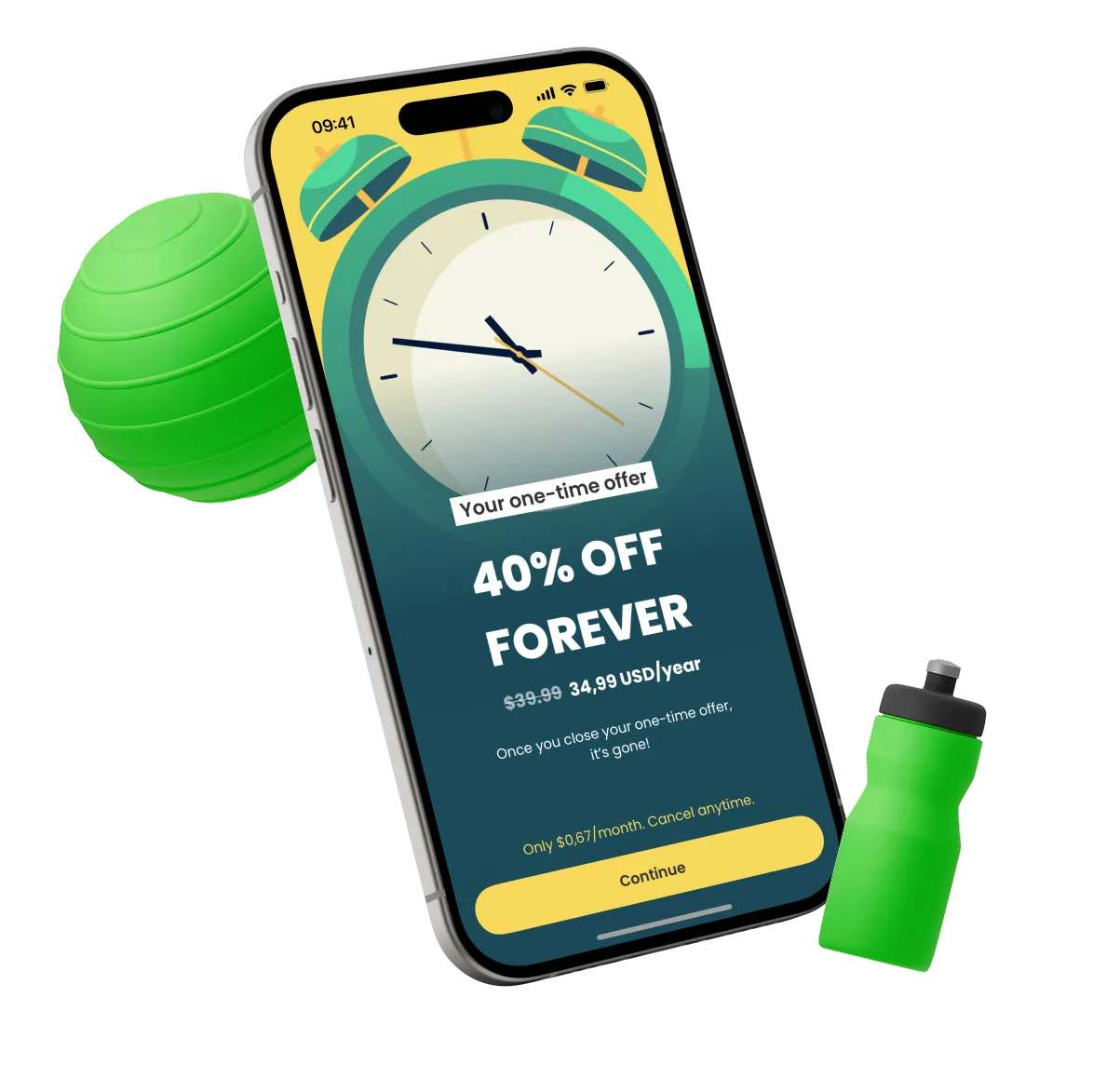
3. Added a second-chance paywall. Users who dismissed the first offer met a follow-up with a limited-time discount, which added 13.9% to ARPU.
Reasoning and learning: the second ask has to change something. Repeating an offer that already failed produces nothing.
4. Simplified to an annual-only option. Removing the comparison task raised commitment, in line with what we see across subscription apps: the cheapest plan is a discount for the committed, not a door for the hesitant.
5. Lowered the entry price on the standard paywall. A more approachable starting point, anchored against higher-value plans.
6. Reframed price presentation and anchors. Different plan layouts and anchoring moved users toward the best-value option without changing what they paid for.
Results
Six of 27 tests cleared their threshold and shipped. Their individual uplifts add up to 201.2% ARPU, and ARR grew 50% over the program. Two of the six carry most of that total: the free and paid boundary at 148% and the second-chance paywall at 13.9%.
How to read this. The 201.2% is the sum of the six winning uplifts, each measured against the version it replaced, not a single before and after reading of the account. We report it that way because it describes what the program produced test by test. Tests were measured in Amplitude and RevenueCat. Price and plan structure were the levers throughout; acquisition was not part of this work.
201.2%
Total ARPU uplift
50%
ARR growth
Client feedback
Their ability to optimise conversion and revenue is exceptionally great.
Kevin Pak
Partner at RetroLabs
Key learnings
Run optimization as a program, not a campaign. Six wins out of 27 is a normal hit rate. What produced the result was the cadence that let six wins accumulate, not any single idea.
Decide fast and scrap fast. A threshold agreed before launch is what makes a losing test cheap. Without one, losing tests get argued about instead of closed.
The free and paid boundary is the highest-leverage lever on a subscription app. It beat every paywall redesign in this program by an order of magnitude.
A closed paywall is a segment, not a rejection. Users who dismiss the first offer are reachable with a different one, and that second ask paid for itself.
Conclusion
7 Minute Workout went from flat revenue to 50% ARR growth without rebuilding the product and without adding a channel. The gain came from testing the moments where the money is decided: what the user understands before the ask, what the ask looks like, and what happens when they say no.
More on our conversion rate optimization and health and fitness app marketing.