
At a glance
- App category
- Productivity, workforce management
- Industry
- Productivity
- Channels
- in-app onboarding, activation flow and paywalls. No paid media in scope
- Period
- 2025 -
- Markets
- Worldwide, United States primarily
- Key results
- ARPU +35% and onboarding completion +15%, from a rebuilt onboarding, a mandatory Get Started flow and paywall testing

The challenge
Employee Link does scheduling, time tracking and team coordination for business owners, managers and employees. The functionality was there. The first ten minutes were not doing it justice.
A workforce app has an activation problem that consumer apps do not: value does not arrive when the user understands the product, it arrives when the company is set up inside it. Shifts exist, hours are logged, teammates are in. Until that happens the app is an empty shell, no matter how good the product is underneath, and a user who leaves before setup never sees anything worth paying for.
What we did
The principle throughout was that every screen should move the user closer to value, which in this product means closer to a configured company.
1. Rebuilt onboarding around who the user is. The original flow was short but generic. We added screens that ask for role (business owner, manager, employee, freelancer), industry and the use cases that matter to them, such as GPS timesheets or scheduling.
Reasoning and learning: in a product with four kinds of user, a shared onboarding is written for whoever is most common and is wrong for everyone else. Asking first costs three screens and makes everything after them relevant.
Typography & Color
Simplified Payroll
2. Made setup a flow rather than a hope. After onboarding, a Get Started popup walks the user through setting up their company in a few steps, with the time each task takes stated up front. We made it mandatory, because activation here is not optional for value to exist.
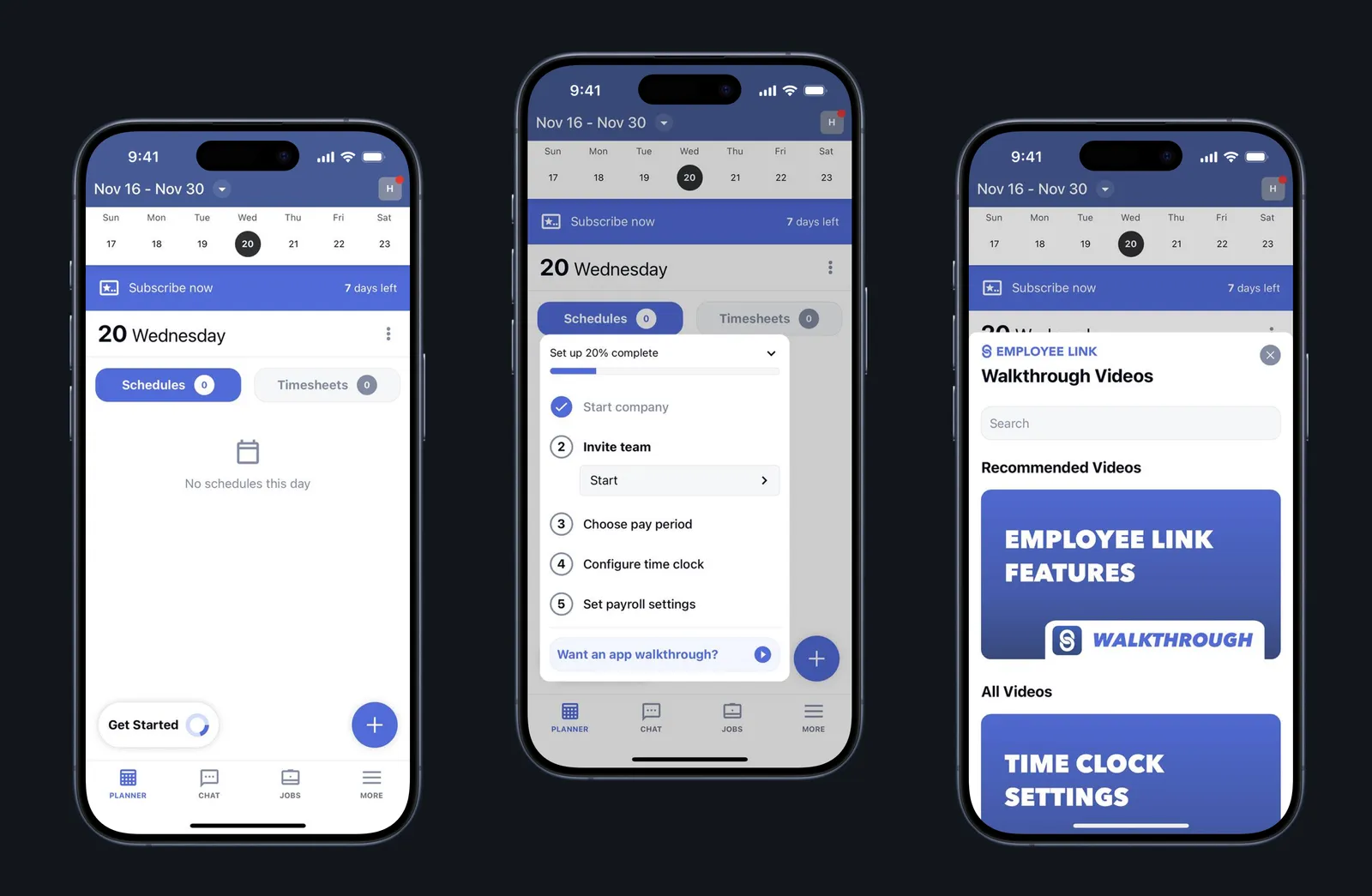
Before the Redesign
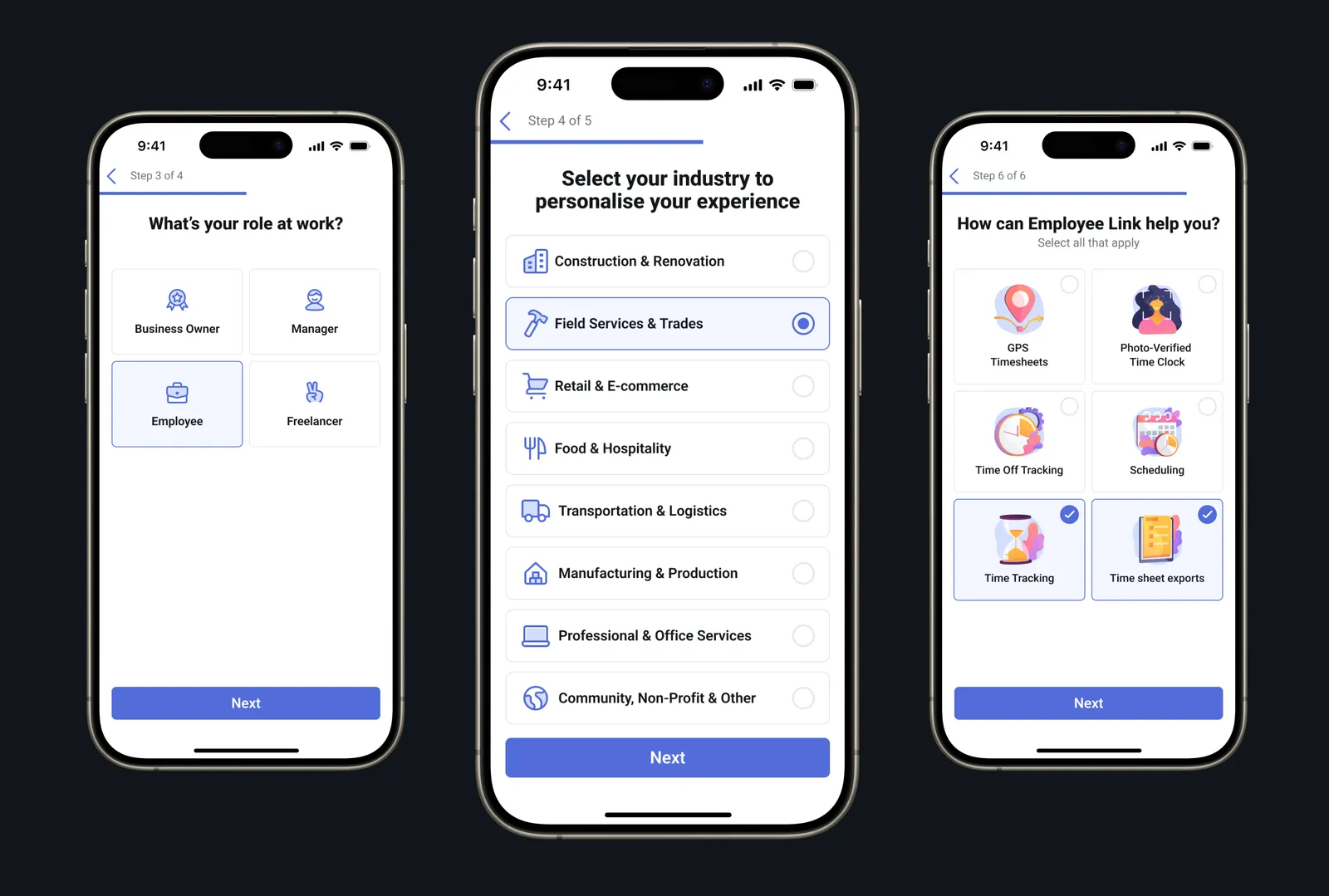
After the Redesign
3. Moved the invite step to the end, after watching where people stopped. Asking users to invite teammates early created friction: inviting people is a public act, and nobody wants to do it before they trust the thing they are inviting them into. Moved to the end of setup, after the key settings were configured, it stopped costing completions.
Reasoning and learning: order is a design decision, not an implementation detail. The same step can be friction or a natural next action depending on what precedes it.
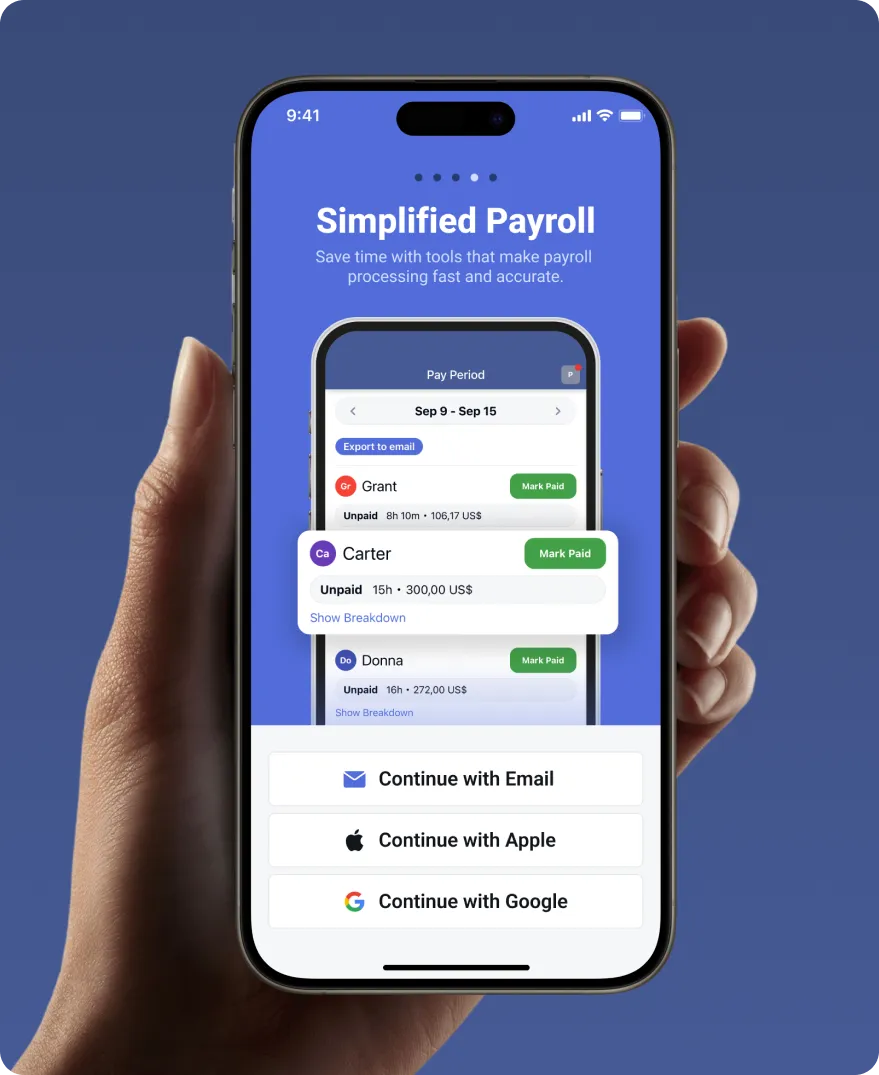
4. Built the export timesheets feature users kept asking for. Exporting hours was the most requested capability from the people running payroll and reports, and there was no good way to do it, which generated frustration and support tickets. The new flow is a date range, a format choice (CSV or PDF) and a file in seconds.
5. Tested the paywall where timing matters most. Most of the testing went into the onboarding paywalls, across entry points, messaging and layout, because in this product the question is not only what the paywall says but at what point in setup the user is ready to hear it.
Results
Onboarding completion rose 15% and ARPU rose 35%. The two are connected: a user who finishes setup has a working company in the app, and a paywall shown to that person is a different conversation from one shown to a user still looking at empty screens.
+35%
ARPU
+15%
Onboarding completion rate
Client feedback
The quality of their work is the best I’ve seen. Thanks to Applica, I've seen a 30% increase in product page views and downloads, as well as great improvements in revenue.

Morgan Trudeau
CEO at Magnify Technologies
Key learnings
In B2B tools, activation is configuration. Value does not begin at understanding, it begins when the product has the customer's data in it. Onboarding has to carry people to that point.
Ask who the user is before telling them anything. Role and industry questions cost a few screens and make every screen after them relevant.
Move the social step to the end. Inviting colleagues is the highest-commitment action in a team product and the worst possible opener.
Conclusion
Employee Link had the functionality and a first ten minutes that did not get users to it. Rebuilding onboarding around role and use case, making setup a guided flow, and testing the paywall against that flow lifted onboarding completion 15% and ARPU 35%.
More on our conversion rate optimization.