
At a glance
- App category
- Productivity, text to speech
- Industry
- Productivity
- Channels
- in-app welcome screen. No paid media in scope
- Period
- 2024 -
- Markets
- United States
- Key results
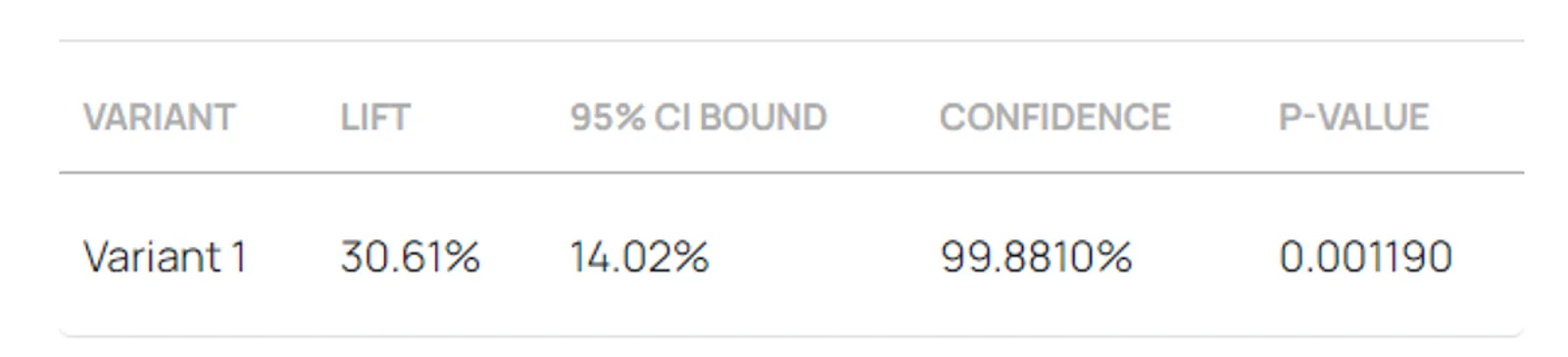
- +30% LTV from a single copy change on the welcome screen, at 99.8% confidence. A 50/50 A/B test on first-time US users over 25 days

The challenge
Peech's welcome screen was well written. It was clear, compact and it described what the app does. That is exactly the problem worth isolating, because a screen that reads well can still fail at its job.
What it did not answer was the only question a new user is actually asking: what is in this for me. A text-to-speech reader is a tool, and tools get described in capabilities. But nobody downloads a capability. They download a way to get through a reading list while driving, or to stop falling behind on work they meant to read.
What we did
1. Interviewed users with a jobs-to-be-done structure. The interviews were built around the jobs people were hiring Peech for rather than the features they used, which is what produced language we could write with instead of guessing at.
Reasoning and learning: the best value proposition copy is already in your users' vocabulary. Interviews are a way of collecting it, not a way of validating something you already wrote.
2. Rewrote the screen from features to benefits. The new copy led with what the app lets you do with your day: multitask, stay on top of what you meant to read, keep going without stopping. The underlying product did not change; only the reason given for using it.
3. Accepted that the better copy was longer, and tested it anyway. The new version ran almost twice the length of the original. That is usually a reason not to ship: longer screens get skimmed, and attention is the scarcest thing in onboarding. We ran it as a test rather than resolve the argument by opinion.
Reasoning and learning: length is not the variable, relevance is. A long screen about the reader is read. A short screen about the app is skipped.
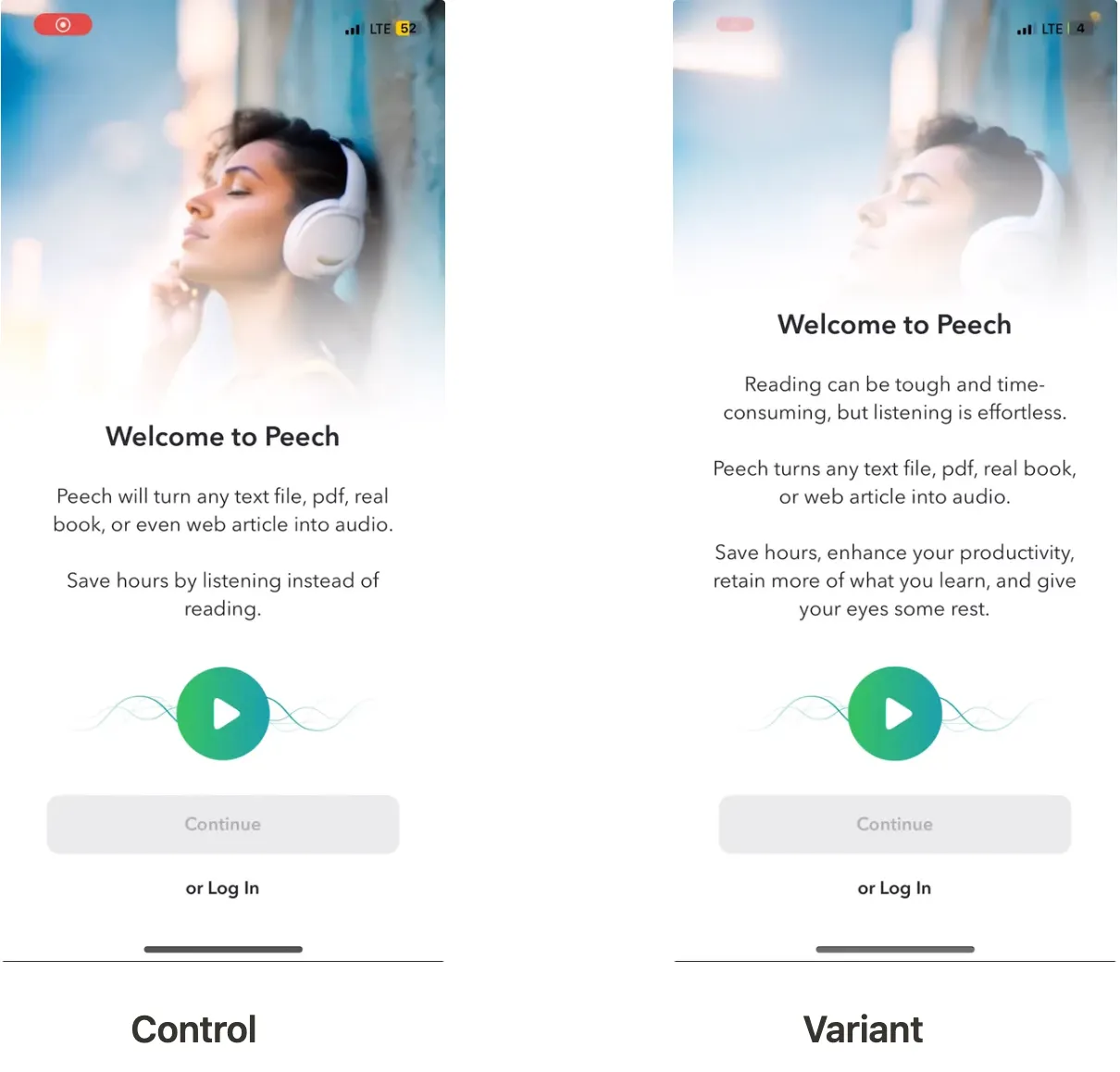
The variant version had more text but it was more user-led
4. Tested one variable, on one audience, long enough to be sure. First-time users in the United States, a 50/50 split between the original and the revised copy, 25 days. One change, so the result could only mean one thing.
Results
The longer, benefit-led version won: LTV up 30%, at 99.8% confidence. The test ran 25 days to reach significance at that level. New users also engaged earlier, recognising where the app fitted into their day rather than what it contained.
30%
LTV increase
Client feedback
We ran loads of AB tests, and many of them demonstrated the rise in key metrics. I was impressed with the knowledge and experience Applica brought to the partnership.
Andrey Paznyak
CEO at Peech
Key learnings
Lead with the benefit, not the feature. Users care how a product solves their problem. The feature list is the answer to a question they have not asked yet.
A copy change can be worth a redesign. Nothing was rebuilt here. One screen was rewritten, and the result was 30% on lifetime value.
One variable per test. A single changed element is what made the outcome readable and repeatable rather than an interesting result nobody could explain.
Conclusion
Peech did not need a new feature or a new funnel. It needed its first screen to answer the question new users were actually asking. Rewriting it from features to benefits lifted LTV 30% at 99.8% confidence, from a 25-day test.
More on our conversion rate optimization and A/B testing and data analysis.