


Overview
TouchRetouch is a photo retouching app that allows users to remove unwanted objects, erase people, clean up backgrounds, hide blemishes, eliminate logos, and retouch images using simple tap-based tools powered by content-aware AI algorithms.
Over the past 6–9 months, the Apple Search Ads account evolved from a heavily brand-dependent setup into a significantly more scalable acquisition engine driven by:
CPP iteration,
intent-based keyword segmentation,
automation,
ASO collaboration,
and Apple’s Max Conversions bidding strategy.
Dec 15 - May 15
The result was not just more scale, but a structurally healthier account with stronger diversification, lower acquisition costs, and improved efficiency across core business metrics.
The Challenge
Historically, the account relied almost entirely on branded demand.
Between Dec 15, 2025 and Feb 28, 2026:
- only 5.8% of spend went toward non-brand acquisition,
- while the majority of volume came from branded searches.
This created:
- very high TTR,
- relatively stable efficiency,
- organic cannibalisation risks,
- but limited scaling potential.
Brand traffic naturally performs well because users already know the product. However, relying too heavily on branded demand limits incremental acquisition opportunities and creates long-term growth ceilings.
On March 1, 2026, the strategy shifted significantly:
generic acquisition was expanded aggressively,
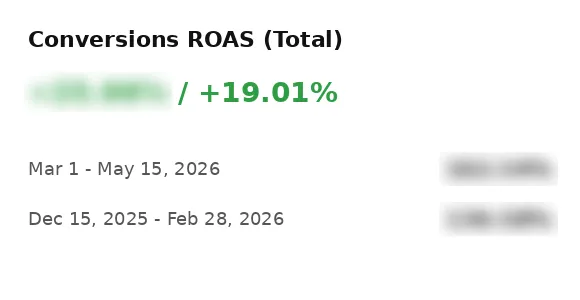
campaign segmentation evolved,
CPP production accelerated,
and automation became deeply integrated into account operations.
This transition intentionally traded some top-of-funnel efficiency for scalable growth infrastructure.
Building a Scalable Apple Search Ads System
The transformation was not driven by a single optimization. It came from several systems working together simultaneously.
Together, these created a significantly more scalable acquisition model.
1. Scaling Beyond Brand
One of the biggest structural changes was reducing dependence on branded demand.
Spend Mix Evolution
Dec 15, 2025 → Feb 28, 2026
- Brand share: 94.2%
- Non-brand share: 5.8%
Mar 1, 2026 → May 15, 2026
- Brand share: 68.8%
- Non-brand share: 31.2%
Non-brand spend increased more than 8x during the period.
Importantly, generic acquisition did not simply scale spend — its efficiency improved substantially.
Non-Brand Performance Evolution
Before/After
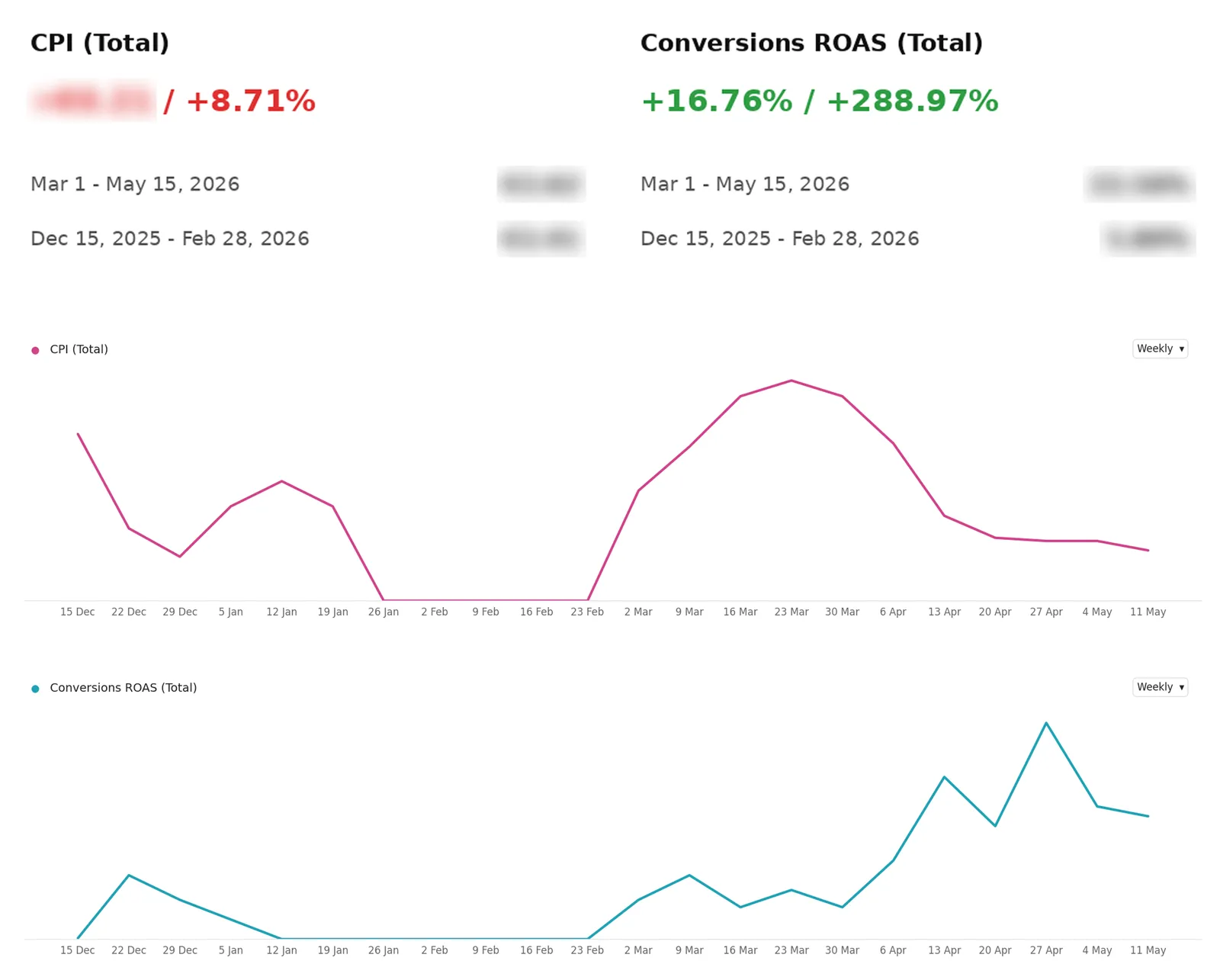
At the same time, branded efficiency also improved:
Brand CPI improved from €0.77 → €0.62
Brand ROAS improved from 136.6% → 162.5%
A common concern when expanding generic acquisition is that overall efficiency may decline as spend shifts toward lower-intent traffic. However, TouchRetouch successfully increased non-brand spend share from 5.8% to 31.2% while improving branded campaign performance and maintaining healthy account-level economics.
2. Intent-Based Keyword Segmentation
Rather than scaling broad generic terms aggressively, the account evolved into tightly segmented intent clusters built around specific editing jobs-to-be-done.
Instead of treating “photo editing” as a single acquisition category, campaigns were structured around highly specific use cases.
Each keyword cluster received:
- dedicated bidding logic,
- tailored CPP messaging,
- and ongoing search term refinement.
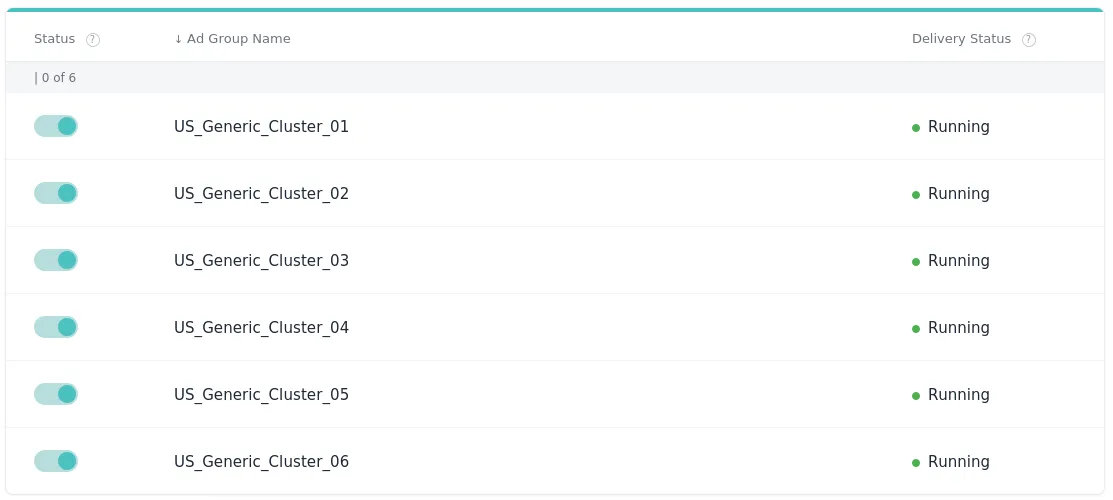
Face Retouch Ad group:
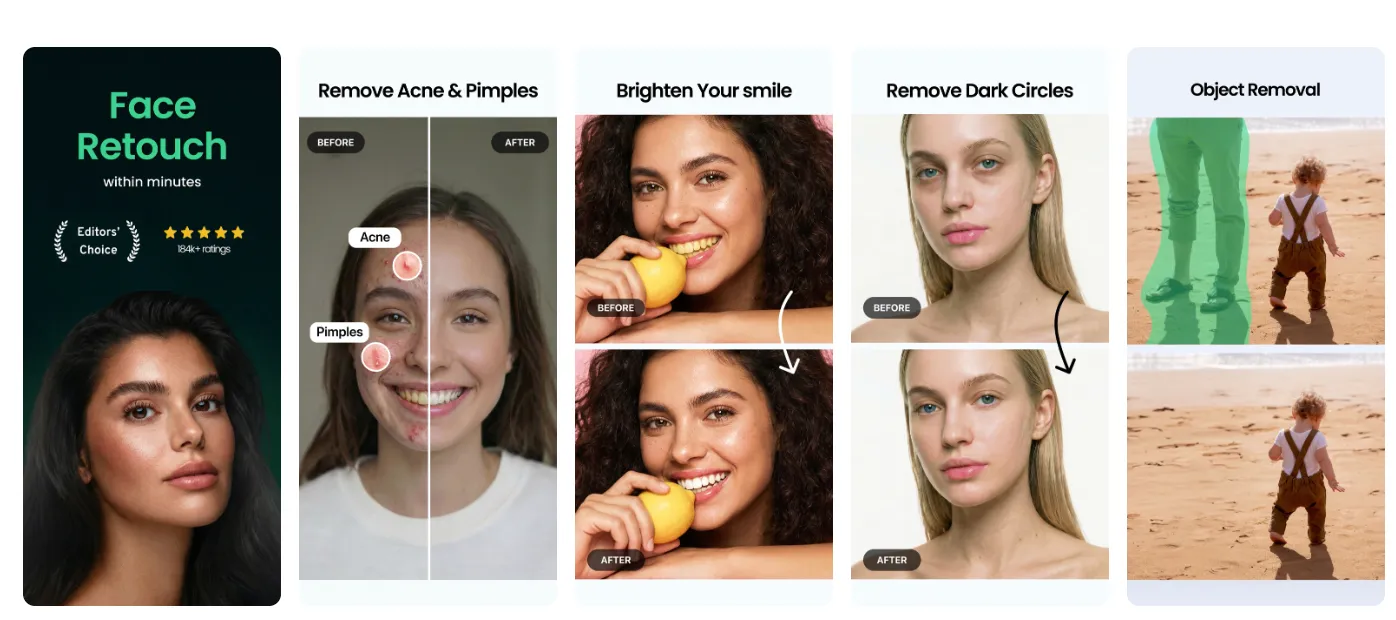
Smart Scenes Ad group:
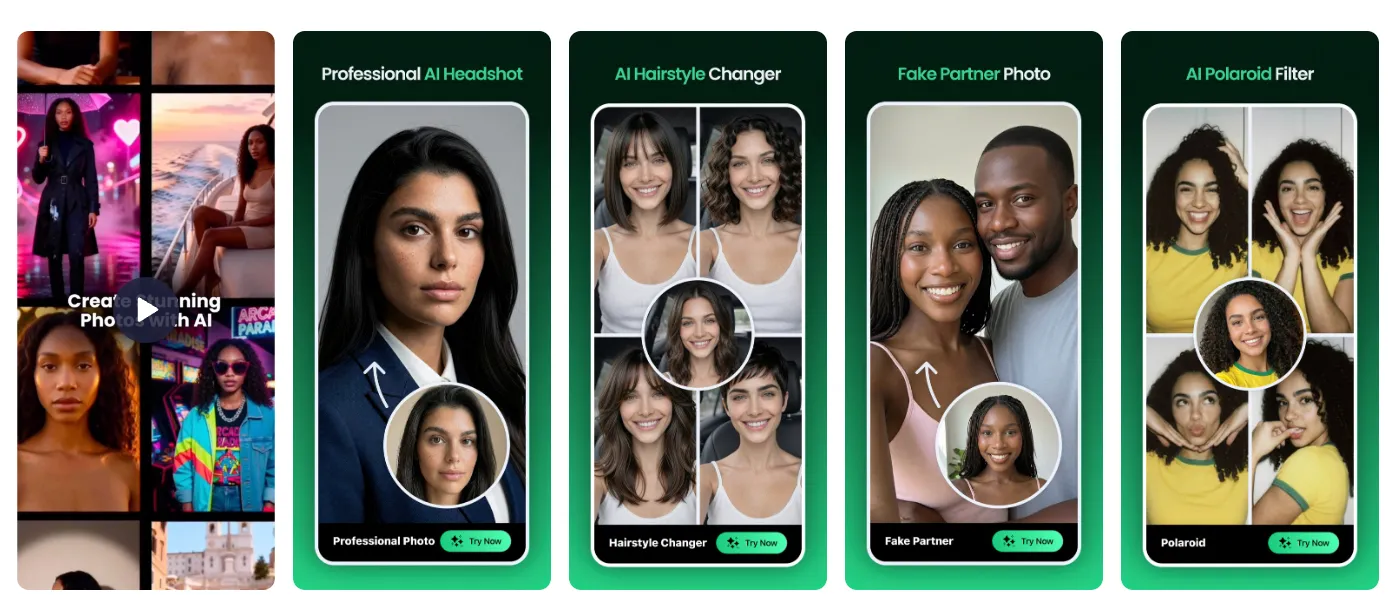
etc.
This process combined:
- Apple Search Ads search term mining,
- ASO keyword insights,
- semantic keyword grouping,
- and CPP iteration.
One of the largest learnings throughout the scaling process was that:
high-intent niche keyword clusters consistently outperformed broader generic traffic.
Intent alignment proved significantly more important than pure search volume.
3. CPP Iteration as an Acquisition System
CPP testing evolved from occasional experimentation into a continuous acquisition workflow.
The team developed:
localized CPPs,

seasonal CPPs (Xmas),

and feature-focused CPPs tailored to specific keyword clusters (e.g. erase object)
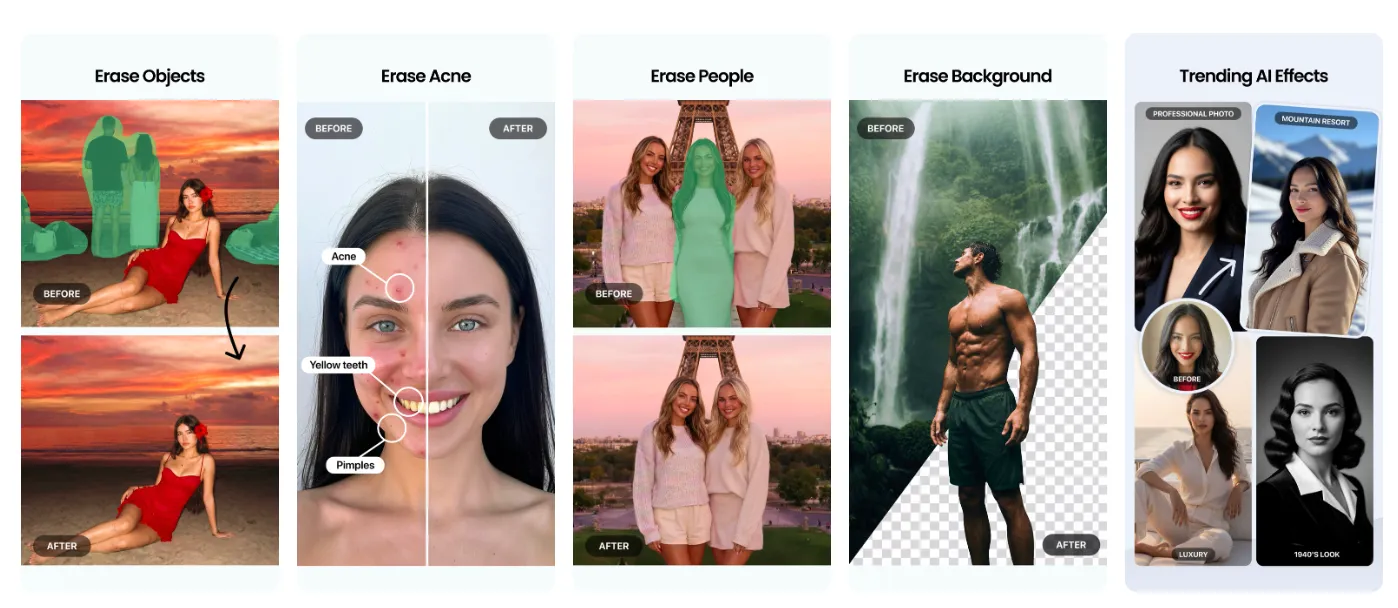
Rather than sending all traffic to a single default product page, CPPs were increasingly aligned with specific user intent.
Example: AI-Focused “Smart Scenes” CPP
A feature-focused CPP showcasing AI-powered Smart Scenes functionality dramatically outperformed the default product page in US branded campaigns.
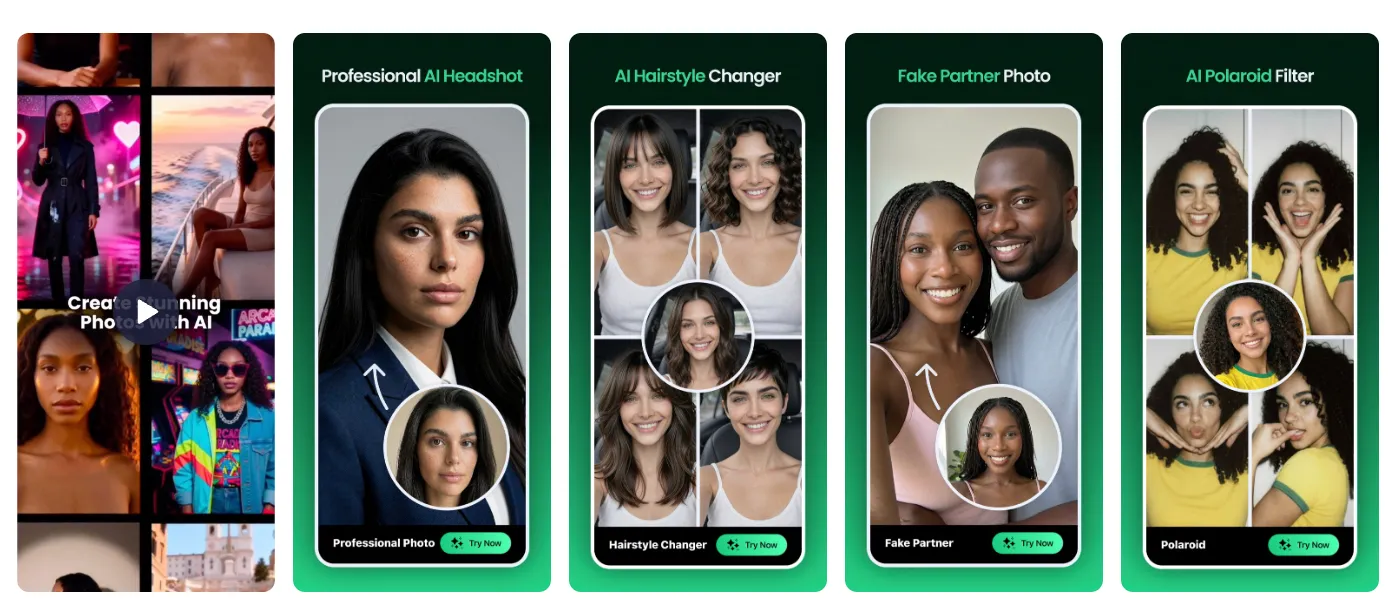
Default Product Page
- CPI: €1.56
- Install Rate: 77.0%
- ROAS: 123.5%
- Cost per Trial: €11.12
Smart Scenes CPP
- CPI: €0.82
- Install Rate: 87.1%
- ROAS: 257.2%
- Cost per Trial: €7.49
Results:
- CPI improved by 47.4%
- ROAS increased by 108%
- Cost per Trial improved by 32.6%
Interestingly, TTR slightly decreased while downstream efficiency improved dramatically.
This reinforced a critical learning:
the highest-clicking CPP is not always the highest-performing CPP commercially.
The strongest CPPs were often the pages best aligned with post-tap user intent rather than the ones generating the highest tap volume.
4. Counterintuitive CPP Learnings
One of the most interesting findings came from CPP testing within UK branded campaigns.
A Christmas-themed CPP generated:

- stronger TTR (+9.9%),
- lower CPI (−24.7%),
- and lower trial-acquisition costs (−14.7%).
However, a Social Proof-focused CPP ultimately produced:
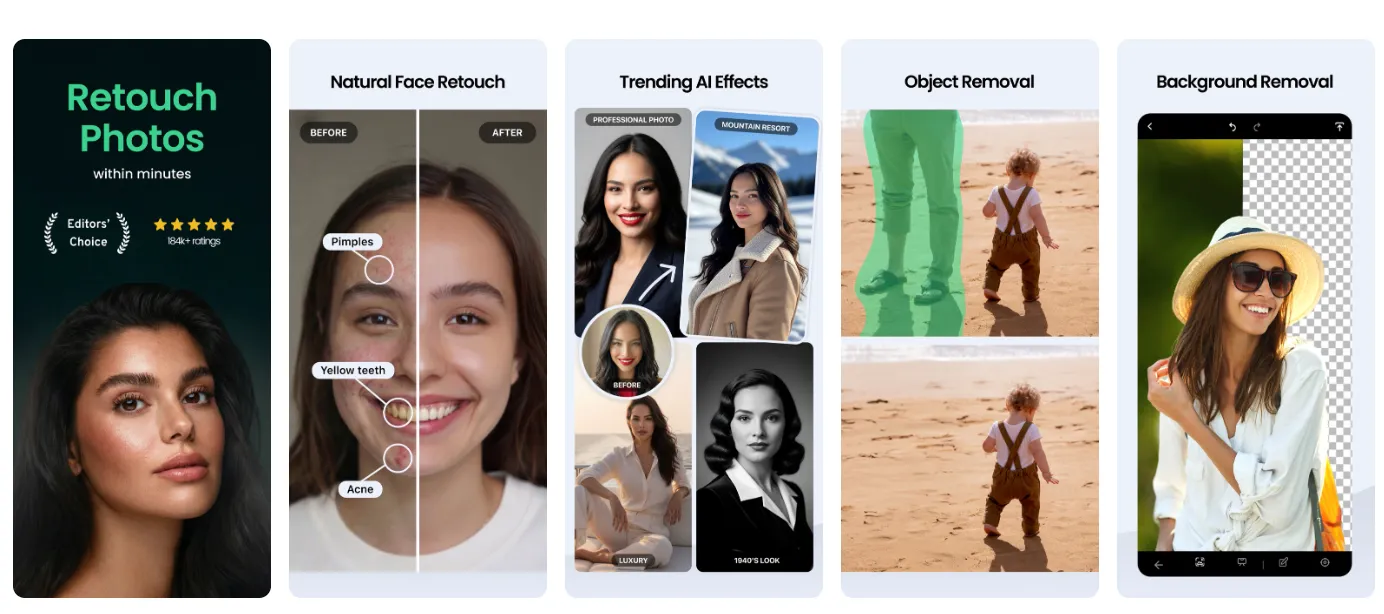
- better downstream conversion quality (download rate +7.3%),
- and higher ROAS (+9.1%).
This reinforced an important operational insight:
optimizing Apple Search Ads exclusively around top-of-funnel metrics can lead to misleading conclusions.
In several cases, the CPPs generating the strongest engagement metrics were not the pages driving the strongest business outcomes.
5. Automation & Operational Scaling
As the account scaled, automation became increasingly important for maintaining efficiency.
Using automation rules, the team implemented workflows to reduce wasted spend and stabilize performance.
Key automations included:
- automatically adding high-spending inefficient search terms as negative keywords,
- pausing keywords when spend exceeded €60 with 0% ROAS,
- increasing bids when branded Share of Voice dropped below 90%,
- and scaling bids for keywords generating 10%+ ROAS.
This operational layer:
- reduced manual overhead,
- improved reaction speed,
- and helped maintain stability while scaling aggressively into non-brand traffic.
6. Max Conversions Rollout
Another major shift came from implementing Apple’s Max Conversions bidding strategy across non-branded campaigns.
Rather than relying exclusively on highly manual bidding structures, Max Conversions enabled:
- broader keyword exploration,
- more scalable generic acquisition,
- and improved operational efficiency.
The beta performed particularly well when paired with:
- tightly segmented keyword clusters,
- CPP alignment,
- and automated search term management.
This became one of the strongest unexpected learnings during the scaling process.
7. ASO + UA Collaboration
One of the biggest operational improvements came from tighter collaboration between the ASO and UA teams.
The workflow evolved into a closed-loop acquisition system:
- ASA search term learnings informed metadata decisions,
- ASO conversion insights informed keyword expansion,
- and CPP learnings influenced screenshot production and creative direction.
The teams worked through:
- bi-weekly syncs,
- shared keyword learnings,
- CPP production coordination,
- and continuous creative iteration.
CPP production and testing velocity increased significantly.
This operational alignment enabled:
- faster iteration cycles,
- stronger intent matching,
- and more efficient discovery of winning acquisition angles.
Results
Comparing Mar 1 – May 15, 2026 vs. Dec 15, 2025 – Feb 28, 2026:
| Metric | Result |
|---|---|
| Spend | +53.3% |
| Revenue | +41.3% |
| Installs | +52.2% |
| CPI | +0.7% |
| Cost per Trial | -21.3% |
| Cost per Purchase | -20.2% |
Meanwhile:
- TTR declined from 28% → 7.64%
- ROAS shifted from 128.5% → 118.9%
However, this decline was expected as the account expanded aggressively into colder non-branded traffic.
Most importantly:
- installs scaled substantially,
- acquisition costs improved,
- and the account became significantly less dependent on branded demand.
Geo-Level Scaling
The US became the primary scaling engine for the new structure.
United States
Results:
- installs increased by 115%
- while Cost per Trial improved by 28%
This demonstrated that our new acquisition methodology was capable of scaling efficiently within the app’s largest market.
Conclusion
Over the past several months, TouchRetouch Apple Search Ads account evolved from a heavily brand-dependent setup into a significantly more scalable acquisition system.
The growth was driven not by a single optimization, but by the combination of:
- intent-based keyword segmentation,
- continuous CPP iteration,
- automations,
- Max Conversions adoption,
- and tightly integrated ASO + UA collaboration.
Most importantly, the account is now structurally positioned for continued growth beyond existing branded demand - creating a healthier and more scalable acquisition foundation long term.