


Michael Bardin
Growth Product Manager at Applica
Leads product optimization at Applica, turning paywalls, onboarding, and subscription flows into controlled experiments for mobile products
LinkedInThe FTC just sued Genesis Tech — the company behind Wisey, Nebula, MadMuscles, PDF Guru, and other apps — over what it calls deceptive subscription funnels. Applica's growth team sits down with subscription lawyer Valeriy Stalirov to make sense of it: how big a deal this really is for app businesses, what users complain about most, and a screen-by-screen teardown of the tactics used — with the compliant version of each.
Growth Product Manager at Applica
Leads product optimization at Applica, turning paywalls, onboarding, and subscription flows into controlled experiments for mobile products
LinkedIn
Founder & CEO at Stalirov&Co
Leads Stalirov&Co, an international IT-law team (US, EU, Ukraine) that keeps app companies onside with App Store, Google Play, and FTC subscription rules. Specializes in the legal layer of monetization — Terms of Use, refund and cancellation terms, auto-renewal disclosures, and payment-flow compliance.
LinkedIn
Host · CEO & Founder at Applica
Founder and CEO of Applica, a mobile growth partner that helps apps worldwide scale through product optimization and performance marketing.
LinkedInOn 29 June, Applica's growth team sat down with subscription lawyer Valeriy Stalirov (Stalirov&Co) to read the FTC's case against Genesis Tech the way an operator would — screen by screen. The finding was uncomfortable: almost every tactic that makes a subscription funnel convert is legal on its own. What turns a funnel into an FTC case is the deception layered atop those tactics.
This is the screen-by-screen version of that session: the deceptive build, exactly where it crosses the line, and the compliant version that still converts.
Three things the session established first:
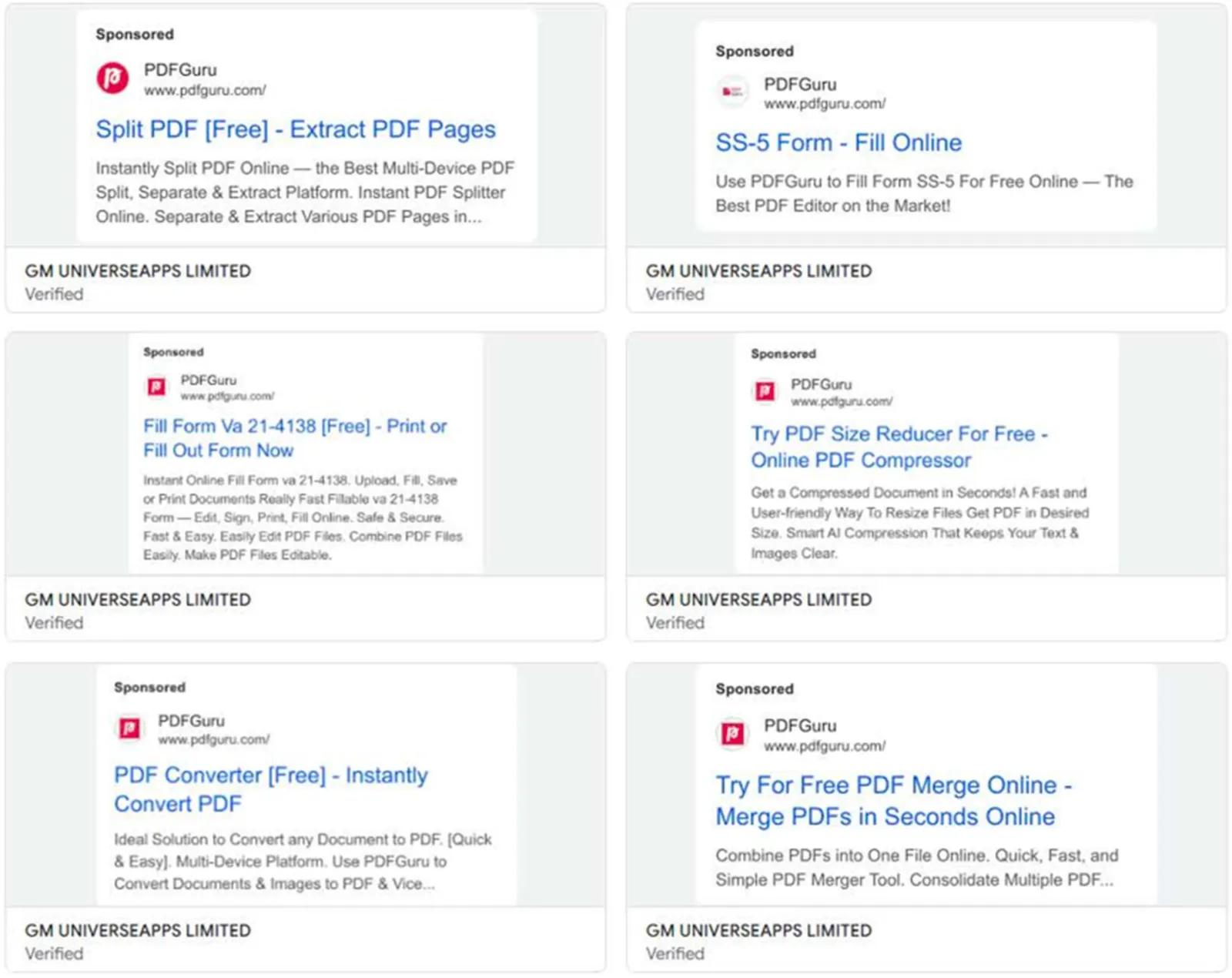
Why it converts — "Free" is the single highest-CTR word in the funnel, and the hook has one job: get the click. Usually it's only partially free — a first taste, one document, a few days — not the actual product. It's true and false at the same time.
Where it crosses the line — Onboarding people on "free" and then charging them under conditions they never clearly agreed to. The subscription terms have to be disclosed up front — not discovered later.
The compliant build — Usually just a copy change: state exactly what "free" gets you — "3-day trial," "one free document" — so what the user is promised is what they actually receive.
Each block below maps to a screenshot pair above, in order (left = deceptive, right = compliant).
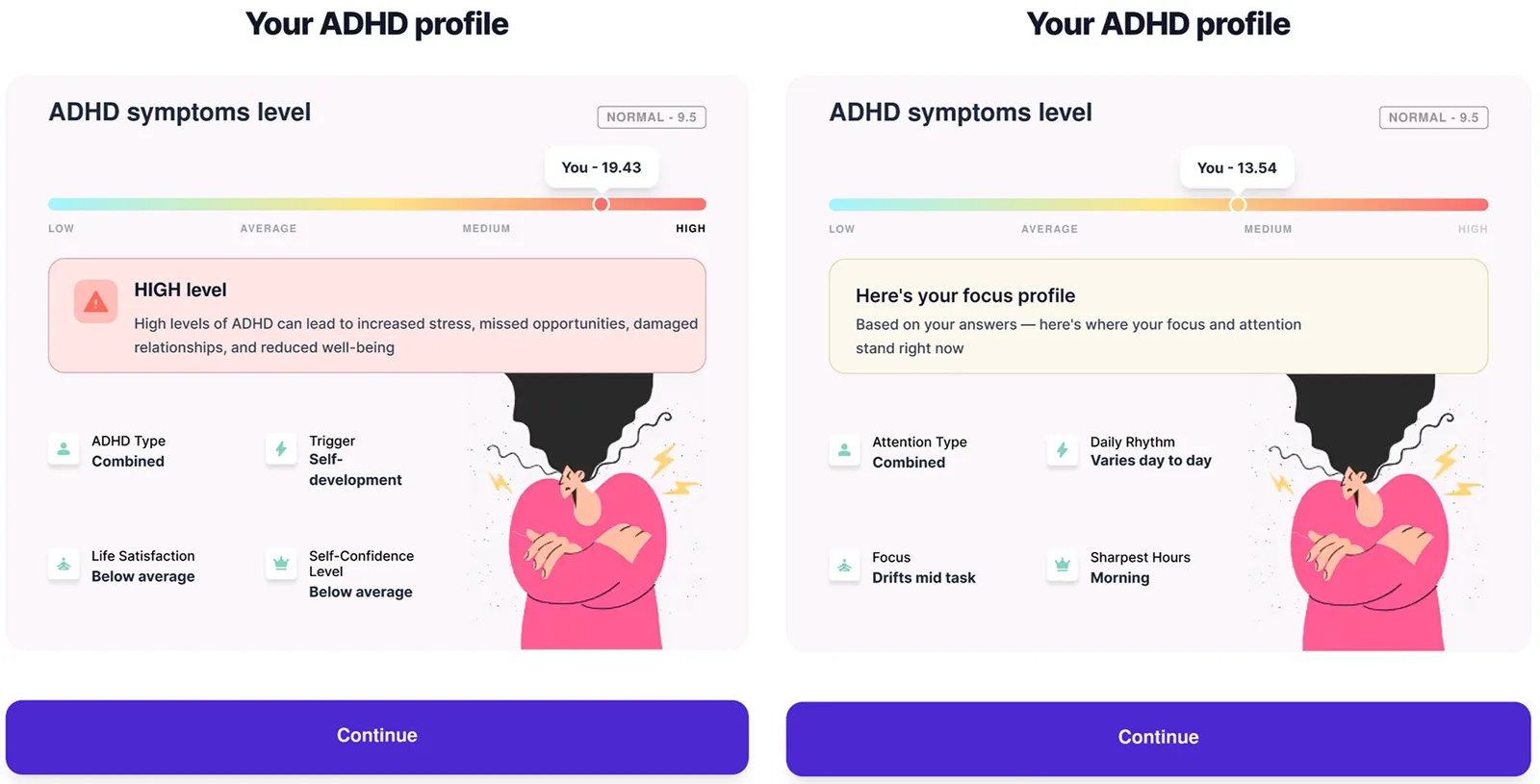
Why it converts — A quiz is an engine for relevance and commitment: you answer questions about your struggles, then a results screen tells you how serious your situation is. Because you've already invested the answers — and just been "diagnosed" — the product feels like the fix.
Where it crosses the line — The result barely moves with your answers: report no symptoms and it still flags "HIGH level ADHD," "life satisfaction below average," "self-confidence below average," in alarm-red. A score that's the same no matter what you enter is a manufactured diagnosis. And the quiz is collecting personal data, which carries its own consent obligations.
The compliant build — Keep the quiz, drop the rigging: reflect the user's real answers back, disclose what the quiz is, and capture consent for the data — so you can actually prove the result and the consent later.
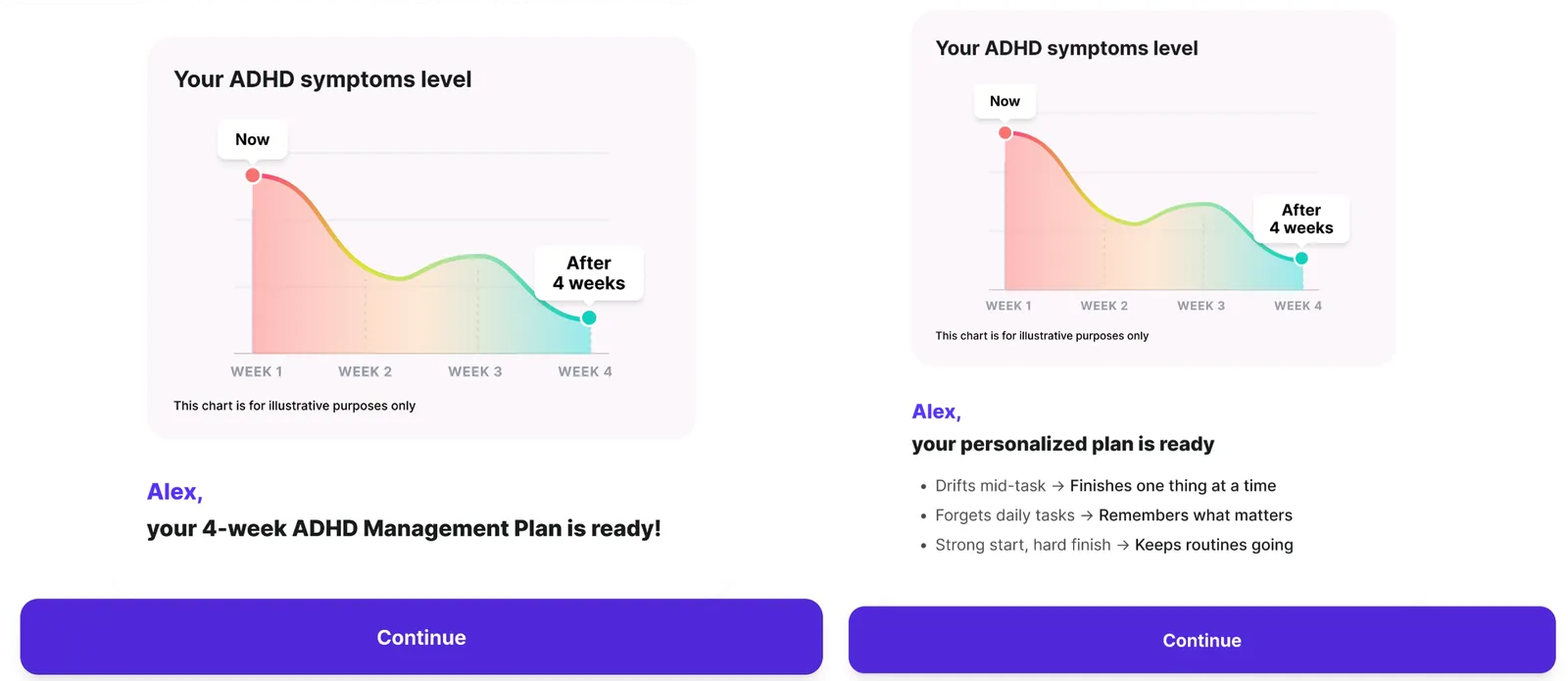
Why it converts — A results screen that connects "your ADHD level is very high" to a specific plan. "Built for you" feels relevant, and relevance is what people pay for.
Where it crosses the line — It's the same made-up output shown to everyone — not really personalized, just a way to convince you the product is the solution. And you shouldn't promise an outcome: showing guaranteed results, progress and achievements is where responsibility, and risk, attach.
The compliant build — Echo the user's own onboarding answers back as a genuine before → after. You can still be clinical and direct — just describe their real inputs instead of manufacturing anxiety. More personal, and true.
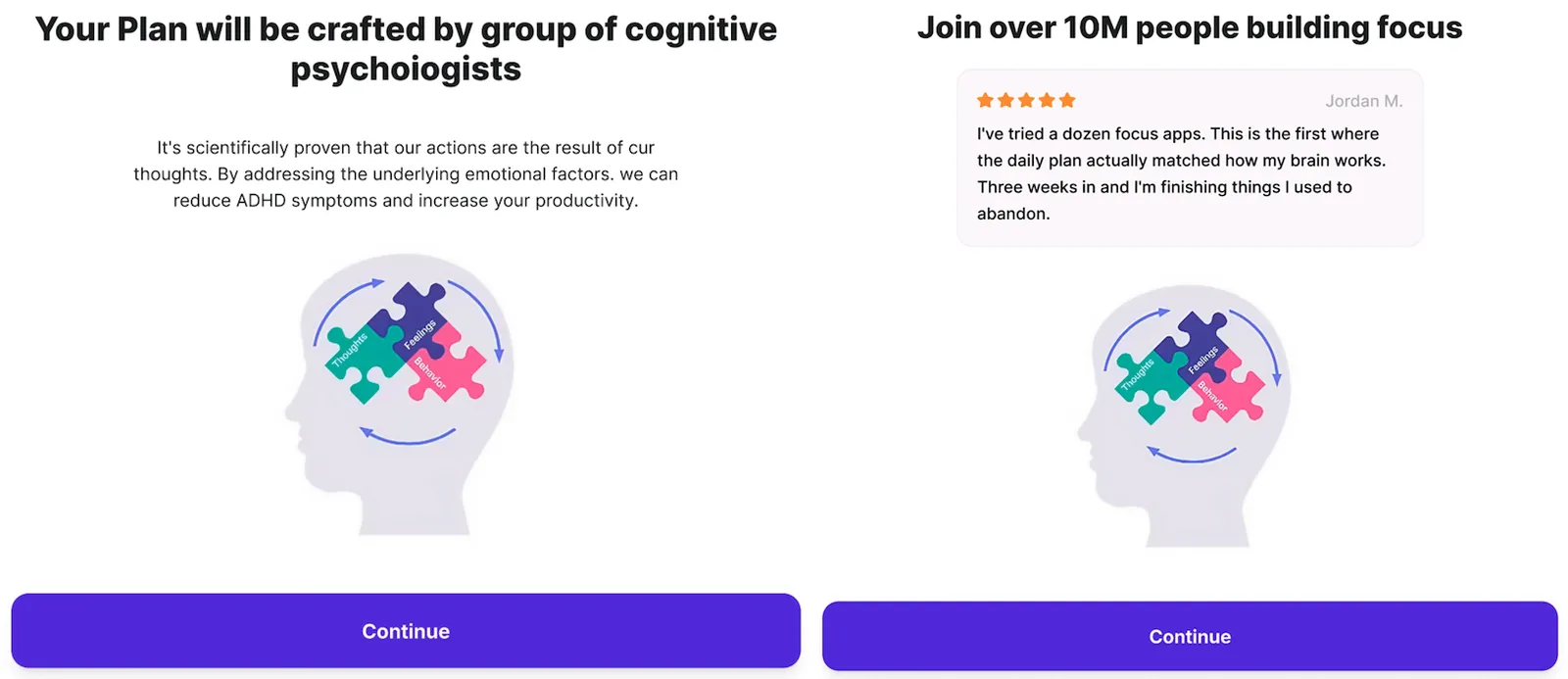
Why it converts — Authority and proof lower perceived risk in the seconds before payment — "crafted by psychologists," "scientifically proven" make people trust the product can fix them.
Where it crosses the line — The claims aren't backed — no citation, no study. You have to be able to evidence a claim; using proof you can't support, just to catch attention and push the next tap, is deception.
The compliant build — Scientific proof isn't the only trust lever, and often not the best — real social proof ("join 10M+ users," genuine reviews) can outperform it. Another strong option is founder-led trust: onboarding told in the founder's own voice, explaining why they built it — credibility without faking evidence.
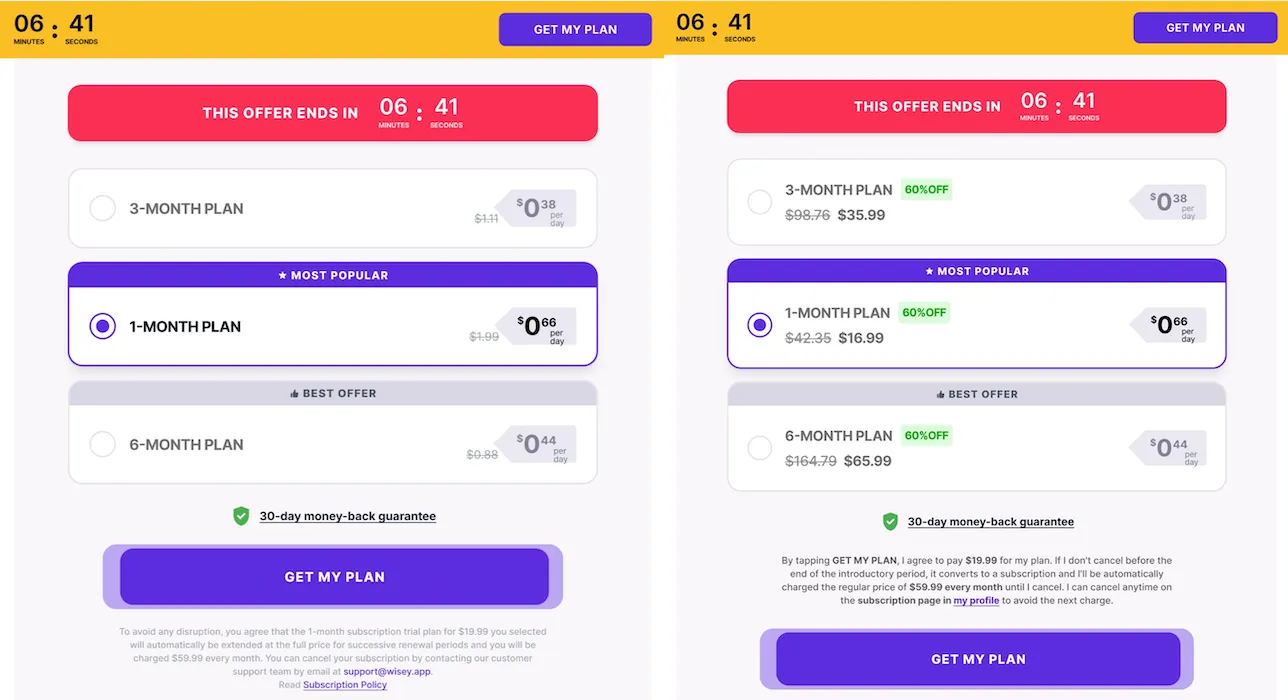
Why it converts — The most important screen, so it carries the most manipulation at once — a per-day price (you're actually paying far more), the rebilling fact buried in the smallest grey text that blends into the background, and a countdown timer.
Where it crosses the line — Two specific moves. The renewal terms sit below the CTA, so you can tap "Get my plan" without ever seeing them — you assume they'll show up later; they never do. And the timer is fake: when it hits zero, nothing changes. A price that renews or changes without the user's notice and consent violates both ROSCA and the app stores.
The compliant build — Keep the urgency — a real timer and a limited-time offer are perfectly fine. The fix is transparency: full price and renewal terms above the CTA, a timer that genuinely ends, and the conditions one tap away. Mostly a layout change, not a conversion killer.

Why it converts — Spin-to-win adds uncertainty, so a discount you "win" feels more valuable than the same number simply handed to you.
Where it crosses the line — The wheel always lands on the same prize — not a gamble, a fixed outcome dressed as luck. Countdown and limited-time offers themselves aren't forbidden — the problem is only when they're paired with auto-renewals or charges the user didn't agree to.
The compliant build — Keep the gamified reveal, lose the lie: a "scratch to reveal today's offer" where the user uncovers a real discount. Same feeling of earning it. Discounts are good marketing — the fix is to make the game real, not to drop it.
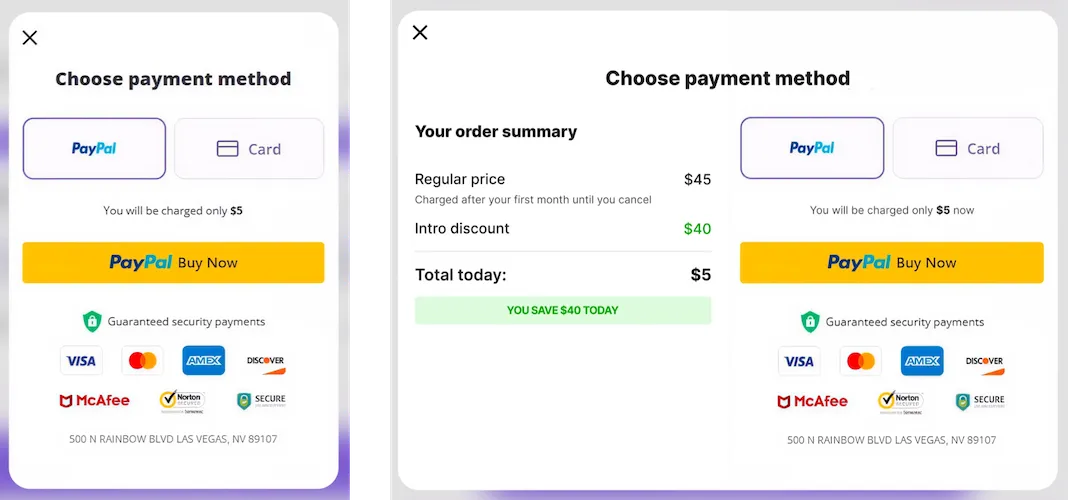
Why it converts — A low first charge — "you'll be charged only $5" — makes the commitment feel tiny and reversible.
Where it crosses the line — The checkout hides the real renewal: $5 now, then ~$50 on the next cycle. This is the core of the Genesis case — charging or changing the recurring amount without the user's approval was the main violation and the reason for the fine. On 3- vs 7-day trials: roughly a 3-day minimum is fine — short auto-converting trials are acceptable ifthe conversion is clearly disclosed.
The compliant build — You're obliged to show the full renewal price — so label it "regular price," keep it visible, and pair it with a genuine intro discount so the first charge still feels low-commitment. You disclose everything you must, and the $5 still converts.
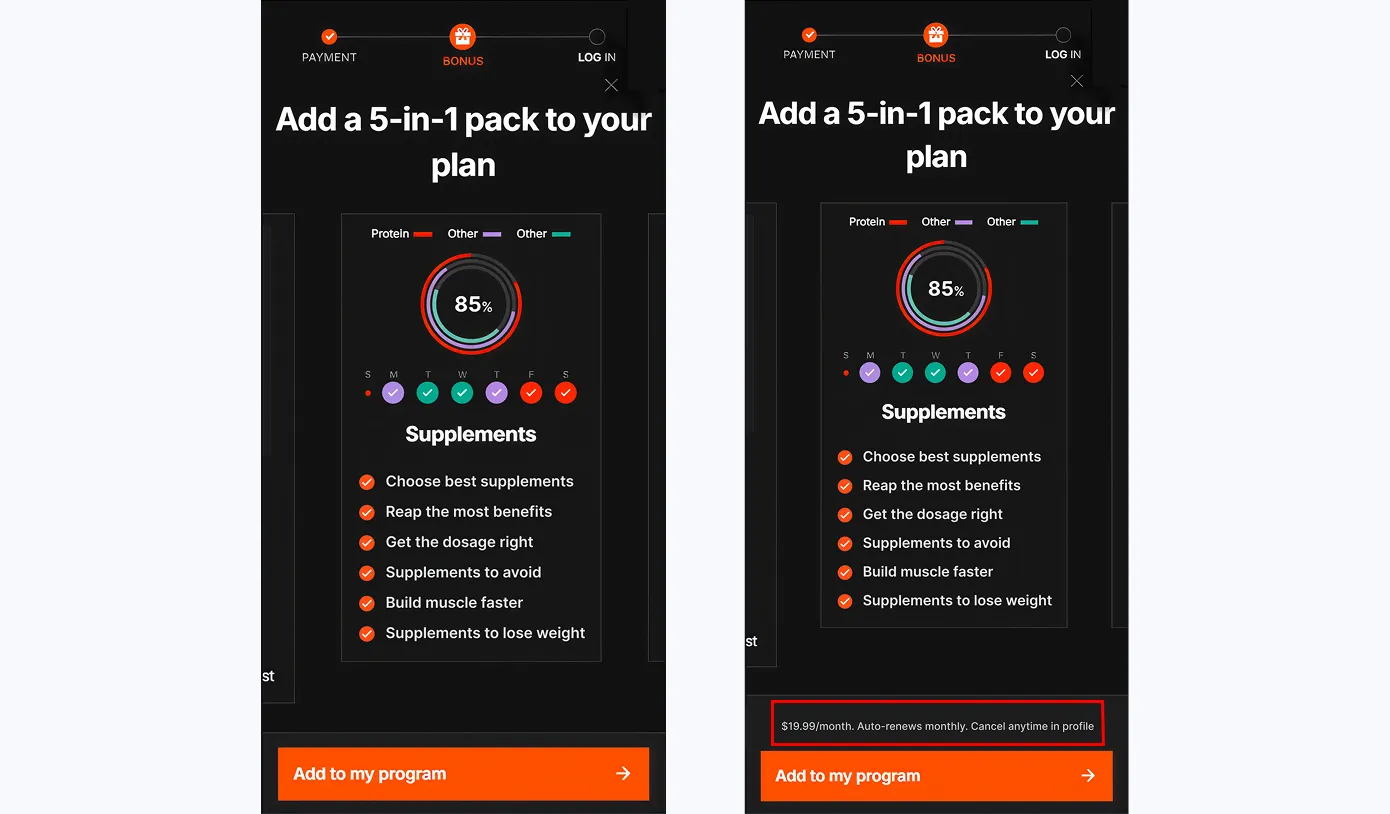
Why it converts — The highest-intent moment — the user just paid, so one tap to add is the easiest extra sale you'll make. The screen frames the add-ons as a value pack.
Where it crosses the line — The add-on's price is hidden. Every separate charge needs its own consent — an upsell taken without a clear request leaves you no evidence you were authorized. One purchase, one approval.
The compliant build — Show the add-on's full terms ("$X/month, cancel anytime in profile") on the offer, and add a checkbox: one extra tap that gives you provable consent. You still sell the people who actually want it.
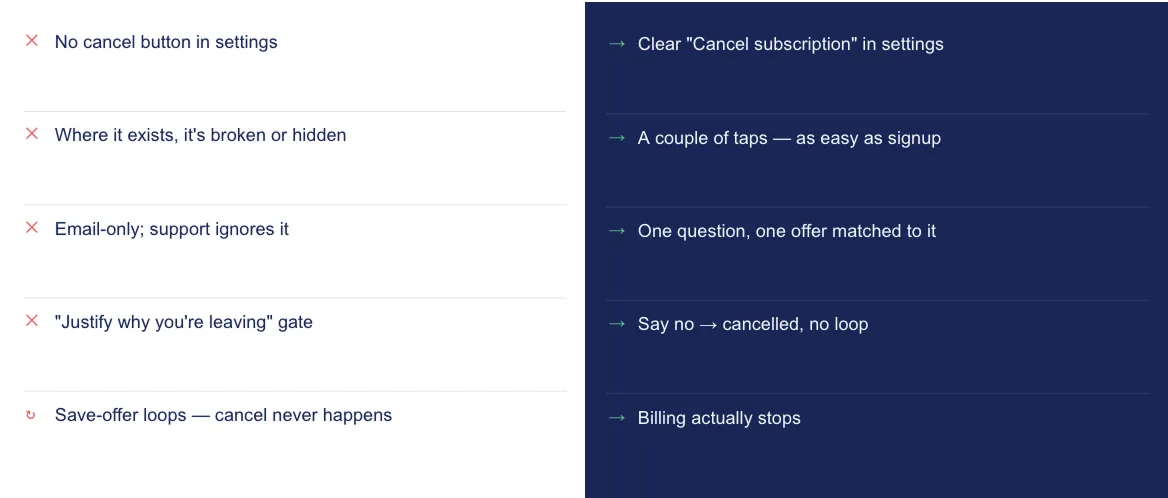
The maze (deceptive) — No cancel button, or it's buried behind tabs; several entry points where the visible one is broken and only a hidden one works; refunds by email only; and "why are you leaving?" flows that loop unless you pick the exact path out.
Where it crosses the line — Cancellation is the hardest part to get right — refusing valid cancellations without reason breaks the rules, and the complaints stack up in the App Store, Play Store and at the FTC. It has to be at least as easy to cancel as to enroll, and billing has to actually stop. Auto-refunding every complaint is good for goodwill but bad for revenue — better to review each within about three days. And a refund that comes back in ten minutes is a sign the operator gets these constantly.
The compliant build — A clear "Cancel" in settings, same channel as signup. The growth-safe version: when someone starts to cancel, reflect the value they've already gotten (a fitness app showing completed workouts) and offer one real, matched discount only if they say it's about price — which lowers churn without trapping anyone.
The screens are the front end; the back end is documents and ownership.
The core set: Terms of Use and a Privacy Policy (covering the subscription model, cancellation, refunds and user rights), plus subscription / auto-renewal terms and a refund policy. Two warnings: generating these in ChatGPT with no legal review, or copy-pasting a competitor's, is irresponsible — they have to match your actual product, payouts and cancellation flows, or you risk losing App Store / Play Store approval.
Collecting health, body, or biometric data puts you in a special category, with US rules and GDPR both in play. Separate the data you may collect from what you may not, get explicit permission, and spell out in the privacy policy what you collect, why, where it's stored and who it's shared with. Above all, minimize: the less sensitive data you hold, the less liability you carry.
Run your own funnel against these:
The funnel still converts — it just stops manufacturing the refunds, chargebacks and liability that were never real revenue. Pick one thing to fix this week. Want a second pair of eyes? Applica runs growth + compliance teardowns of subscription funnels, and Stalirov&Co audits apps and prepares the documents above.
Educational recap of a publicly filed complaint; allegations unproven; not legal advice.
The latest mobile growth insights will be
delivered straight to your inbox