CRO vs Paywall Optimisation vs Product Optimisation: What's the Difference (and Which One Do You Need)?
A subscription app founder takes three discovery calls in the same week. The first agency pitches "Conversion Rate Optimisation." The second tool "paywall optimisation." The third consultant "product optimisation." Each one describes work that overlaps with the other two — A/B testing, funnel analysis, lifts in trial conversion or average revenue per user (ARPU) — but the engagement scopes, prices, and outcomes don't line up. The founder is left comparing quotes that aren't measuring the same thing.
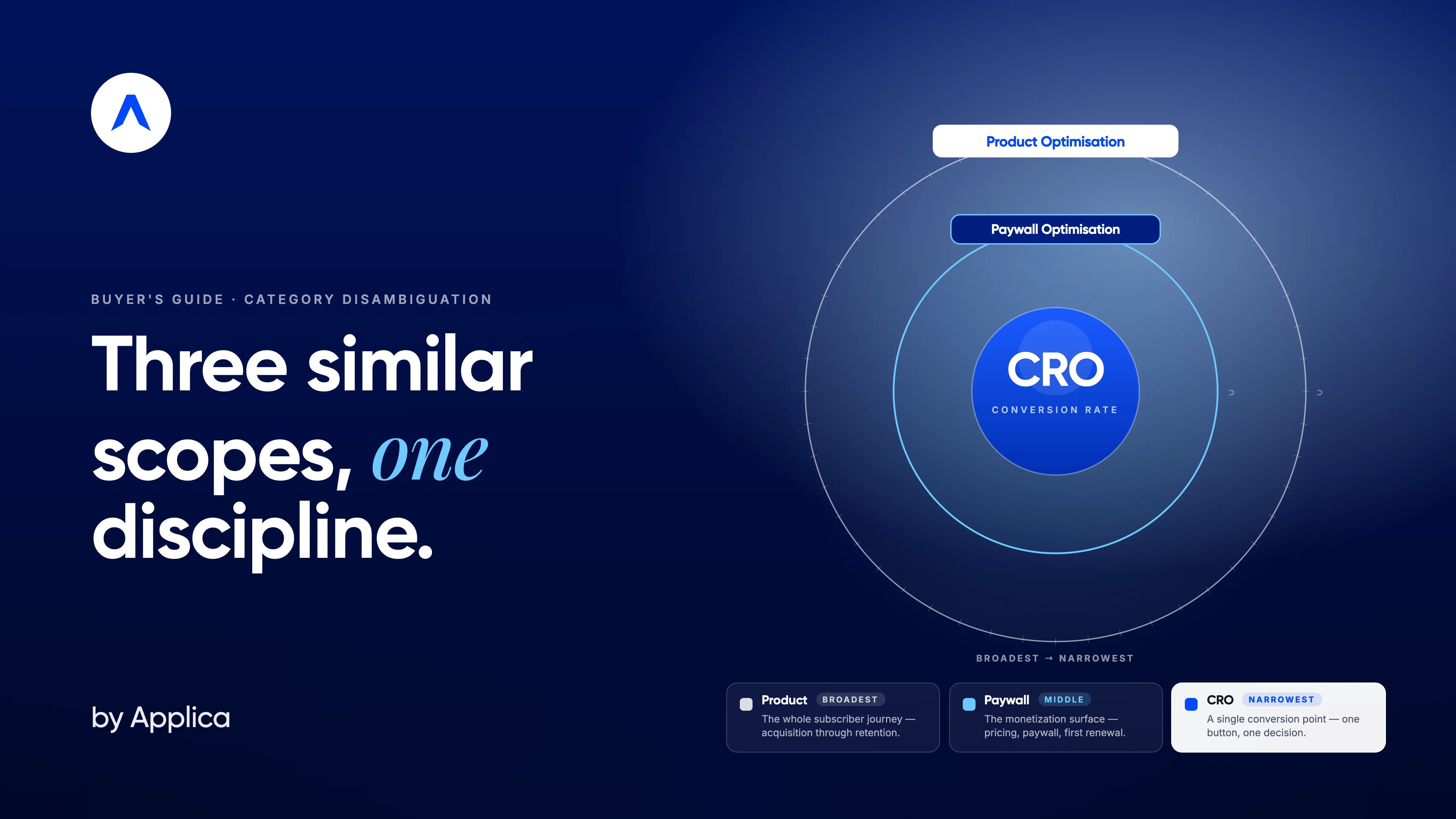
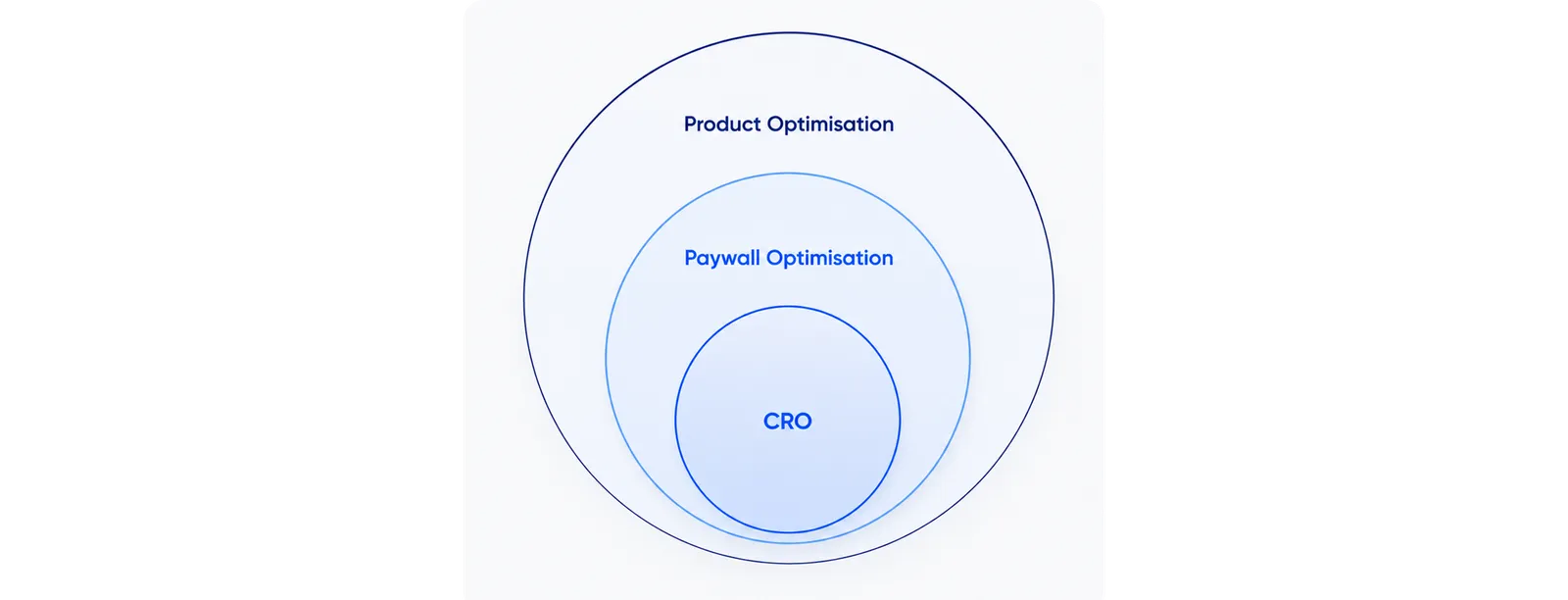
This piece exists to fix that. The three terms aren't synonyms, and they aren't competing services either. They describe three nested scopes of the same broader discipline: narrowest is CRO, in the middle sits paywall optimisation, and the widest is product optimisation. The procurement question isn't which one to pick — it's how much of the funnel the engagement needs to cover before the bottleneck is actually solved.
What follows is a plain-English breakdown of each scope, a side-by-side comparison, and a decision tree for which scope a subscription app should buy right now.
Why these three terms get confused (and why scoping the wrong one is expensive)
The overlap is real. All three disciplines lean on A/B testing as the validation method. All three touch the subscription funnel somewhere between install and revenue. All three promise lift in numbers that show up on the same dashboards — trial starts, paid conversions, ARPU, lifetime value (LTV). Walk into any vendor's website and the deliverables sound interchangeable.
The confusion comes from three sources at once. Tooling vendors collapse the terminology because their products serve more than one scope — Superwall, Adapty, and RevenueCat sell paywall infrastructure, but the marketing language reaches for the broader "CRO" or "growth" frame to widen the buyer pool. Agencies position themselves toward whatever the buyer typed into Google — the same agency may describe itself as a "CRO partner" on one landing page and a paywall specialist on another. And the terms carry different heritage: CRO is a web-marketing discipline imported into mobile, while paywall optimisation is mobile-native — so the same word means slightly different things depending on where the practitioner started their career.
The procurement cost shows up later. Scope a paywall engagement when the real leak is in onboarding, and the paywall lift will land — but the trial-to-paid number won't move, because trial-quality wasn't the problem. Hire a CRO specialist for a single screen when the funnel needs end-to-end work, and the engagement ends with a 12% lift on one number while LTV stays flat. Neither agency did bad work. The scope was simply wrong for the problem.
What is CRO (Conversion Rate Optimisation)?
Conversion Rate Optimisation (CRO) is the practice of lifting the percentage of users who take a defined action at a defined point in the funnel. It is the narrowest of the three scopes — a specific conversion point, a specific intervention, a specific lift target.
CRO has web roots that predate mobile entirely. The discipline emerged from e-commerce in the early 2000s, after the dot-com bubble forced marketing teams to defend their spending with measurable outcomes. The methodology was built for a specific surface — a landing page, a checkout flow, a signup form — and the early tooling reflected that origin.
When CRO moved into mobile, it split into two distinct surfaces that share a name but require different work. Store-listing CRO covers everything that happens before the install — icon, screenshots, preview video, the App Store or Google Play product page. In-app CRO covers everything after the install — onboarding screens, paywall, signup flow, purchase confirmation. The two share statistical methodology and tooling philosophy, but they have different practitioners and different time-to-impact horizons.
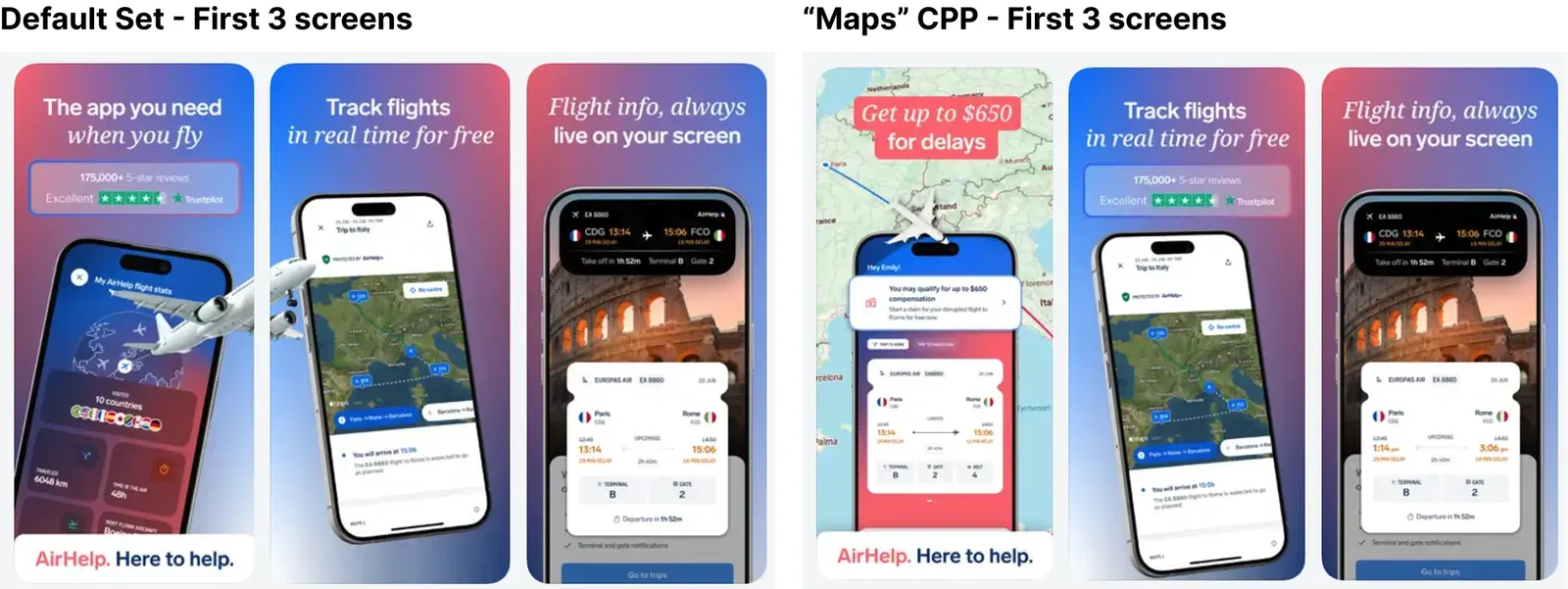
The metrics CRO answers to are point-conversion metrics: click-through rate, install rate, trial start rate, screen-to-screen drop-off. The work is iterative, hypothesis-driven, and statistically validated. The discipline's best practitioners increasingly frame CRO as a learning system rather than a winner-finding game — the goal of any individual test is to add to a body of knowledge about how users behave on a specific surface, not just to crown a winning variant.
Who does it: CRO specialists, growth marketers, and product designers — often hired as freelancers or as specialists inside a broader product team. Mobile-specific CRO practitioners pull in behavioural analytics tools to map session-level interactions alongside the statistical layer, since mobile surfaces don't offer the heatmap-and-form-analytics depth that web CRO has had for two decades.
What is paywall optimisation?
Paywall optimisation is the middle scope — broader than a single conversion point, narrower than the whole funnel. It is a specialised subset of in-app CRO focused on the screens and decisions that govern monetisation: the paywall surface itself, plus the few choices immediately around it (placement, trigger, plan structure, trial length, pricing display).
It earns its own name because the paywall is structurally different from any other screen in a subscription app. Day 0 dominates trial starts and paid conversions almost everywhere — across categories, 80–89% of trial starts happen on the day of install, and roughly half of all paid conversions follow the same pattern. The paywall is the single highest-leverage surface in most subscription apps because the conversion decision happens once, fast, and rarely gets reconsidered.
Scope is tighter than CRO but deeper. A paywall engagement typically covers: paywall design and copy, plan structure (weekly, monthly, annual, lifetime), trial mechanics, pricing displays and decoy effects, the trigger that surfaces the paywall, and the position of the paywall in the user journey. Recent benchmark data shows the gap between best- and worst-performing paywall configurations runs as high as 636% on LTV — no other single surface in a subscription app carries that range, which is what justifies the specialised focus.
The metrics are monetisation metrics: paywall view rate, paywall-to-trial conversion, trial start rate, trial-to-paid conversion, and ARPU. Recent paywall guides from established practitioners emphasise that paywall improvements compound only when the testing programme is structured, not sporadic — one consultant working on the Mojo app reported a 60% ARPU lift over five months from sustained paywall experimentation.
The most counter-intuitive finding from the 2026 benchmark data is that paywall design — the visual surface most teams instinctively start with — is the last variable that should be tested. The structural decisions (placement, plan mix, trial mechanics) carry far more weight, and most apps have never deliberately tested any of them.
Who does it: in-house product or monetisation teams using tooling like Superwall, Adapty, RevenueCat, or Purchasely; paywall-specialist agencies; or product optimisation agencies as one component of a broader engagement. For teams wanting to go deeper on the design layer specifically, Applica Agency has published a longer reference on mobile paywall design best practices and a separate comparison of the major subscription paywall tooling options.
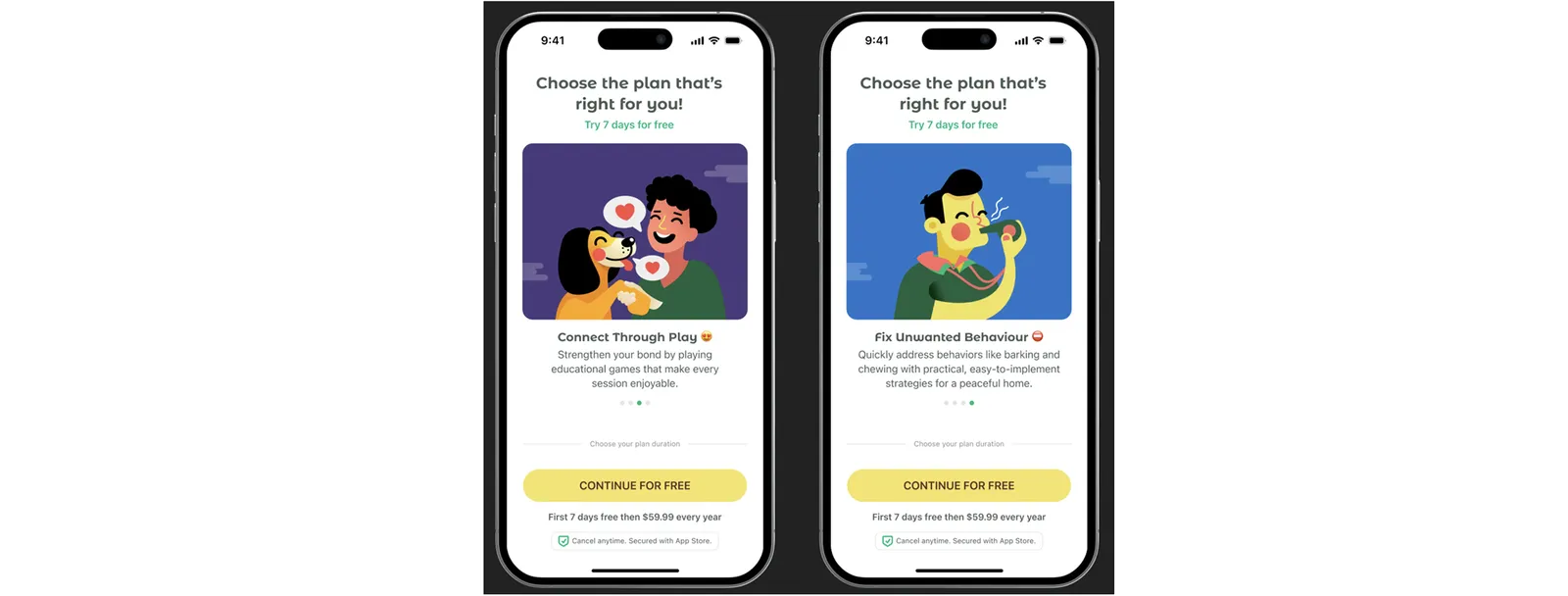
A concrete example. For Dogo — a dog training app — a paywall-focused engagement lifted ARPU by 13%, with most of the gain coming from clearer value communication on the paywall before the pricing was shown. That win is paywall optimisation in its cleanest form: one surface, one structured testing cycle, one revenue metric moved.
What is product optimisation?
Product optimisation is the broadest of the three scopes — the operating discipline that contains CRO and paywall optimisation as components inside it. It is the practice of lifting LTV and annual recurring revenue (ARR) by optimising the entire subscription user journey: acquisition message fit, onboarding, activation event, paywall, trial design, retention, renewal mechanics, and the cohort-and-channel-level analysis that ties them together.
The defining difference from the other two scopes is what counts as the unit of optimisation. CRO optimises a conversion point. Paywall optimisation optimises a monetisation surface. Product optimisation optimises a subscriber's compounding economic value across their entire lifecycle. That changes the work: it isn't just more tests, it's a different prioritisation logic — a paywall test that wins on trial-to-paid but suppresses Day 7 retention is a loss at the product optimisation level, even if it's a win at the paywall level.
The reason the broader scope exists at all is that subscription metrics are deeply interconnected. Retention compounds into LTV directly; small lifts in Day 7 retention extend the curve and raise lifetime value disproportionately more than equivalent lifts at the top of the funnel. And the relationship between acquisition channel, paywall, and retention isn't symmetric: the 2026 subscription benchmark data shows hard paywalls converting roughly 5x better than freemium at Day 35, while freemium's one-year retention lands within a percentage point of hard-paywall apps — which means the "right" monetisation model depends on whether the team is optimising for fast conversion or long-tail revenue.
Scope, in practical engagement terms: acquisition signal fit (does the marketing match the product?), onboarding restructure, activation event definition, paywall optimisation as a sub-component, trial mechanics, retention loops, renewal mechanics, and the analytics infrastructure that lets the team read the whole picture without sources disagreeing.
The metrics are compounding metrics: LTV, ARPU over time horizons (D30, D90, D360), ARR, retention curves by cohort, and the LTV-to-CAC (customer acquisition cost) ratio that determines whether the business can profitably scale acquisition.
Who does it: product growth teams, product-led-growth specialists, and full-cycle agencies that combine product, design, analytics, and testing inside one engagement.
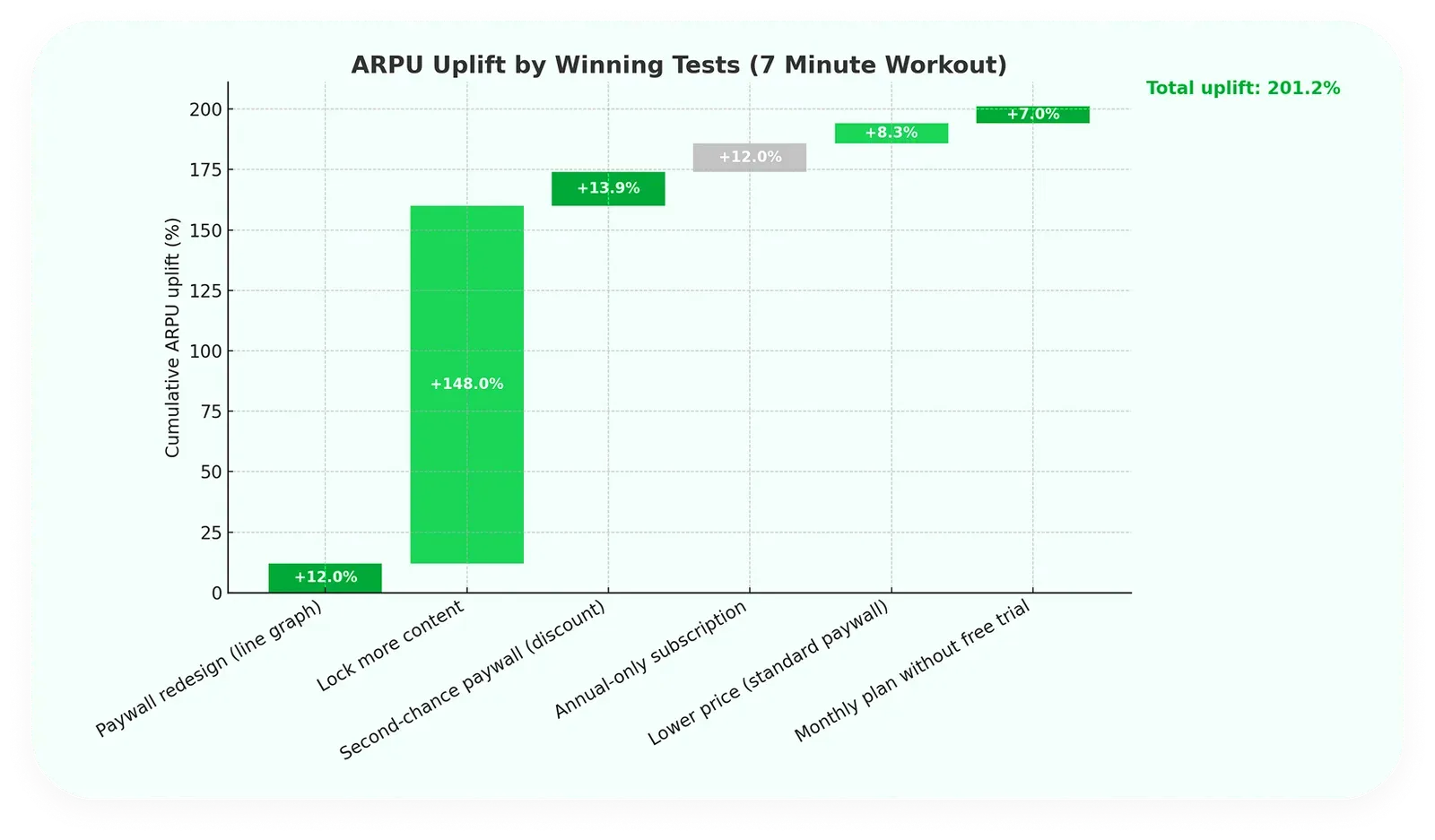
A concrete example. For 7 Minute Workout, a structured testing programme across onboarding, paywall, and retention lifted ARR by 50%. The engagement ran 27 hypotheses, of which six produced shippable wins — a 22% win rate that compounded across the funnel rather than landing on a single surface. That is product optimisation in its cleanest form: every layer of the subscriber journey treated as part of the same operating system, with the prioritisation logic answering to revenue, not to any one screen.
Side-by-side comparison
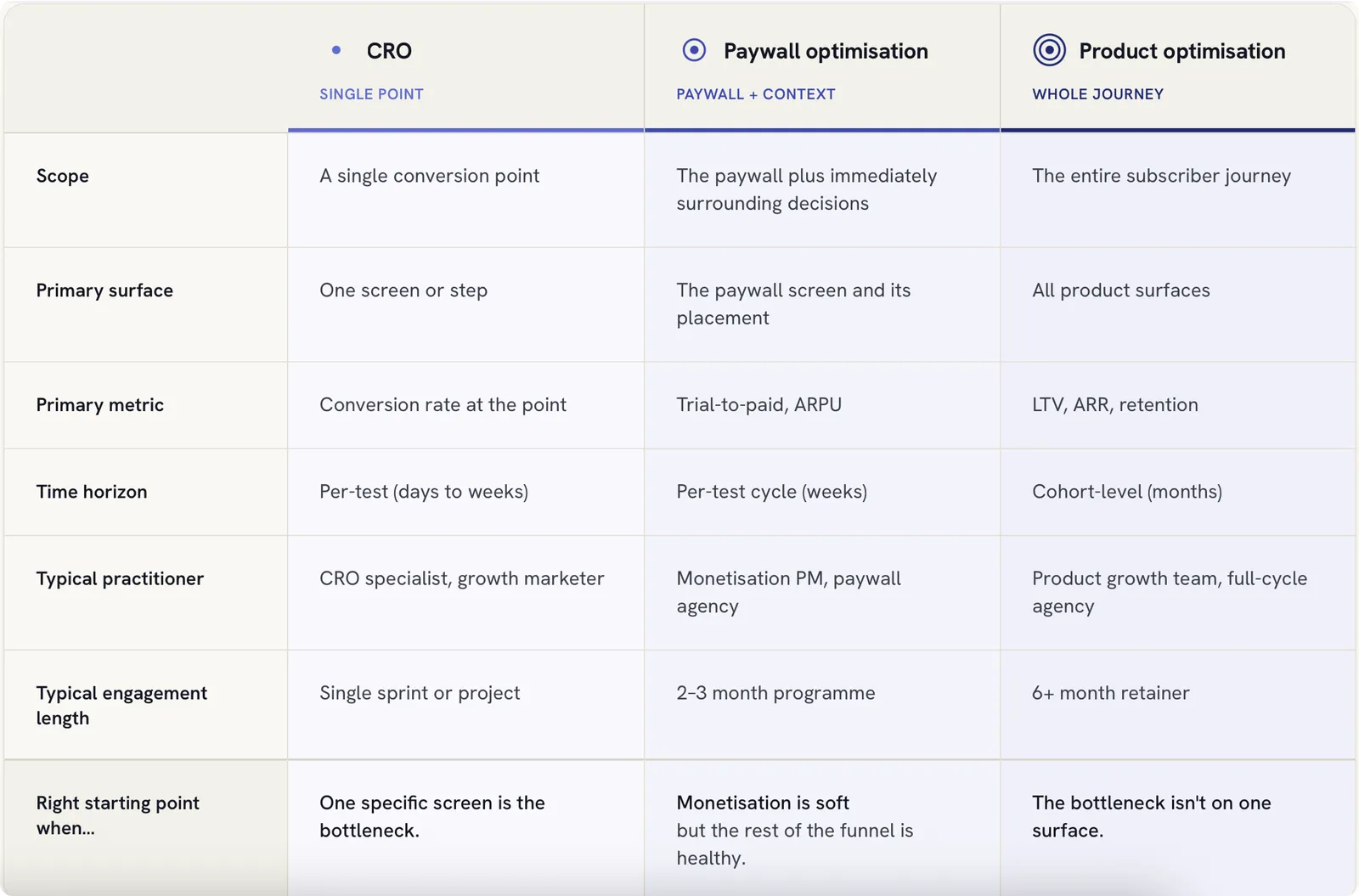
Across the broader industry framing, this scope nesting is sometimes presented as a "subscription stack" where CRO sits inside lifecycle optimisation and paywall work sits inside CRO — different naming, same underlying logic.
When do you need each?
When is CRO alone the right scope?
CRO alone is the right starting point when the bottleneck is genuinely on one surface, and the rest of the funnel is healthy enough that fixing that one surface meaningfully moves the business. Common cases: a store listing with healthy traffic but a sub-20% impression-to-install rate; an in-app signup flow with a known abandonment screen; a single screen that prior testing already flagged as a high-leverage candidate.
CRO is also the right scope when budget or organisational scope doesn't extend further. A single-screen engagement with a clear hypothesis can produce a real lift in three to six weeks, and that's a defensible use of a small budget. The risk is mistaking a CRO engagement for a complete solution when the actual problem lives elsewhere in the funnel.
When is paywall optimisation the right starting point?
Paywall optimisation is the right starting point when the app has healthy upstream traffic and onboarding, but monetisation is underperforming benchmarks. Concretely: trial start rates below category median, trial-to-paid below 25%, ARPU flat over multiple quarters, or pricing untested in 12+ months.
It is also the right starting point when the team has paywall tooling in place but hasn't built a structured testing programme on top of it. Most teams in this position have run two or three ad-hoc paywall tests and concluded "we tested paywalls already" — but a 60% ARPU lift, like the one the Mojo case reports, requires a sustained programme, not a handful of one-off experiments.
When do you actually need product optimisation?
Product optimisation is the right scope when the bottleneck doesn't sit on one surface — or when the team has already optimised individual surfaces and the business metric isn't responding. Specifically: paywall tests with diminishing returns, LTV growing slower than ARPU, growth plateaus that traverse the funnel rather than concentrating in one place, or the suspicion that acquisition is bringing the wrong users to a product designed for someone else.
It is also the right scope when there's a structural mismatch between acquisition and product. A paywall lift won't fix users who shouldn't have installed in the first place. A retention loop won't fix users who never activated. When the underlying problem is funnel-shape rather than surface-performance, the broadest scope is the only one that can read the whole picture.
A final note on signposting: these are starting points, not final scopes. A good diagnostic phase often re-scopes the work — what looked like a paywall problem turns out to be an onboarding problem, or what looked like a retention problem turns out to be acquisition-channel-mix.
How Applica's product optimisation engagements include CRO and paywall work as components
Applica operates at the broadest of the three scopes — product optimisation — with CRO and paywall work delivered inside the same engagement when they're the right intervention for the problem. The operating sequence is consistent across clients: a diagnostic phase that reads the full funnel and identifies where the actual bottleneck lives, a prioritisation framework that turns 50+ hypotheses into a quarterly testing roadmap, and a disciplined testing programme with pre-defined ship-or-scrap decision rules.
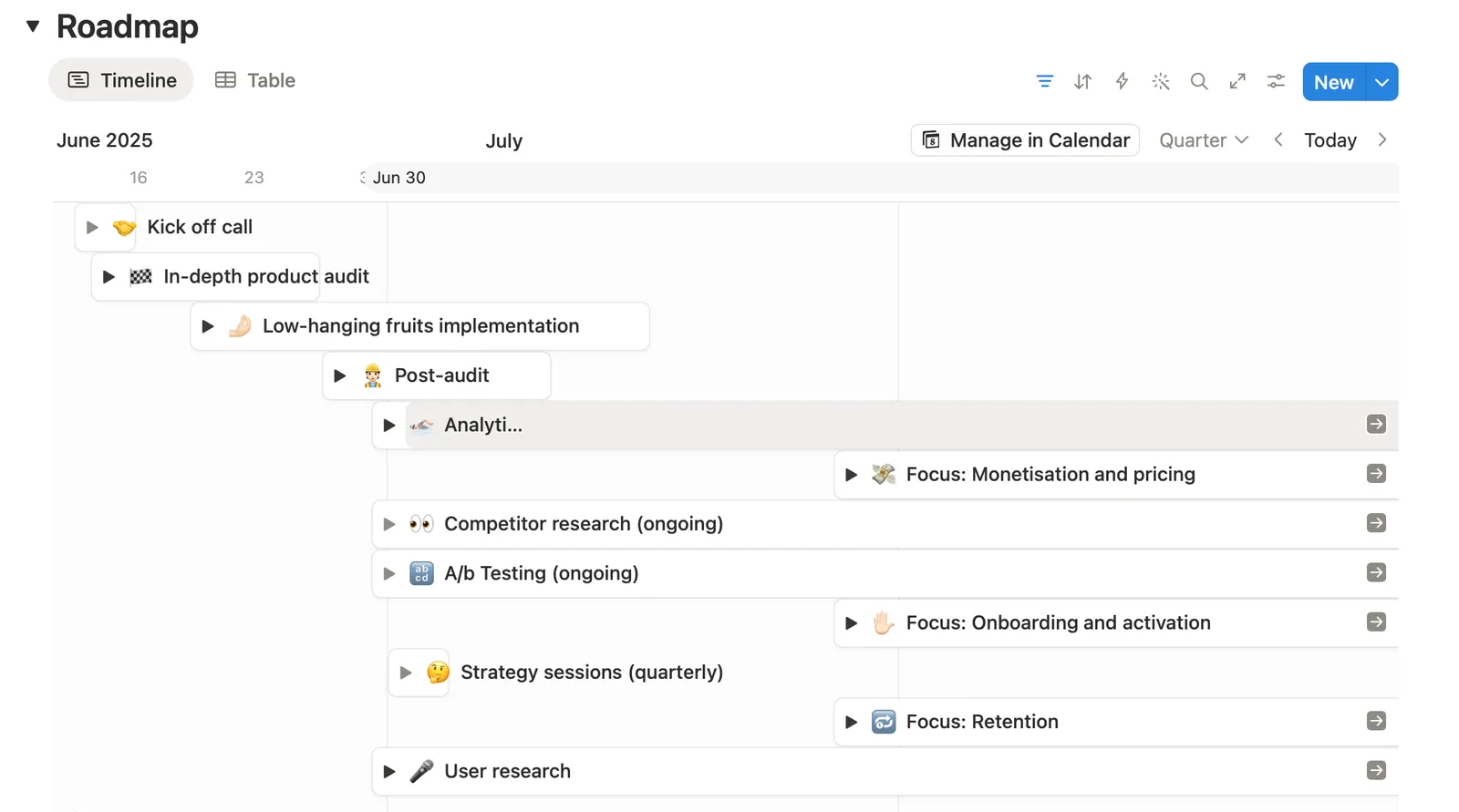
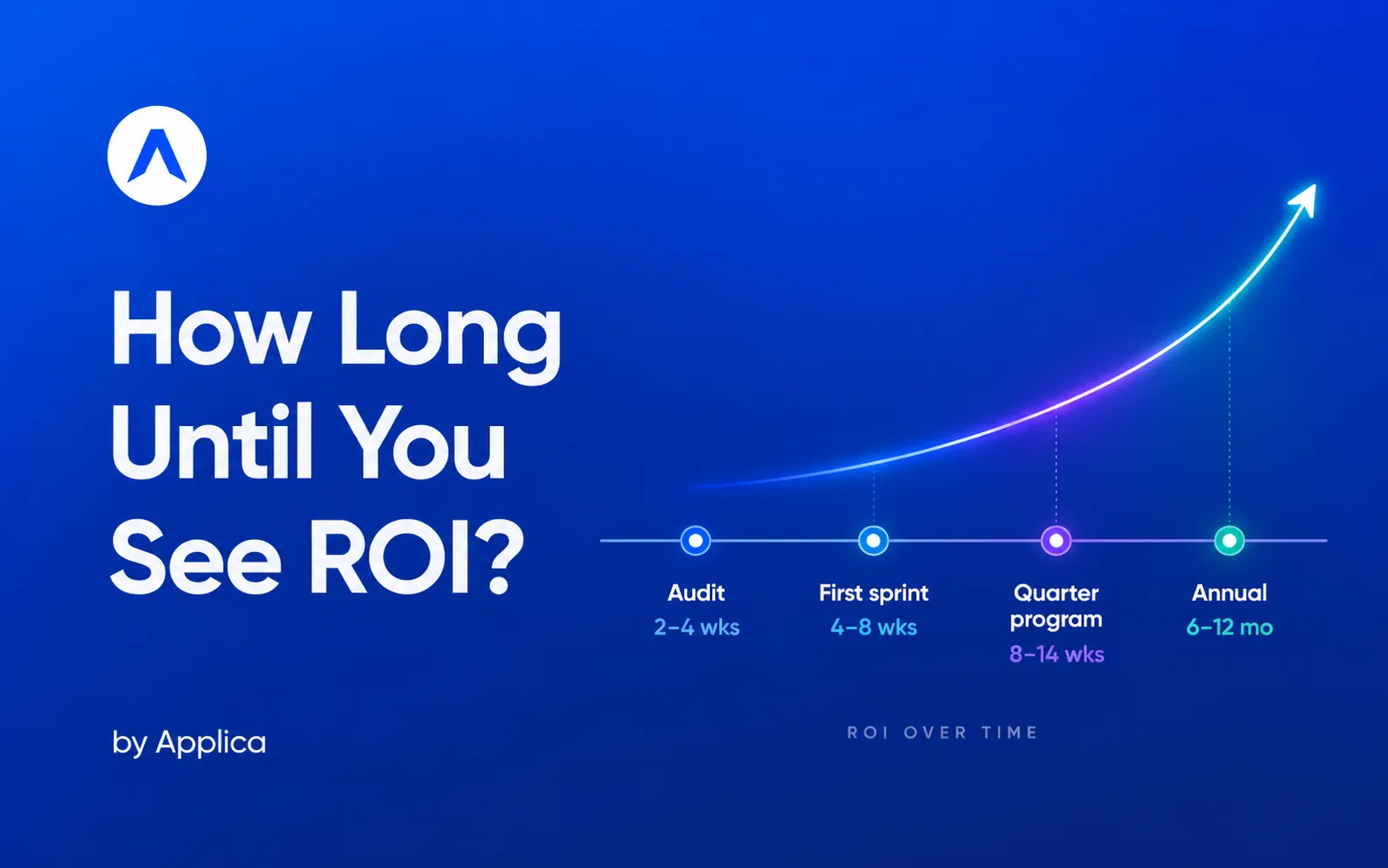
Where the bottleneck is genuinely on one surface, we recommend the narrower scope — a paywall-only engagement, an onboarding sprint — and say so. Where the bottleneck is unclear or spans multiple surfaces, the broader scope is the safer scope, because the diagnostic phase will surface whichever leak actually moves the business. For teams considering where to start, our breakdown of how to kick off a subscription optimisation engagement walks through the first 30 days in more detail, and our companion piece on how long product optimisation takes to show ROI covers what 4-week, 3-month, and longer engagements actually produce.
Three terms, three scopes, one scoping question
The three terms — CRO, paywall optimisation, product optimisation — aren't synonyms and they aren't competitors. They describe three nested scopes of the same underlying work, and the right scope depends on where the bottleneck in a subscription app actually lives.
Three takeaways worth holding onto. CRO is the narrowest scope; it earns its place when one specific surface is the constraint. Paywall optimisation is the middle scope; it earns its place when monetisation is soft but the rest of the funnel is healthy. Product optimisation is the broadest scope; it earns its place when the constraint isn't on one surface — or when nobody has actually diagnosed which surface the constraint is on.
If you're not sure which scope your app needs right now, that uncertainty is itself a diagnostic signal — and usually points to the broadest scope as the safest place to start. If you're weighing where to begin and want a structured diagnostic, let's talk — Applica Agency's Subscription App Optimisation engagements are built for exactly this scoping question.