
A team watches a conference talk where a respected operator explains how a hard paywall doubled their conversion. They go home, rebuild their own paywall to match, ship it cleanly — and the number moves a little, or not at all, or the wrong way. The implementation was faithful. The result didn't follow.
This pattern is so common that it has a recognisable shape. A product team can declare a long string of winning experiments — a redesigned paywall, a new onboarding flow, an annual-plan push lifted from a competitor — and still find, a quarter later, that company-level revenue has barely moved. As one teardown of the novelty effect in A/B testingputs it, you can demonstrate a dozen-plus "wins" and produce almost no business impact. The tactics were real. The transfer wasn't.
This is not an argument against best practices, and it is not the non-answer that "it depends." Senior teams already know context matters. What's missing is a structured way to decide, before you invest, whether a given best practice will transfer to your situation — and the cheapest way to test it when you're unsure. That structure is what this piece provides.
A best practice is a context-specific result wearing a universal costume
When a tactic produces a result somewhere, two things happen at once: the result becomes a story, and the context that produced it gets edited out. The story travels — into talks, threads, and case studies — but the conditions that made it work usually don't travel with it. What you inherit is the conclusion without its premises.

What is external validity, and why does it decide whether a tactic transfers?
In experimentation, there are two different questions you can ask about any result. The first is whether the change actually caused the outcome inside that test — its internal validity. The second is whether the result holds for other populations, products, and time periods — its external validity, sometimes called generalisability. A famous case study tends to have high internal validity: in that app, at that moment, the tactic genuinely worked. Whether it generalises to yours is a separate question the writeup almost never answers.
The two are not only distinct — they often trade off. As one clear treatment of internal versus external validity explains, the tightly controlled conditions that make a result credible inside a study are frequently the same conditions that limit how far it generalises outside it. The discipline of distinguishing the types of validity that govern a result is exactly what most best-practice borrowing skips. A tactic can be a clean, causal win in its original setting and still be a poor bet in yours — not because the original team was wrong, but because you are not running their experiment.
The result you read about is the survivor
There is also a selection effect baked into what gets published. Operators write up the tactic that worked, rarely the twenty that didn't, and almost never the specific stage, audience, and channel mix that made it land. The standard guidance on generalisability in online experiments names three structural threats to whether a result transfers: time-related factors, shifts in the population being tested, and novelty or learning effects. Recent work on external validity under ongoing sampling reinforces the point — because online tests recruit users continuously and often run over short windows, sample composition is tied to the specific period and duration of the experiment, which quietly limits how far the finding extends. The practical guidance on building experiments for representative samples is that generalisability improves only when a test runs long enough to span real purchase and seasonal cycles — conditions the original case study may or may not have met.
Novelty is the most underrated of these. A change can lift a metric simply because it is new, then decay back toward baseline as users habituate — an effect the literature treats as illusory by definition. The inverse exists too: a redesign can underperform at first through change-aversion before recovering, a primacy effect documented in standard A/B testing fundamentals. Analyses of why measured uplift diverges from real-world results show the same shape repeatedly. The headline number you're copying may have been part decay-prone novelty in the first place. Even Applica Agency's own published references — including our mobile paywall design best practices — are starting points to be tested against your context, not directives to be applied unread.
Why do best practices fail even when you implement them correctly?
Because correct implementation was never the variable. A best practice is a solution that was fitted to one app's specific conditions and then generalised into a universal rule; when you apply it faithfully, you reproduce the tactic but not the conditions, and the conditions were doing most of the work.
The most credible benchmark data now says this outright. The 2026 State of Subscription Apps finds hard paywalls converting roughly five times better than freemium — about 10.7% versus 2.1% download-to-paid by day 35 — with nearly identical first-year retention. Read carelessly, that's a mandate: go hard-paywall. Read carefully, the same report adds that freemium remains the right call when free users drive word of mouth, network effects, or long-term brand scale. The practice isn't wrong. It's an answer to a question — how do I maximise early monetisation of paid traffic? — that your app may not be asking. The best practices that fail aren't wrong; they're answers to a question your app isn't asking.
The 6 context dimensions that determine whether a practice transfers
To decide whether a borrowed tactic will port, evaluate it against the six transfer dimensions below. Each is a place where your context can diverge from the source's enough to flip the outcome. If you differ materially on the dimensions that produced the original result, the practice should be treated as untested in your setting — not as proven.
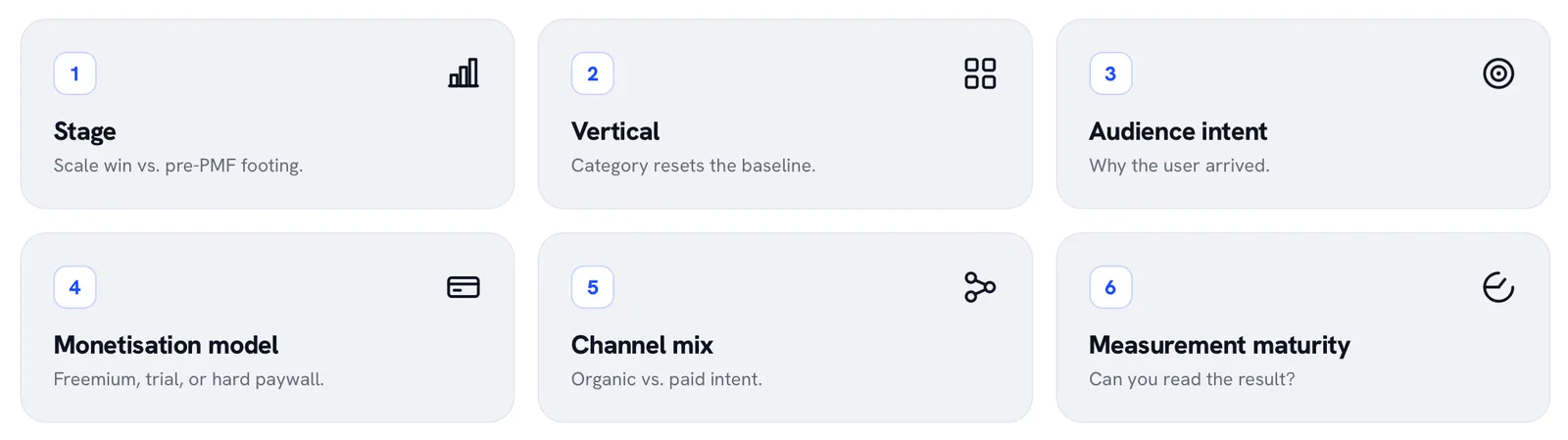
1. Stage. A tactic validated at scale can degrade a pre-product-market-fit (pre-PMF) app, and vice versa. The subscription market behaves like a sorting machine: the 2026 benchmarks show the top 10% of apps grew 306% in a year while the median grew just 5.3%. A practice optimised inside a top-decile growth engine is not operating in the same reality as an app finding its footing.
2. Vertical or category. Conversion and retention baselines differ structurally by category, so a tactic's expected payoff shifts before you change anything. Cross-category data on subscription retention shows Utilities leading first-renewal retention at about 58% while Health & Fitness sits near 30% — and earlier category benchmarks put Shopping's year-one monthly retention near four times that of Social & Lifestyle. (Why monetisation mechanics differ between categories is its own subject; here the point is simply that category resets the baseline.)
3. Audience intent. The same surface converts differently depending on why the user arrived. A paywall tuned for high-intent searchers will read as aggressive to a curiosity-driven browser. This is where a disciplined view of who your users actually are separates a transferable tactic from a mismatched one.
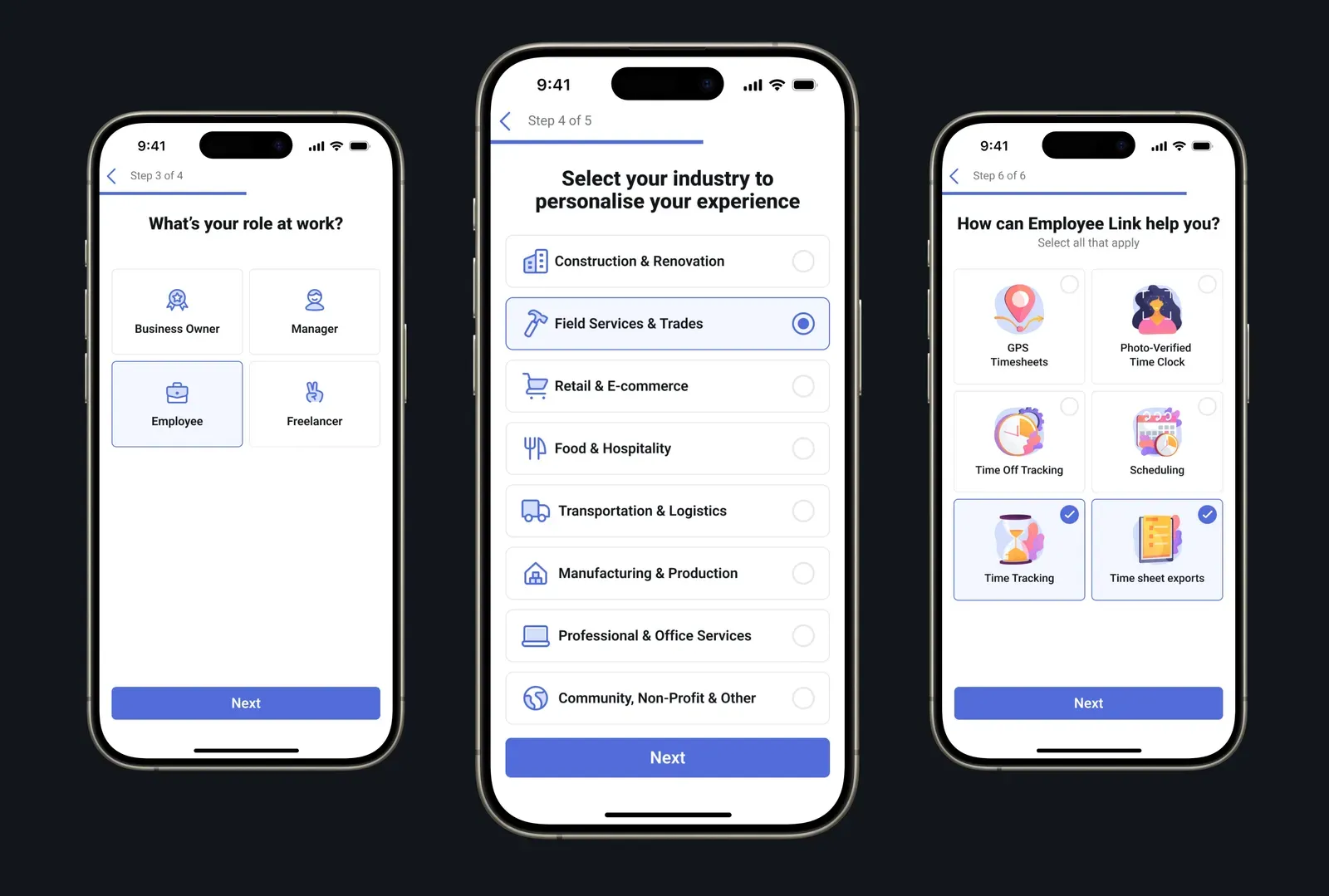
4. Monetisation model. Freemium, hard paywall, and free-trial models change what a tactic even does. A win-back offer, a trial length, or a paywall placement that lifts one model can suppress another, which is why borrowed monetisation moves need testing inside your own retention and engagement context rather than assumed.
5. Acquisition channel mix. Users arrive with intent shaped by how you acquired them. Analyses of paid versus organic traffic commonly find organic converting 20–50% higher because organic visitors self-select on intent, and mobile-specific work on organic and paid acquisition notes that paid-acquired users often skew toward lower engagement and higher churn. A tactic proven on an organic-heavy base is unproven on a Meta-heavy one.
6. Measurement maturity. If your event taxonomy and source-of-truth can't read a result cleanly, you cannot tell whether a practice transferred at all. Teams that can't reliably separate ARPU from LTV — average revenue per user from lifetime value — will misread which lever actually moved, and copy the wrong conclusion forward.
A seventh, more operational gate sits underneath all six: team capacity. A practice that depends on a testing velocity or instrumentation discipline you don't have will not replicate, however well it fits on paper.
The same tactic, two contexts: three worked examples
The clearest way to see transferability fail is to watch one tactic produce opposite verdicts in two settings.
The same paywall, reversed by channel. A paywall design can win decisively for an organic-acquired cohort and lose for a paid-social cohort arriving with lower intent. The tactic didn't change; the audience behind it did — a divergence we examine in detail in our piece on why the same paywall wins on organic and loses on Meta. Borrowing the paywall without matching the channel mix borrows the result's risk, not its result.
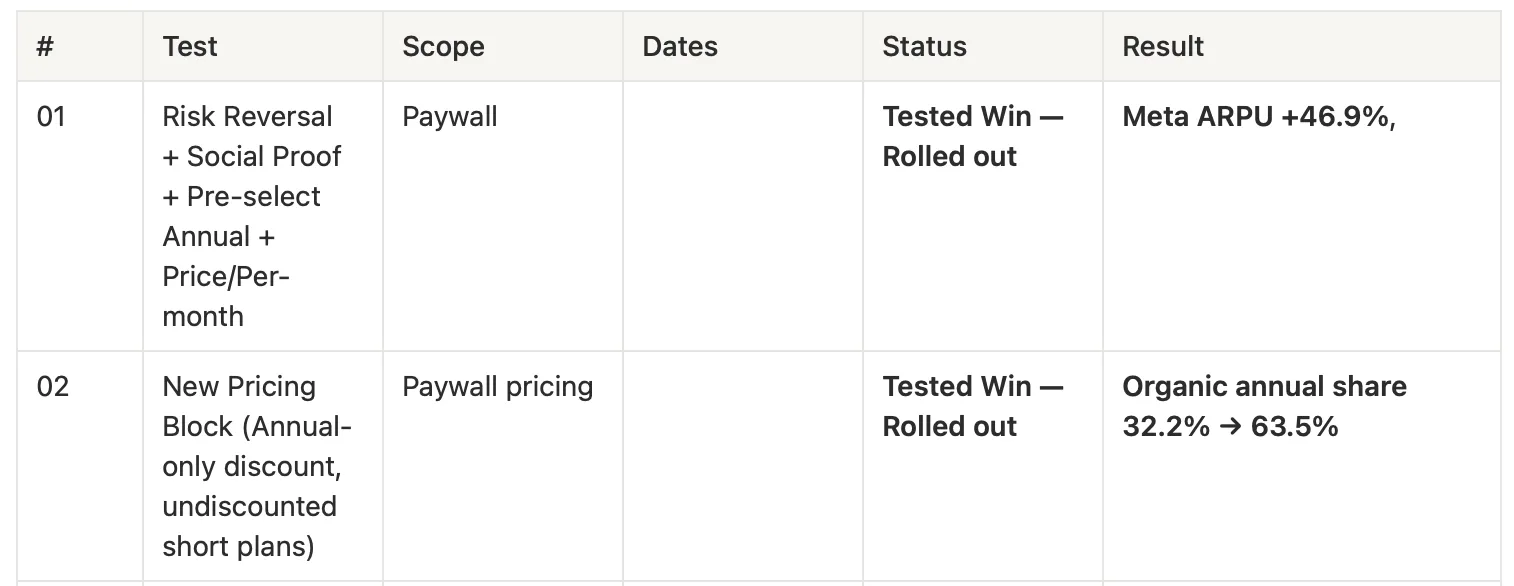
Annual-plan pricing that helps one app and hurts another. Pushing users toward annual plans can pay back acquisition cost faster for an app with strong demonstrated value — and degrade customer acquisition cost (CAC) economics for an app whose paid mix and pixel signal weren't built for it, because the monetisation decision feeds back into how the channel optimises. That interaction is the subject of our analysis of how pricing decisions retrain your paid-acquisition pixel.
Onboarding as a monetisation surface — for some products. Treating onboarding as the place to establish and price value works powerfully where the activation moment and the willingness-to-pay moment coincide. Where they don't, the same move front-loads friction and suppresses the very activation it was meant to drive. The benchmark guidance reflects this ambivalence: trial and paywall data shows hard paywalls prompting trial starts at high rates, while the 2026 trend analysis cautions teams to study their own category's behaviour rather than follow the crowd by default.
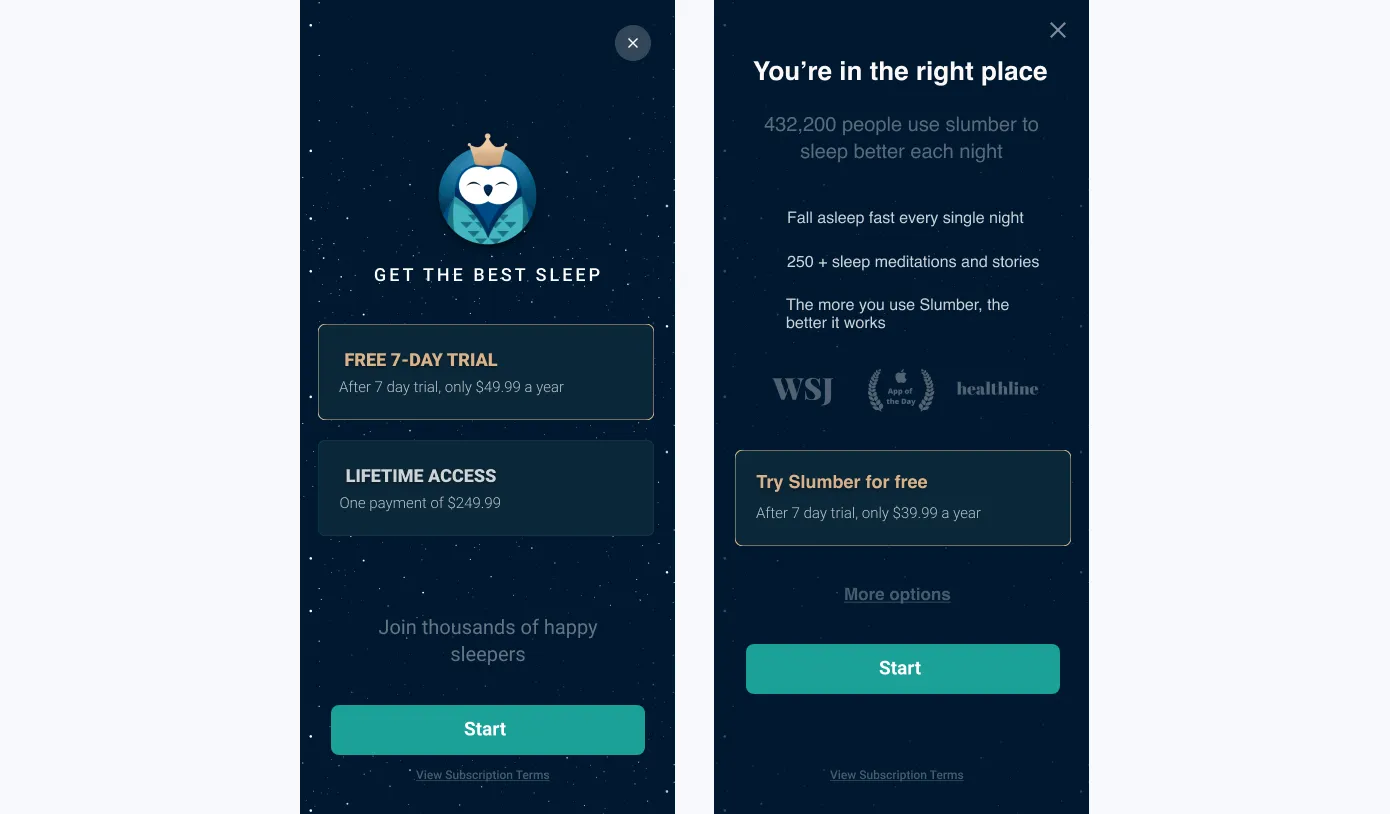
One anonymised engagement makes the divergence concrete with a single number. The same conversion-optimisation and UI/UX intervention, run for a pet-care app, lifted ARPU by roughly 7% in the US and nearly 13% outside it, with win-back deals up about 27% — identical work, materially different outcomes by geography. That is context-fit in miniature: the intervention was sound, and the size of its payoff still depended on where it landed.
How do you pressure-test a borrowed best practice before adopting it?
Run it through the context-fit diagnostic — three questions, in order, before you commit engineering or budget to a borrowed tactic.
1. What context produced the original result? Reconstruct the source's stage, vertical, audience intent, monetisation model, and channel mix as far as the writeup allows. If those conditions aren't stated, treat the result as anecdote, not evidence.
2. Does my context match on the dimensions that mattered? Not all six dimensions matter equally for every tactic — a pricing move is dominated by monetisation model and channel; an onboarding move by stage and intent. Identify which dimensions drove the original result, and check your alignment specifically on those.
3. What is the cheapest way to test the transfer? Almost always cheaper than a full build. Fake door testing can validate demand before you build anything; a small holdback or a segmented read can confirm the effect holds in your population before you roll it out. Run the test long enough for novelty to wash out, and segment new versus returning users so an illusory early spike doesn't get mistaken for a durable win.
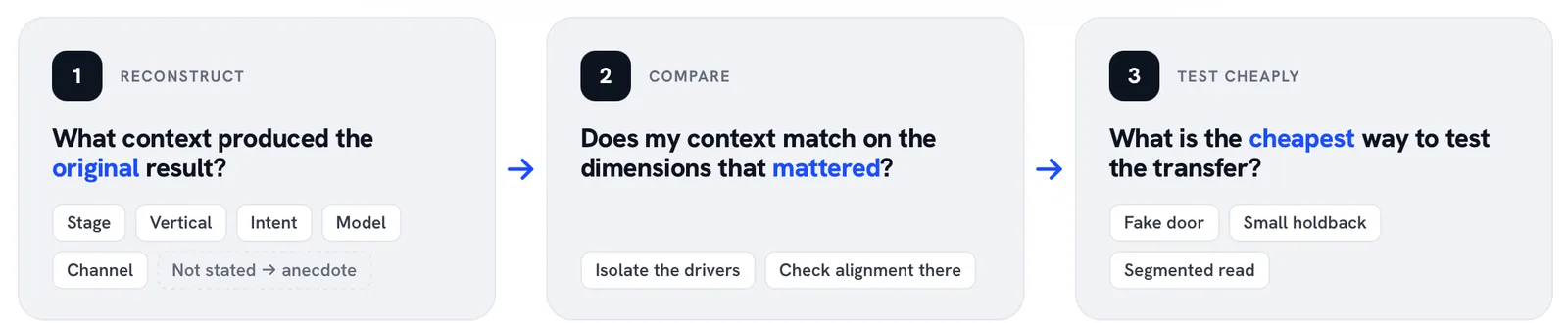
The output of the diagnostic is not adopt-or-discard. When your context doesn't match, the move is usually to adapt — keep the underlying mechanism the tactic was exploiting, and re-fit it to your conditions — rather than to copy or reject wholesale.
From borrowed practices to your own playbook
Treat every borrowed practice as a hypothesis, not a directive
The operational shift is small and consequential: a best practice enters your roadmap as a hypothesis to be validated in your context, never as an instruction to be executed. That means documenting the context you tested it in, so the result becomes inheritable knowledge rather than a one-off. This is the logic behind Applica's experiment history review framework — an experiment is only as portable as the conditions you recorded alongside it, and a result without its context produces confident wrong answers later. Over time, your validated hypotheses compound into something more valuable than any borrowed catalogue: a growth strategy that is genuinely yours, with outside best practices as inputs rather than substitutes.
Why cross-client pattern recognition makes fit-checks testable
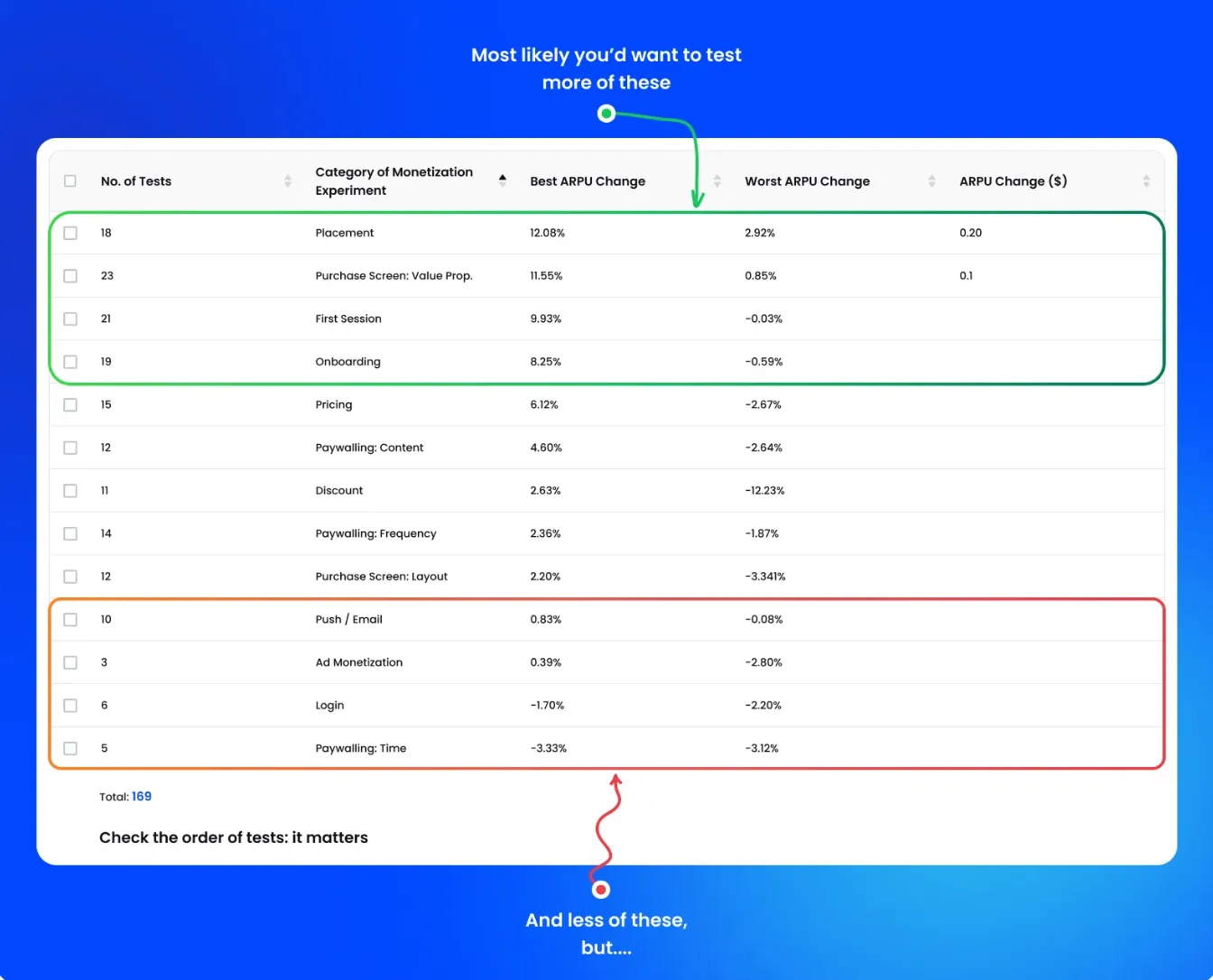
The reason transferability is hard to judge from inside one app is that you only ever see your own context. Teams that work across many apps see the same tactic land in dozens of different contexts, which is precisely what reveals whether a practice is structurally portable or quietly context-bound — a recurring argument in where mid-market teams find genuine product expertise. At Applica Agency, that cross-client vantage is the core of how our Conversion Rate Optimizationpressure-tests borrowed tactics: not by trusting that a practice worked elsewhere, but by knowing the conditions under which it has and hasn't transferred.
Frequently asked questions
Are best practices useless, then? No. A best practice is real evidence — from someone else's context. It tells you a tactic can work and roughly how, which is genuinely useful as a hypothesis. It just isn't proof that the tactic will work for you, and it shouldn't be treated as one.
How do I know which of the six dimensions matter for a specific tactic? Trace the mechanism. Ask what behaviour the tactic was actually changing and which condition that behaviour depended on. A pricing tactic lives or dies on monetisation model and channel mix; an onboarding tactic on stage and audience intent. Match on the dimensions that drove the result, not all six equally.
Isn't running my own tests slower than just copying what works? Only if the copy works. A borrowed tactic that doesn't transfer costs you the build plus the misread quarter spent acting on it. A cheap upfront transfer test — a fake door, a holdback, a segmented read — is almost always faster than recovering from a confident wrong rollout.
Conclusion
Best practices break for a structural reason, not a careless one: a documented result is evidence from a context you don't share, and the writeup almost never includes the conditions that produced it. The fix isn't cynicism about best practices or paralysis about context — it's discipline. Evaluate any borrowed tactic against the six transfer dimensions, run it through the three-question context-fit diagnostic, and adopt it as a hypothesis you validate rather than a directive you execute. Done consistently, that turns other people's wins into inputs for a playbook that actually fits your app.
If your team keeps importing tactics that look proven and underdeliver in your context, that's exactly the problem worth solving before the next build — let's pressure-test your roadmap together with Applica Agency's Conversion Rate Optimization.