
Pulsetto
Pulsetto is a device you wear around your neck that sends gentle electrical pulses to the vagus nerve to lower stress, ease anxiety, and improve sleep, in a few minutes a day. A companion app guides each session, tracks results, and hosts the subscription.
pulsetto.tech
Since June 2025, Applica and Pulsetto have worked as one team on the app across three fronts: monetization, retention, and lifecycle communication.
Monetization
The challenge
At the start of the cooperation, only a small share of the people who installed the app went on to subscribe. We looked into what was holding conversion down and found three things worth acting on:
Users felt they were paying twice.
Having bought the device, many didn't see why the app should cost extra. It surfaced in app store reviews, and a follow-up survey confirmed it was a common reason for not subscribing.
The paywall wasn't where the highest intent was.
It sat deep in the app and appeared well after signup, past onboarding, when a new user is most committed to solving the problem they came to solve.
The offer did little to lower the risk or justify the price.
The free trial ran only three days, too short to feel a cumulative therapy begin working, and the paywall didn't communicate clearly what the premium added over the free app version.
What we did
The onboarding paywall
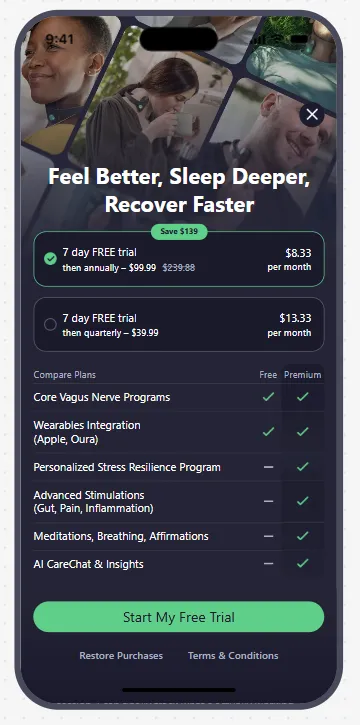
The app had no real paywall at the moment that mattered, so we built one from scratch and placed it where customer intent is highest:
Placed it right after the onboarding quiz.
The user has just described their problem and committed to fixing it, so the subscription is offered at the peak of intent instead of stumbling upon it later.
Showed free against premium in one table.
A feature table makes the reason to pay clear at a glance, rather than leaving the user to infer it from a list of features.
Extended the free trial from three days to seven.
Long enough to feel the device working before paying more, which also softens the "paying twice" objection: you try before you commit.
A paywall for each level of intent
Users hit a paywall at very different levels of readiness, from ready to buy to just curious. No single offer serves them all: the person opening a specific premium feature, the one who just declined, and the lapsed subscriber returning after weeks away each need a different ask. So we matched every paywall to where the user sits on the willingness-to-buy ladder, tuning what it argues for, what it charges, and whether it offers a trial.
Gave each premium feature its own paywall.
Open a specific locked feature, like advanced health insights or the resilience program, and you encounter a paywall built around it, so the pitch addresses the intent that surfaced it rather than selling premium in general.
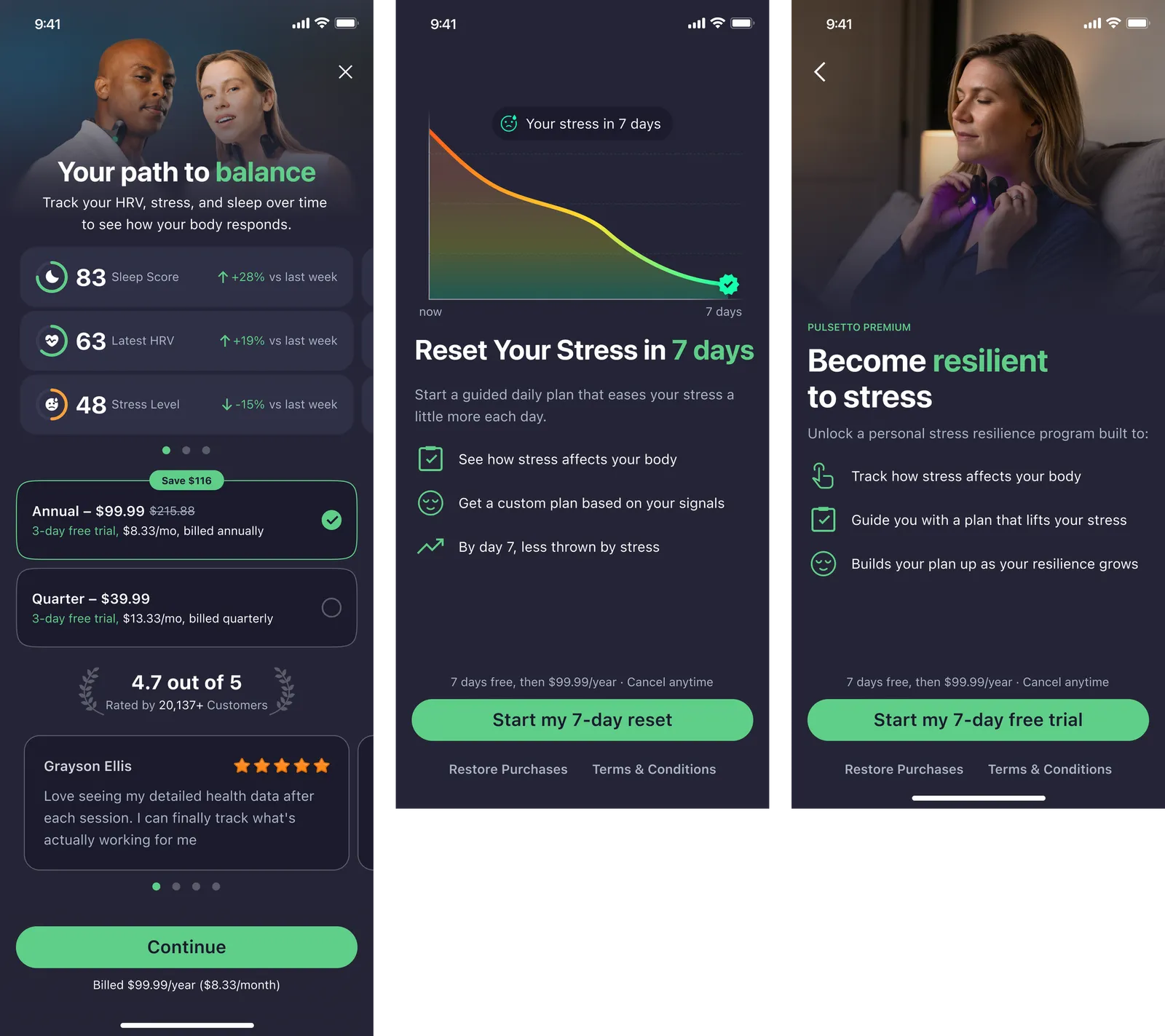
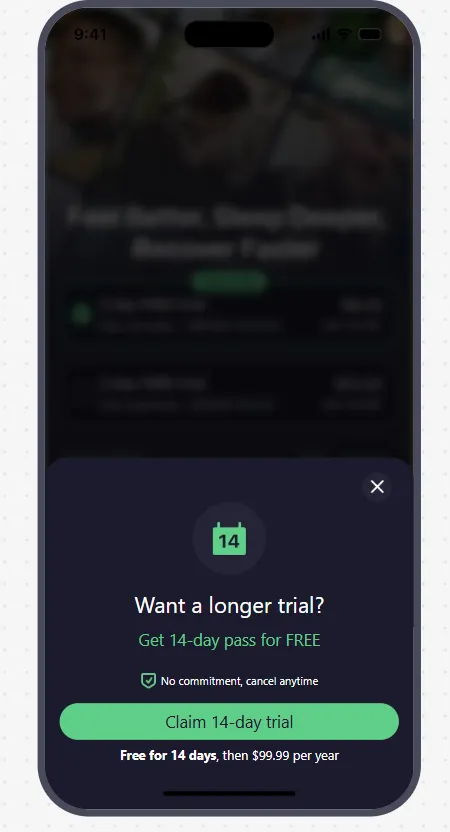
Made a better offer to users who dismissed the first paywall offer.
A closed paywall usually isn't a refusal to ever pay; it just means the offer didn't fit. So the next one asked for less: a longer trial, for the users where commitment was the barrier.
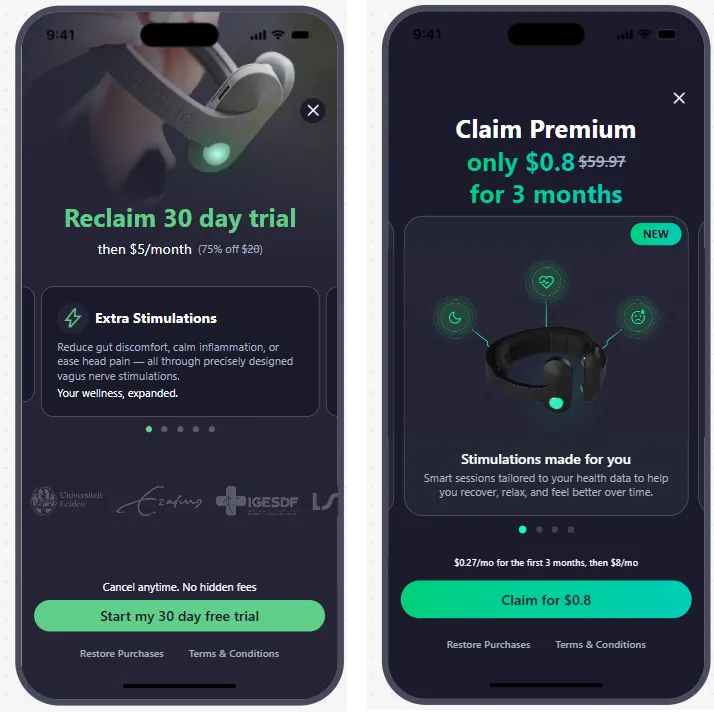
Built paywalls for users past the first purchase.
Lapsed subscribers were met with win-back pricing tuned for returning rather than new joiners, and seasonal sales caught users who were only waiting for a reason to buy.
Retention
The challenge
The second front was usage retention: many new users fell away in their first weeks, before the therapy had time to show its effect, and stimulated less often than the daily use the therapy needs to work.
To understand why, we conducted root cause analysis using behavioral data and user research, and two causes stood out:
The device takes real effort to use.
A session means applying gel, pairing the device, and sitting through an unfamiliar sensation on the neck. That effort is heaviest at the very start, before any routine has formed to carry the user through it.
The benefit is invisible day to day.
Vagus nerve stimulation builds its effect gradually, over weeks of regular use. A user feels little after any single session, bought the device for relief now, can't tell it's working, and stops before the benefit arrives.
That gave us the plan: reduce the friction in the first sessions and make the benefits more tangible for users. Then reinforce both with communication that helps build the habit.
In-app changes
Merged the setup steps into one guided flow.
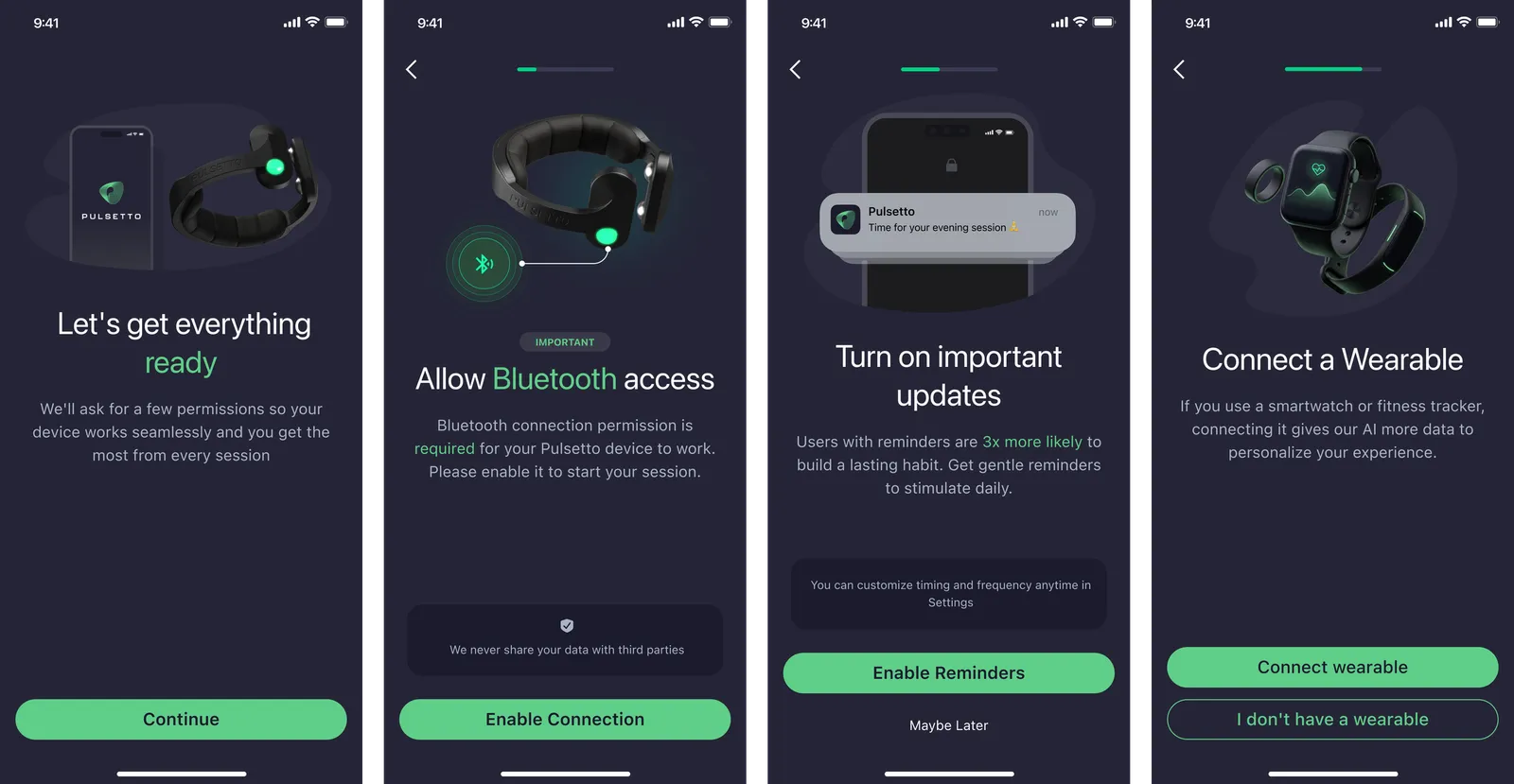
Getting a new user connected is what makes everything else possible, so we rebuilt the app's separate permission prompts into one deliberate flow. It opens with a screen that explains why the connections matter, then asks in order of importance: the device first, since nothing works until it's paired; notifications next, so the app can reach the user afterward; then the wearable, which users often didn't even realize they could connect and which is what lets the app show them their progress.
Rebuilt the first session as a guided tutorial.
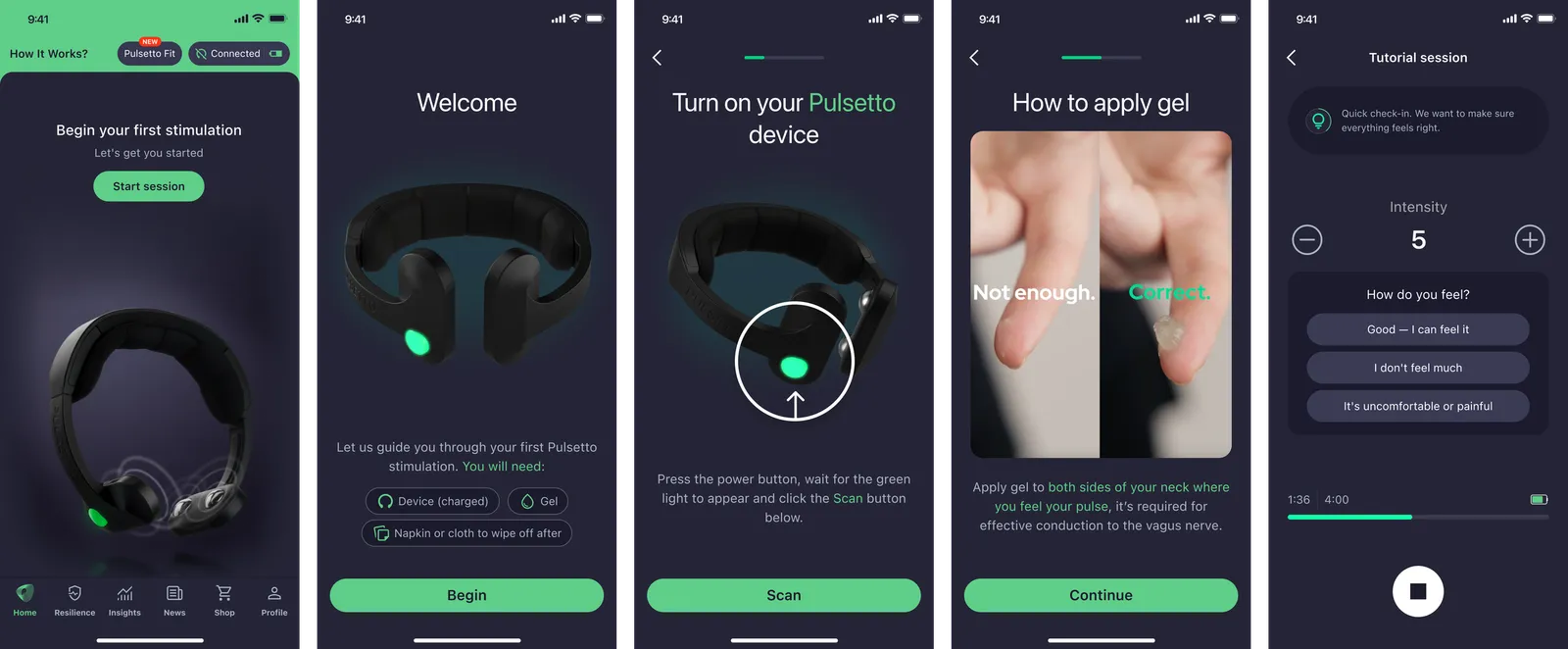
The first stimulation is where most of the friction lives. The sensation is unfamiliar, and if users don't know what to expect, or place the device wrong, it can feel too strong or uncomfortable, which is one of the main reasons early users cool on the product. We rebuilt that session as a guided tutorial: it sets expectations for what a normal sensation feels like, walks the user through gel and placement, keeps the first session short and gentle, and checks in partway so anyone having a rough time gets help rather than being left to struggle.
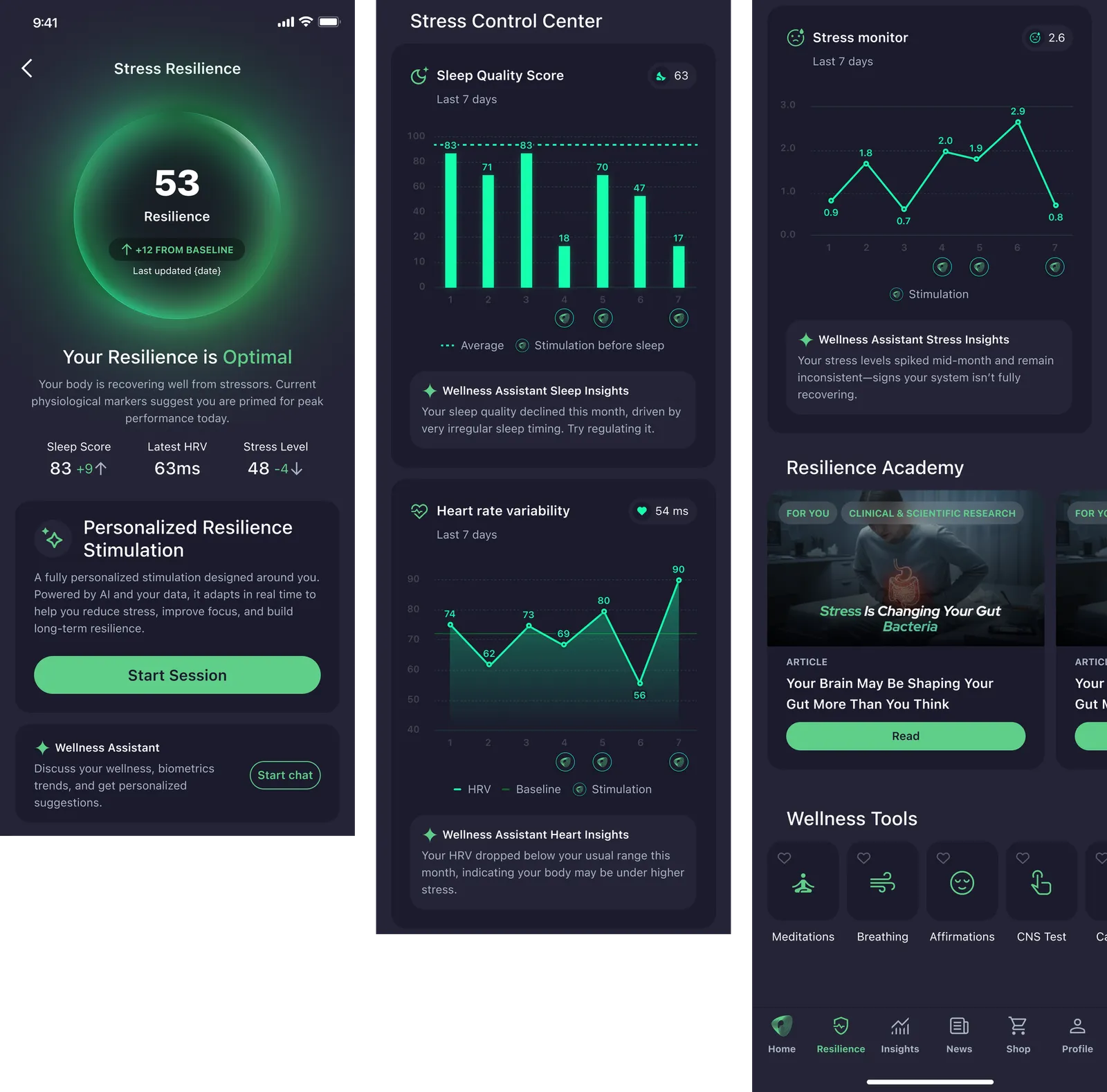
Designed the Stress Resilience MVP feature.
The device's effect builds slowly and invisibly, so users may quit before they can feel it working. Stress Resilience is the feature we designed to close that gap: a personalized program that adapts each user's stimulations to their body and wearable data to build their resilience over time, and tracks that progress as a single score. It turns a benefit users couldn't feel into progress they can watch, and gives them a reason to keep stimulating while the real effect accumulates.
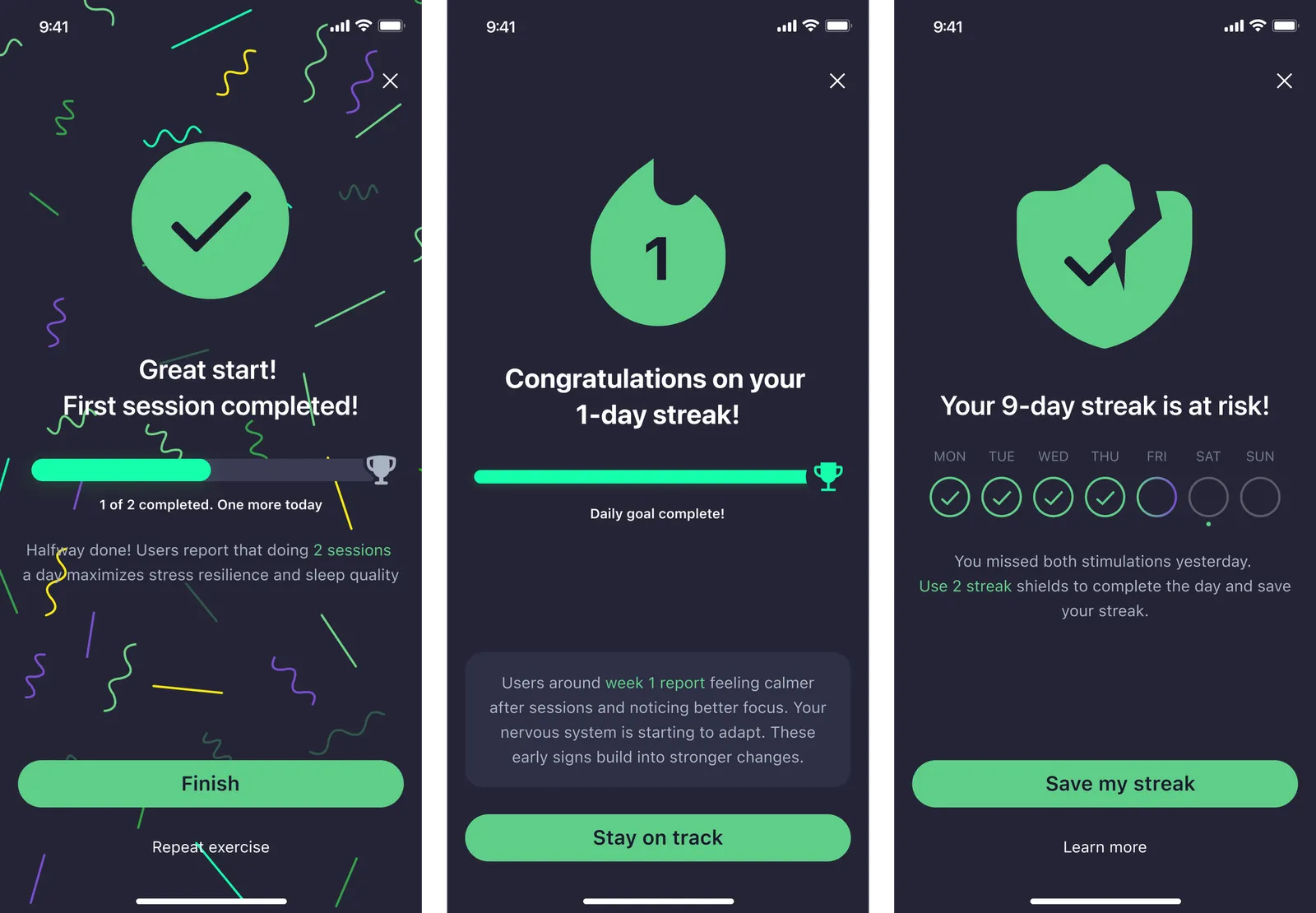
Made the daily habit harder to break.
A habit only forms if it survives the days a user would otherwise skip, so we strengthened the reasons to keep it going: a redesigned streak system that marks first sessions and milestones, and streak shields that protect a run through a missed day, so one lapse doesn't erase weeks of progress and the motivation with it.
Lifecycle communication
Pulsetto's messaging didn't reflect how people actually used the device. Everyone received the same reminders on the same schedule, whether they stimulated every day or hadn't opened the app in weeks. Messaging that ignores the user can't build a habit or bring back someone who has slipped.
We rebuilt it with our partner Reteno. Applica owned the strategy, the segmentation, the flows, the copy, and the measurement, what to track and how to read it; Reteno built the system to that specification.
Replaced the fixed schedule with behavior-based messaging.
Instead of a single cadence for everyone, messaging now adapts to each user's level of engagement. A regular user gets a single daily reminder at a time they set themselves. A user who starts missing sessions enters a re-engagement flow focused on the first days after they slip, when a return is still possible. A user inactive for a long time moves to a slower reactivation track. The message fits what the person is doing, rather than a calendar that ignores it.
Pushed wearable connection early.
Users who connected a wearable stayed with the product better, because the wearable lets the app show them their progress and lets them see the device working. So we built a campaign to get new users connected early.
Tuned each message to the user's problem and recent activity.
Content and timing adapt to what each user came for, whether sleep, stress, or anxiety, and to when they tend to use the device. Because every message was measured, each step of the rollout could be read before the next was released.
Results
Conversion to paying rose from under 2% at the start of the cooperation to roughly 16% by the end.
It moved for more than one reason, including shifts in Pulsetto's own acquisition mix, so we read it as the shape of the app's growth rather than the effect of any single change or our effort alone. But where we could compare a change against the version before it on live users, the result was clear on its own terms: the rebuilt onboarding paywall and the feature-specific paywalls each beat what they replaced on trial starts and revenue.
Conclusion
Intent to buy is a ladder, not a switch. People reach a paywall at very different levels of readiness, and the offer should match where they stand: what it argues for, what it charges, and whether it carries a trial. Closing a paywall is rarely a final no. It usually means the terms did not suit that person at that moment, so every later ask should change something rather than repeat what already failed.
Retention layers only hold if what is underneath them works. Streaks, reminders and rewards are the usual response to people drifting away, and they do reinforce a routine that is already forming. What they cannot do is create a reason to come back where there is not one yet. If a product is hard to use in its first days, or its value takes weeks to become noticeable, motivation features sit on nothing. So the useful question is which cause is producing the churn, because each one calls for a different fix. For Pulsetto the causes were the effort of the early sessions and results that take weeks to build, so the answers were a guided first session and a score that made that progress visible, with the habit layer supporting both rather than substituting for them.
Over the year Pulsetto grew its recurring revenue 9x. Owning the device does not make someone a subscriber. The app has to meet each user with an offer that fits where they are in their journey. Applica and Pulsetto worked as a single team on the app: diagnosing why users left, building against those reasons, and running the systems that came out of it.
Client feedback
Applica helped us achieve unprecedented revenue growth and boost retention by transforming our user experience. We’re so grateful to the team!
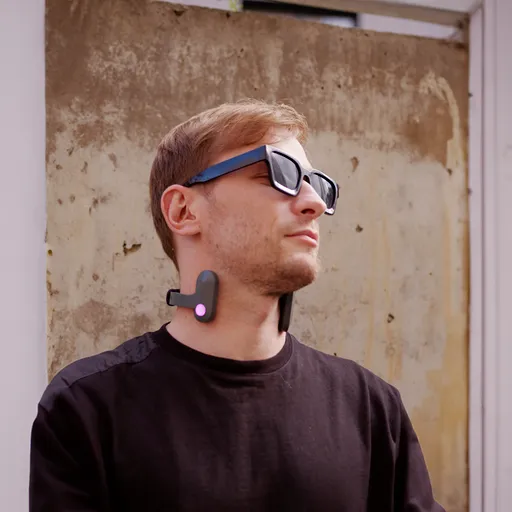
Vitalijus Žiauga
Product Owner at Pulsetto