
At a glance
- Client
- AirHelp, Flight Tracker
- App category
- Travel, flight tracking
- Industry
- Travel
- Channels
- App Store and Google Play listings, Apple Ads, Google App Campaigns, Meta
- Period
- 2025 -
- Markets
- United States, United Kingdom, Spain, Italy, France, the Netherlands, Portugal and Germany at launch, later Poland, Turkey and Arabic-speaking regions
- Key results
- 330,000+ downloads since launch, 4.7 average rating across both stores, day-one discoverability across eight markets at once

The challenge
AirHelp is known for one thing: getting passengers compensated when flights go wrong. The new app was a flight tracker, which is a different product for a different moment, and launching it carried three problems that had nothing to do with the app itself.
The positioning had to be rebuilt in the stores. Everything AirHelp ranks for relates to compensation claims. A flight tracker has to be found by people who are not thinking about compensation at all, which means the store listing had to argue for a product the brand was not known for.
The two audiences had to stay apart. AirHelp's compensation business runs on the web and works. An app that pulled those users off the web would have moved revenue rather than added it.
None of it could drift off brand. AirHelp is a global brand with a defined identity, and a launch across eight markets multiplies every chance to break it.
What we did
1. Opened pre-orders three weeks before release. That window is not marketing padding. It accumulates users before day one, and it lets you watch organic rankings and search intent on a real listing while there is still time to change the plan.
Reasoning and learning: a launch day is a reading, not an event. Pre-order turns the first day from a guess into a confirmation.
2. Localised the store presence across eight markets at once, then kept going. The United States, the United Kingdom, Spain, Italy, France, the Netherlands, Portugal and Germany at launch, later Poland, Turkey and Arabic-speaking regions.
3. Built several screenshot sets and let testing choose. Each set carried the flight tracker positioning, the brand voice and social proof. The winning set was selected on A/B test results rather than on preference.
Reasoning and learning: the screenshot set is the highest-traffic creative any app has, and it is usually the one chosen in a meeting.
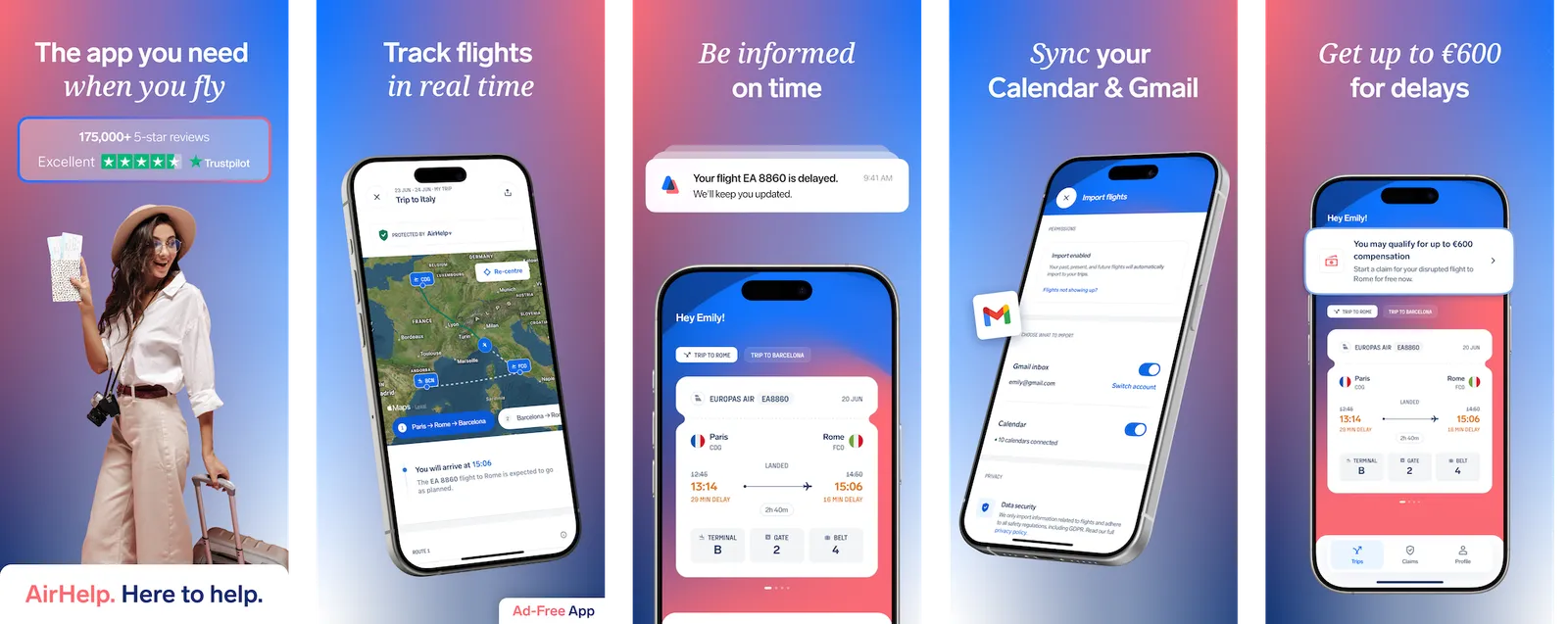
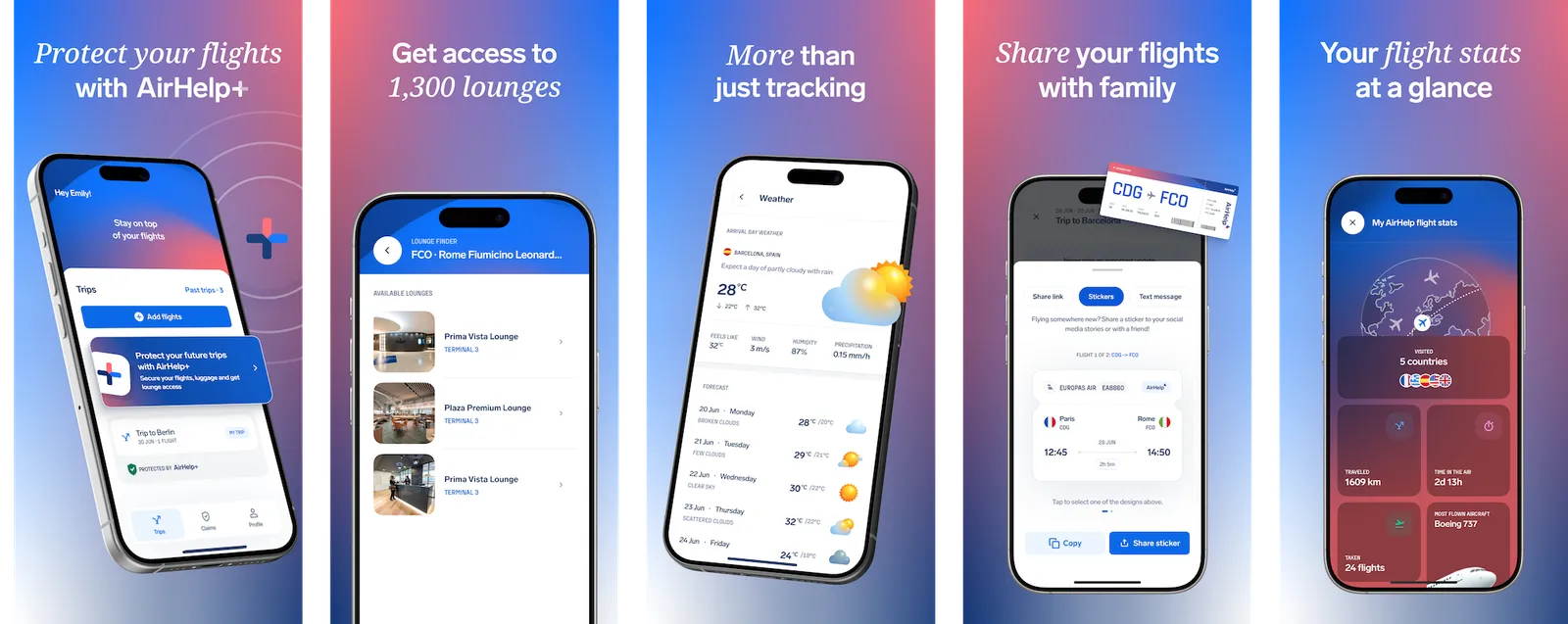
Screenshot set for AirHelp’s App Store listing, designed and developed by Applica’s team.
4. Ran ASO as a system, not a metadata pass. Keyword research across every target geo, competitive analysis of the Travel category, and continuous A/B testing on both the App Store and Google Play. Custom store listings on Google Play, custom product pages for Apple Ads and Meta, and in-app events.
5. Ran paid acquisition market by market. Apple Ads with brand, competitor and generic campaigns segmented by country. Google App Campaigns with localised creatives per country, plus a video-only variant to read creative effect separately. Meta with a warm-up campaign a month before release, then broad Advantage+ and interest testing through ABO.
Reasoning and learning: launching eight markets as one campaign gives you one average. Launching them separately tells you which three to scale.
6. Fed the paid winners back into the store. The top-performing creatives from Meta became the basis for the Apple Ads custom product pages, so the ad and the page behind it told the same story.
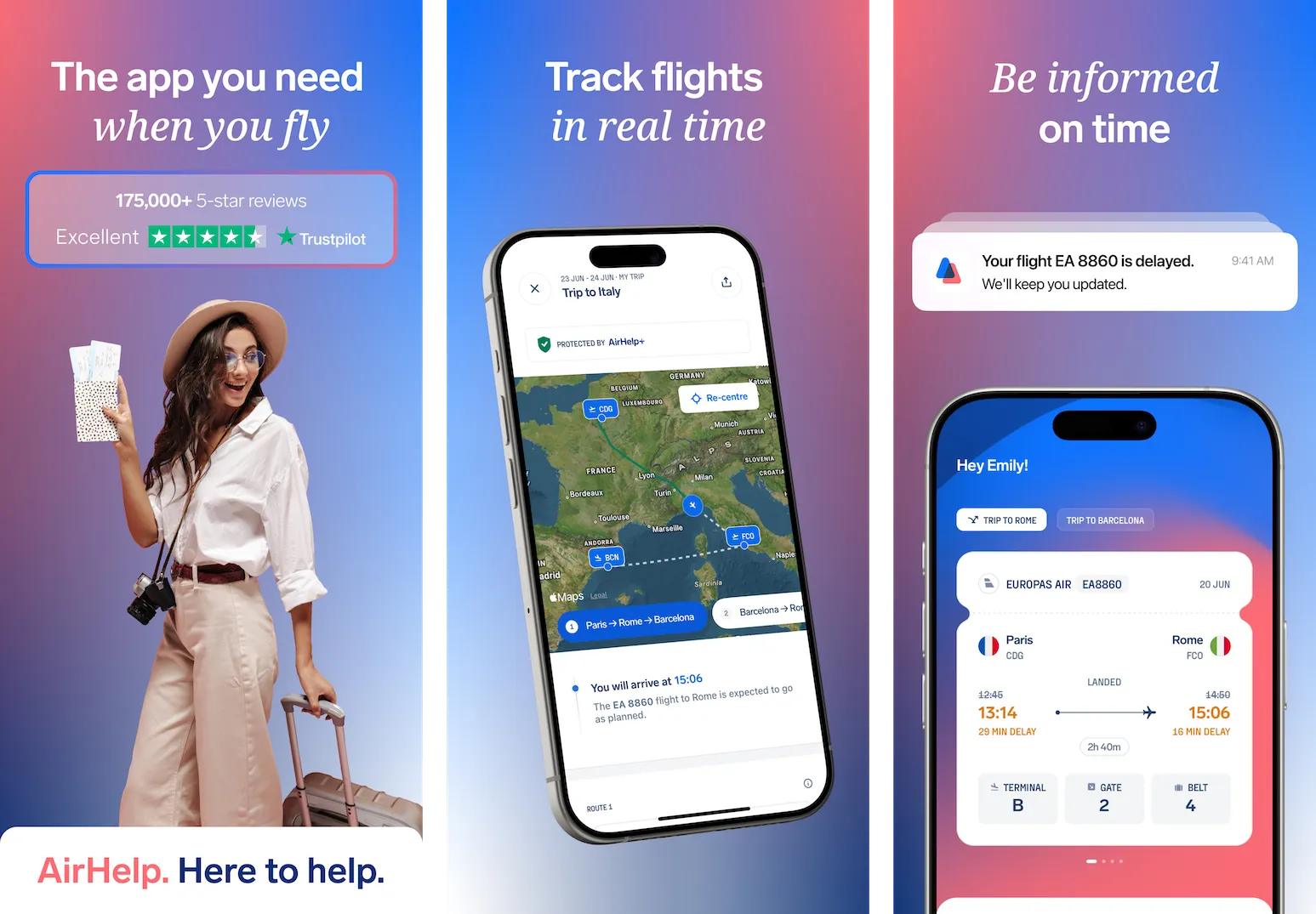
These custom product page screenshots for Apple Ads were developed by Applica, incorporating top-performing ad creatives from Meta campaigns.
Results
The app passed 330,000 downloads since launch, with a 4.7 average rating across the App Store and Google Play, and gained traction quickly across the target markets. The pre-order and ASO work did what it was for: discoverability existed on day one rather than building over the first month.
4.7
Average rating on app stores
330,000
Downloads after launch
Client feedback
Applica turned a complex, global launch into a clean win. Their pre-order, ASO, and paid mix delivered day-one discoverability, rapid traction across our priority markets, and 330,000+ downloads with excellent conversion and CPI – while keeping our Flight Tracker positioning clear and on-brand.

Ewa Tkaczyk
Director of Ecommerce at AirHelp
Key learnings
A pre-order window is a test environment. Three weeks of real listing data before launch is worth more than any amount of pre-launch forecasting.
Launch markets separately even when you launch them simultaneously. The point of eight markets is to find the two or three that deserve the budget, and an aggregate hides them.
A new product under a known brand has to be found by people who do not know the brand for it. AirHelp's existing rankings were an asset for the wrong query, so the listing had to earn new ones.
Paid and ASO should share creatives. The winning Meta videos became the custom product pages, which is the cheapest way to make the tap and the page agree.
Conclusion
AirHelp launched a flight tracker into eight markets at once, under a brand known for something else, without touching its existing web business. 330,000 downloads and a 4.7 rating came from treating the launch as a measurable sequence: pre-order, localisation, tested creatives, and paid run market by market.
More on our app store optimization and mobile user acquisition.