
At a glance
- Client
- Dogo: Dog Training & Clicker
- App category
- Pet care, dog training
- Industry
- Pet care
- Channels
- in-app paywall. No paid media in scope
- Period
- 2025 -
- Markets
- Worldwide, United States primarily
- Key results
- conversion rate +9.5% and ARPU +13% in two months, from a paywall rebuilt around two user segments

The challenge
Dogo's paywall had one job and two audiences, and it was built for neither. People arrive at a dog training app at opposite ends of a relationship: one has just brought home a puppy that bites everything and will not stop weeing indoors, the other has had the same dog for six years and wants to keep it healthy and interested.
A single paywall written for both of them is written at an average dog owner who does not exist. It described what Dogo premium includes rather than what it solves, and what it solves is different for each group.
What we did
1. Audited the product and found two problems, not one. The paywall was not communicating value clearly, and it was not personalised. Those sound like the same problem. They are not: the first is about wording, the second is about who the wording is for, and fixing the first without the second produces a clearer message to the wrong person.
2. Defined the segments from behaviour, then described them properly. Puppy parents are usually new to dog ownership and want guidance on the foundations: toilet training, biting, the habits that decide what the next decade looks like. Adult dog parents are maintaining a relationship that already works, focused on health, enrichment and new things to do together.
Reasoning and learning: a segment is only useful if the two groups want different things from the same product. These two do, which is why the split was worth building a paywall around rather than a line of copy.
3. Ran a MaxDiff survey to rank what each segment valued. Knowing the segments exist is not the same as knowing what to say to them. MaxDiff forces a ranking rather than collecting agreement, so the output was an ordered list of value propositions per segment instead of a set of things users said were nice.
Reasoning and learning: ask users to choose, not to approve. Everything sounds valuable in isolation, and a paywall has room for two or three arguments at most.
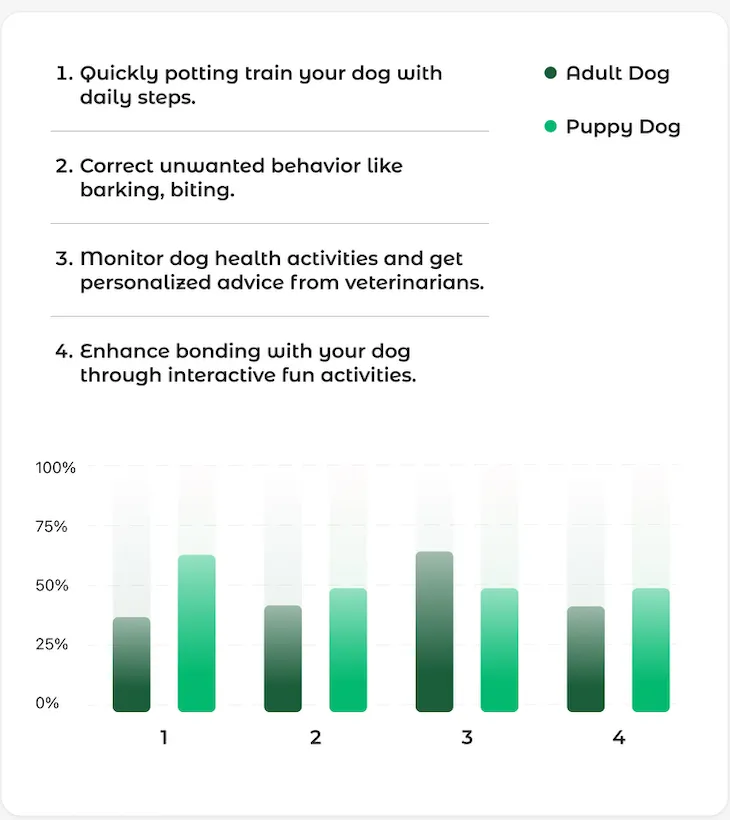
4. Redesigned the paywall copy and visuals per segment, through several iterations. Puppy owners met the training problems they were living with that week. Adult dog owners met health monitoring and enrichment. Same premium product, two different reasons to buy it.
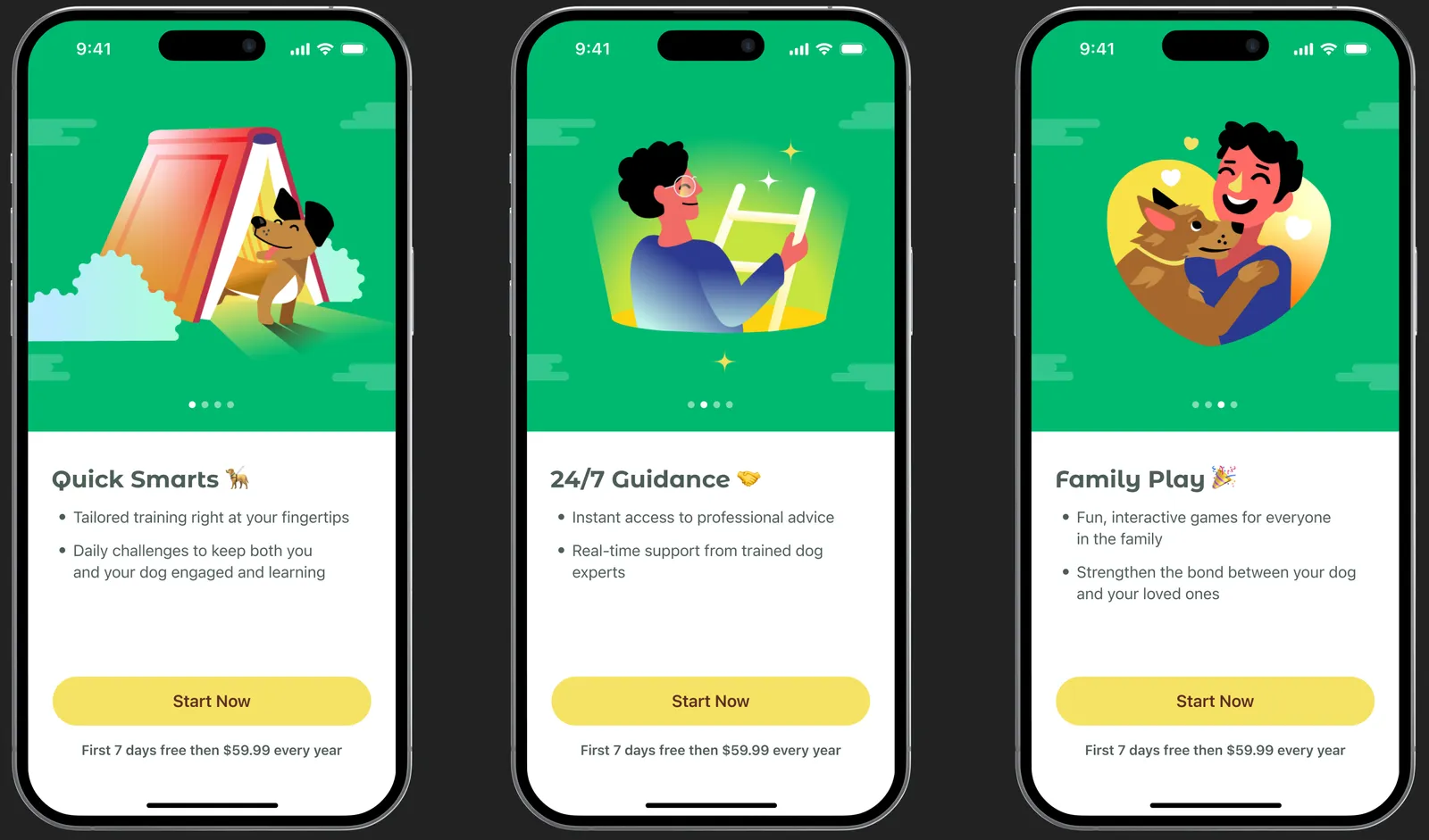
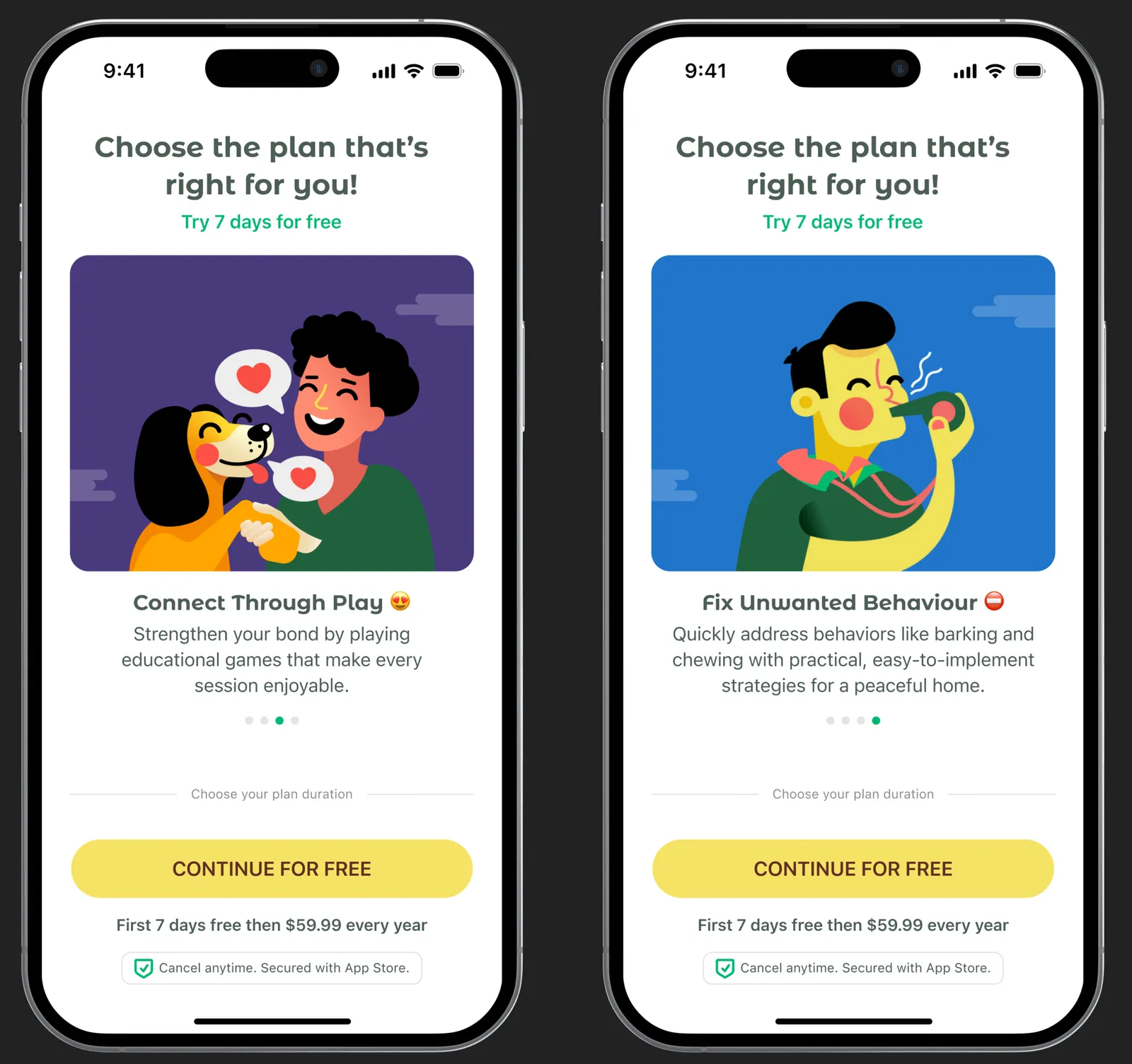
5. Tested the variants against each other by segment. The segmentation shaped the testing method, not just the design: each group saw the version built for it, which is what let the result be attributed to relevance rather than to a better-looking screen.
Results
Two months of paywall work produced a 9.5% increase in conversion rate and a 13% increase in ARPU. Both moved together, which is the signal that the gain came from users understanding the offer rather than from pushing a more expensive plan.
+9.5%
Conversion Rate
+13%
ARPU
Client feedback
Applica has reduced the risk for us and is an incredible support for the team.

Tadas Žiemys
CEO, Dogo App GmbH
Key learnings
One paywall for two audiences serves neither. The averaged message is the one nobody recognises as written for them.
Rank value propositions, do not collect them. MaxDiff produced an order of priority, and a paywall needs an order far more than it needs a list.
Conversion and ARPU rising together tells you it was comprehension. When only one moves, you have usually shifted plan mix. When both move, people understood what they were buying.
Conclusion
Dogo's premium features were valuable to every user and obvious to none, because the paywall addressed an average dog owner. Splitting it into the two journeys its users are actually on lifted conversion 9.5% and ARPU 13% in two months.
More on our conversion rate optimization.