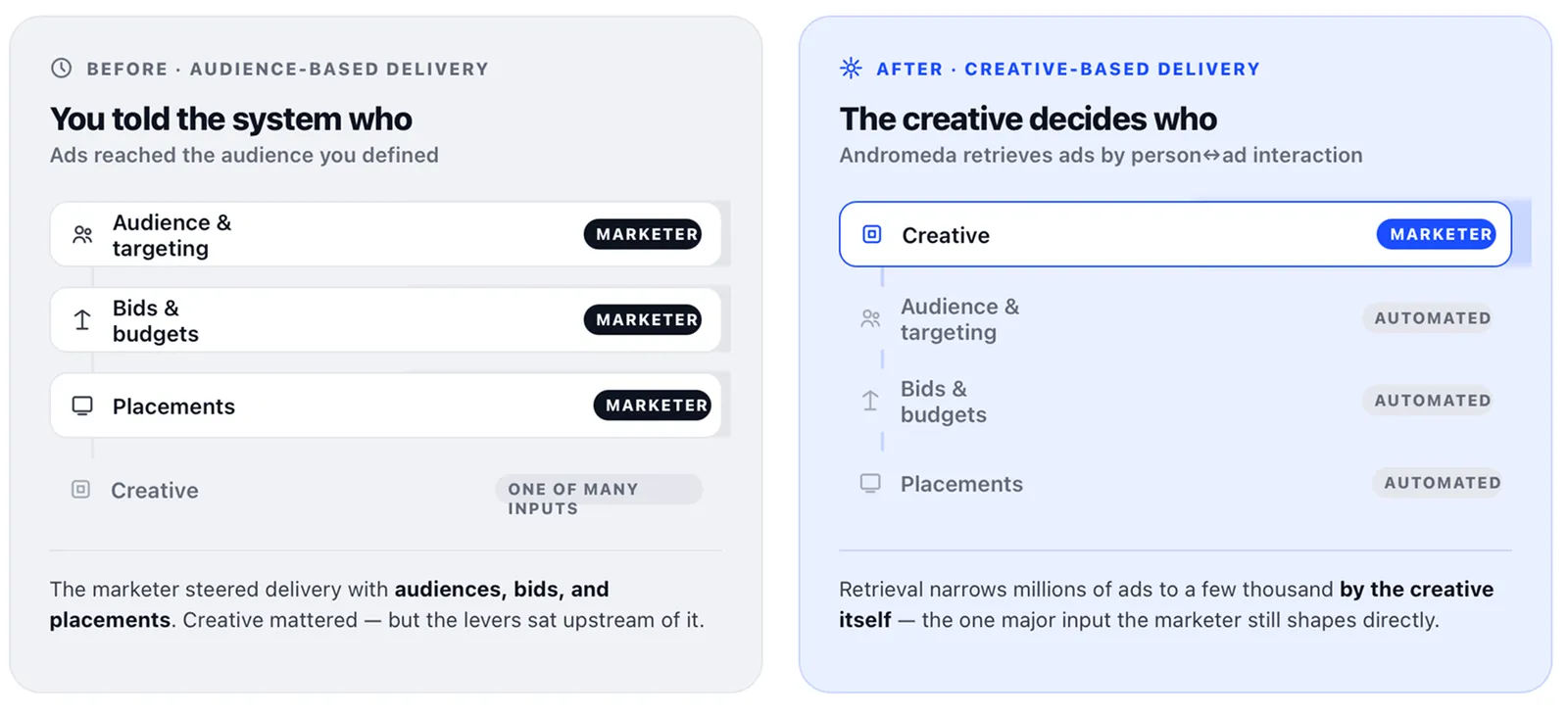
Between late 2024 and the end of 2025, Meta quietly rewired how ads find people, and in doing so, it changed what creative strategy in performance marketing is actually for. Its retrieval engine, Project Andromeda, now sits at the first stage of ad delivery, narrowing tens of millions of eligible ads down to a few thousand candidates before the auction ever runs. It was built to learn the interactions between people and the ads themselves, which means the creative increasingly determines who an ad reaches. Targeting, bidding, and placement have collapsed into automation. What is left for the marketer to shape is the creative. And across the accounts we manage, a consistent pattern holds: roughly 75% of the performance difference between two ads traces to the creative itself, not the audience, not the bid.
Put those two facts together and the conclusion is uncomfortable for most org charts. Creative strategy is the new growth lever in performance marketing, not because ads suddenly matter more, but because automation absorbed every other lever, leaving creative as one of the few major performance inputs marketers still directly shape. The catch is that "creative" here does not mean more ads. It means a system: structured audience research, differentiated value propositions, deliberate hypotheses, and disciplined post-test learning. This piece separates two things that look identical and behave nothing alike, creative production and creative strategy, and explains why the second is where scalable growth now lives.
What is creative strategy in performance marketing?
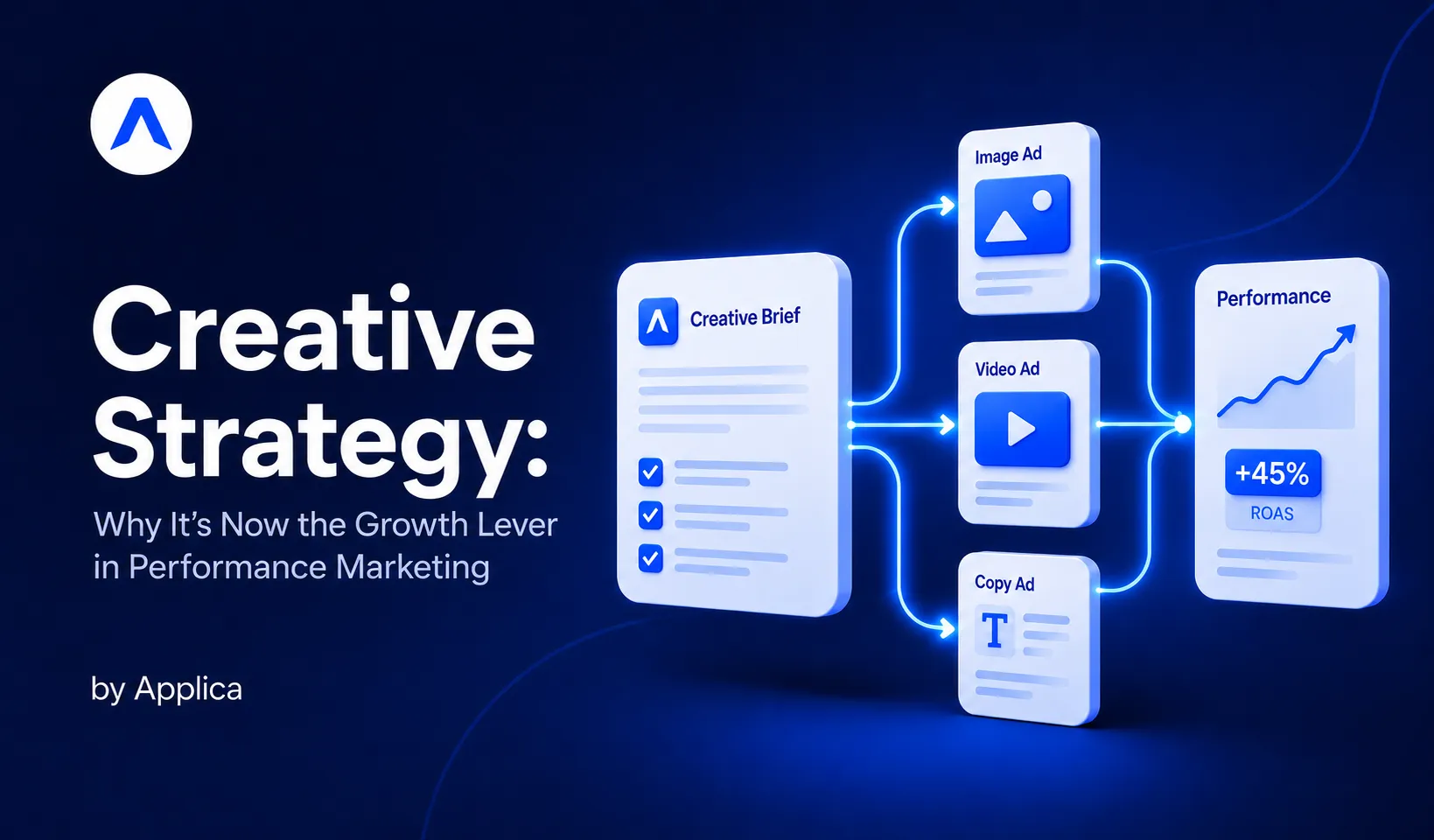
Creative strategy in performance marketing is the system that decides what to make and why, before anyone opens a design tool. It connects four things into one loop: audience research that surfaces real motivations, a differentiated value proposition, structured hypotheses about what will move a specific audience, and post-test learning that feeds the next round. Creative production is the downstream step: turning those decisions into the actual videos, statics, and copy that run.
The distinction matters because automation has made production cheap and strategy scarce. Anyone can now generate fifty variations of an ad in an afternoon. Almost no one can tell you which hypothesis each variation is testing, what a win would prove, or what a loss would rule out. Strategy is the part the machine can support but cannot fully own, which is precisely why it remains one of your strongest competitive edges. At Applica Agency, our operating sequence treats creative as a research-and-validation system, not a production line, the same way a serious team treats performance marketing as an infrastructure problem, not a channel-by-channel scramble.
How automation absorbed every growth lever except creative
For a decade, a skilled buyer's edge lived in the controls: sharp audience segmentation, manual bid strategies, and placement decisions made ad set by ad set. That edge is being automated away, not gradually, but structurally.
What Andromeda actually changed
Andromeda is a machine-learning retrieval engine, and understanding what it does matters more than the marketing shorthand wrapped around it. In Meta's own description, it is the first stage in a multi-stage recommendation system, tasked with selecting a few thousand relevant candidates from tens of millions of eligible ads, after which larger ranking models decide what a person actually sees. Meta reports that the system delivered a +6% recall improvement to retrieval and a +8% ads-quality improvement on selected segments by using a deep neural network to learn higher-order interactions between people and ads data.
The operational consequence is the part that reorders your priorities. Andromeda was explicitly engineered to handle the "exponential growth of creatives" that automation and generative tools produce, and it reconstructs the latent signals between a user and an ad on the fly. In practice, the creative is now a primary input the retrieval stage reads to decide who is a match. The audience reached is increasingly shaped by how the delivery system interprets the creative, rather than only by the targeting parameters selected at campaign setup.
The levers that collapsed into the machine
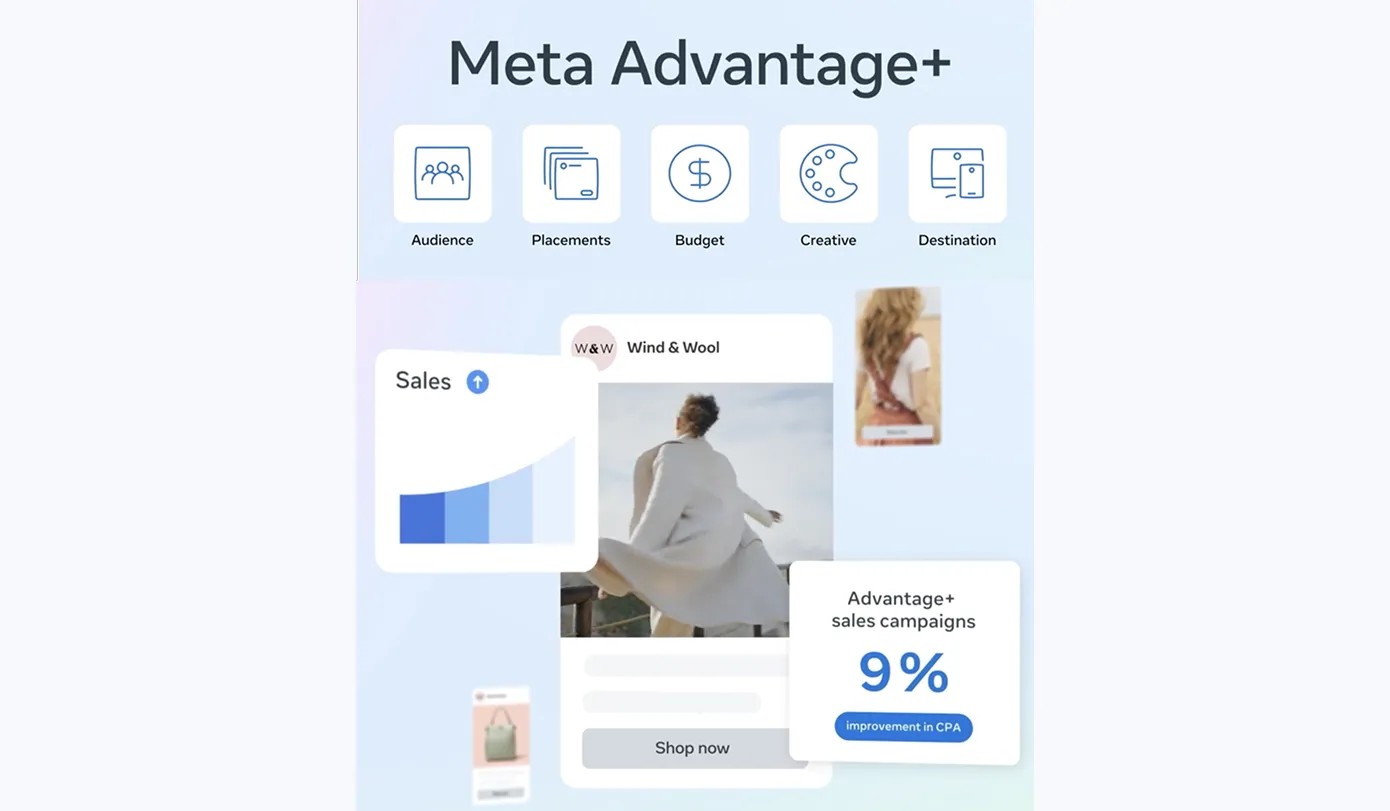
Around the same window, Meta consolidated the manual controls that used to define a buyer's craft. Detailed targeting options have been progressively consolidated, and Advantage+ audience has moved from an option to the default, with the system expanding reach well beyond whatever segments a marketer specifies. Budget allocation, bid adjustment, and placement now sit inside the same automated suite.
This is the mid-point of the argument, and it is worth stating plainly: creative strategy is the new growth lever in performance marketing, not because ads suddenly matter more, but because automation absorbed every other lever, leaving creative as the only input the marketer still controls. When the machine handles targeting, bidding, and placement better than a human can, the human's leverage does not disappear. It relocates to the one input the machine still takes its cues from.
As targeting, bidding, and delivery become increasingly automated, creative is one of the few major growth levers marketers still directly control. But the advantage does not come from producing more assets. It comes from building a system that connects audience research, differentiated value propositions, structured hypotheses, and post-test learning. The goal is not to guess which ad will win, but to make every test improve the probability of finding and scaling the next winning concept.
© Dmytro Lapytskyi, Creative Lead at Applica
That quote marks the pivot in this piece: from what changed to what to do about it. And the first thing to get right is that the answer is not "make more ads."
Why is creative the main growth lever now?
Creative is the main growth lever now because it is the last input that meaningfully differentiates two campaigns after automation has equalised the rest. When two advertisers hand the machine the same objective, budget, and broad audience, the variable that separates their results is what the ads say and show. That is why, across the accounts we manage, we consistently see around 75% of the performance gap between ads attributable to the creative, a directional pattern, not a universal constant, but one stable enough to plan around.
External research points the same direction from a different starting line. Nielsen's analysis of advertising effectivenessfound that, across the campaigns studied, creative contributed 47% of sales impact, the single largest factor, while targeting accounted for just 9%. That is cross-industry data drawn largely from consumer-goods and traditional media, so it is corroboration rather than proof for mobile user acquisition (UA). But it is striking that an independent body, using its own methodology, lands on the same hierarchy we see in app accounts: creative dominates, targeting is a minor term. When two independent measurements disagree on the exact number but agree on the ranking, the ranking is the part you can trust.
Creative strategy is not creative production
Here is the trap most teams fall into once they accept that creative matters: they scale production. More designers, more variations, more weekly output. It feels like progress, and it moves the wrong number. Volume without real variation is noise, and under Andromeda-style retrieval, near-duplicate ads offer limited strategic value because they reveal very little about which messages resonate with different audience segments.
The lever is not more creative. It is deliberately different creative: distinct hooks, angles, messages, visual devices, formats, personas, and offers, each one representing a real hypothesis about what will move a specific audience. Producing 30 executions of one idea is production. Producing 10 genuinely different concepts, each designed to validate or disprove a specific belief about your buyer, is strategy. The first fills a content calendar. The second turns testing into a system that compounds, where every result narrows the search for the next winner.
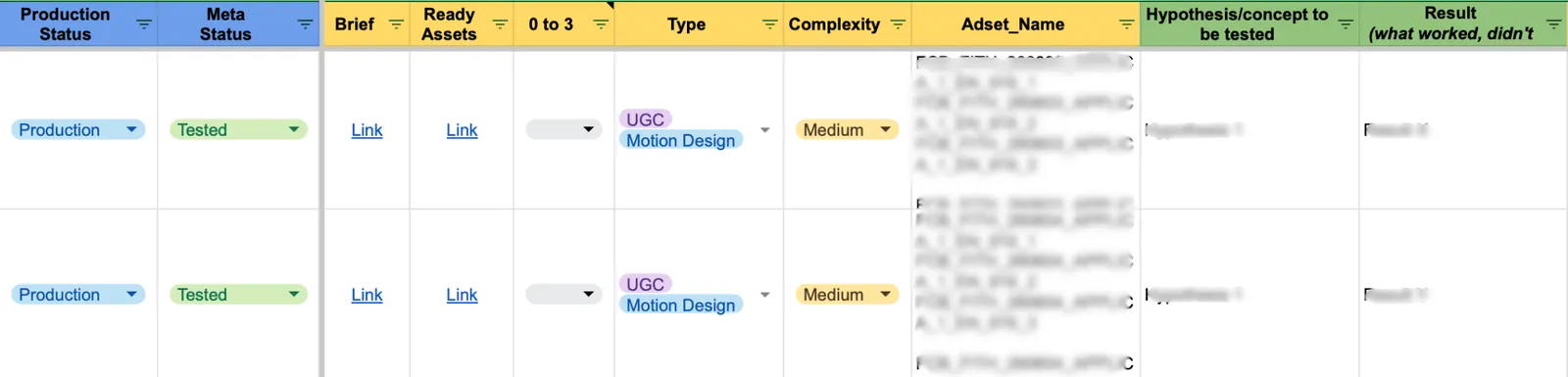
The difference is easiest to see in what each approach tests. A production-led team varies the surface: swap the background colour, recut the same footage, restyle the caption. Those variations mostly measure noise, because they hold the underlying claim constant, a false-variation trap, where a dozen "different" ads are really one idea wearing twelve outfits. A strategy-led team varies the hypothesis: does this audience respond to a time-saving angle or a status angle; to a founder's voice or a customer's; to a problem-first hook or a result-first one. Each of those is a question with a real answer, and the answer transfers to the next concept whether the ad won or lost. This is the "not more, but different" discipline we apply the same way in creative A/B testing for the app stores: the point of a test is the learning it returns, not the asset it produces.
How a creative strategy system extends a winner's lifespan
The clearest return on creative strategy is not a better single ad. It is a longer, more productive life for the winners you find, and a faster, cheaper path to finding them.
Concept-level hit rate, not asset-level output
The unit that matters is the concept, not the asset. In how we structure it, one concept equals one hypothesis expressed across roughly three executional variations. Measuring hit rate at the concept level, rather than counting individual assets, is what makes the system legible. A differentiated app in an open category might need around 10-15 concepts (roughly 30-45 creatives) to surface 2 strong concepts and 1 scalable winner. A saturated or underdeveloped case can require 50-60 concepts (150-180 creatives) to find 2-3 promising-but-fragile concepts. These are directional planning benchmarks, not guarantees, but they reframe the question from "how many ads did we ship?" to "how many validated hypotheses did we buy?"
Fatigue is measured by spend, not calendar time
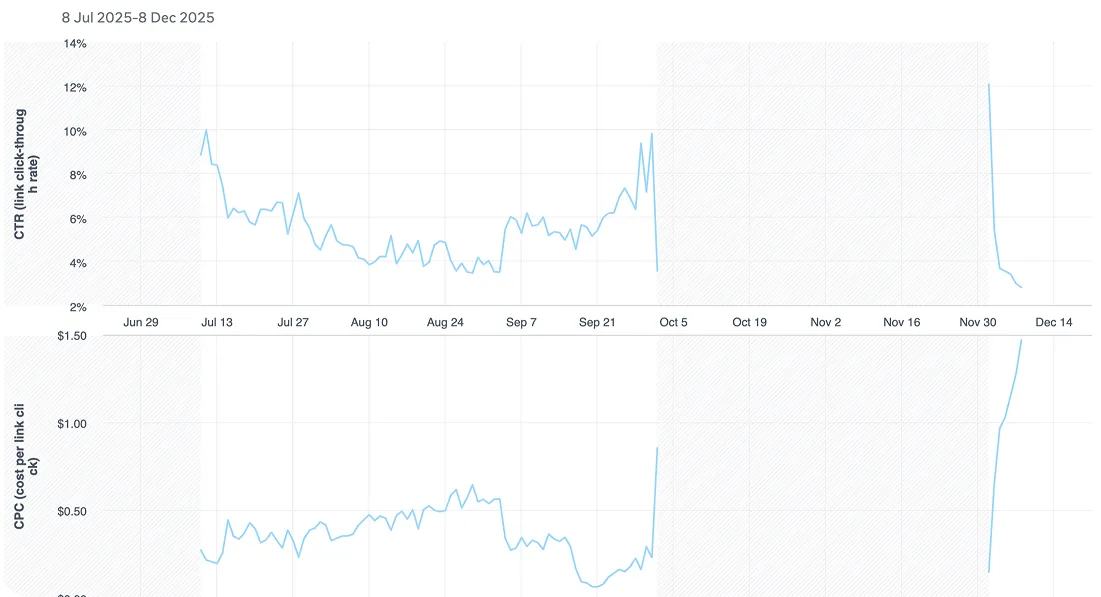
A winning concept does not die on a schedule; it dies when it has been shown enough. At the individual winning-asset level, we directionally begin to see sustained CPA and CPM deterioration after approximately $20,000-25,000 in spend across many funnel-led campaigns. While funnels can lower CPA and improve conversion, they may also accelerate saturation by repeatedly exposing a concentrated high-intent audience to the same ad-to-funnel combination. That figure is a directional benchmark, not a threshold to hard-code, and it varies by category and funnel. The reason it matters: if you know a concept fatigues by spend, you stop retiring winners too early on a calendar and you stop over-investing in a concept past its ceiling.
The hypothesis matrix keeps the winner alive
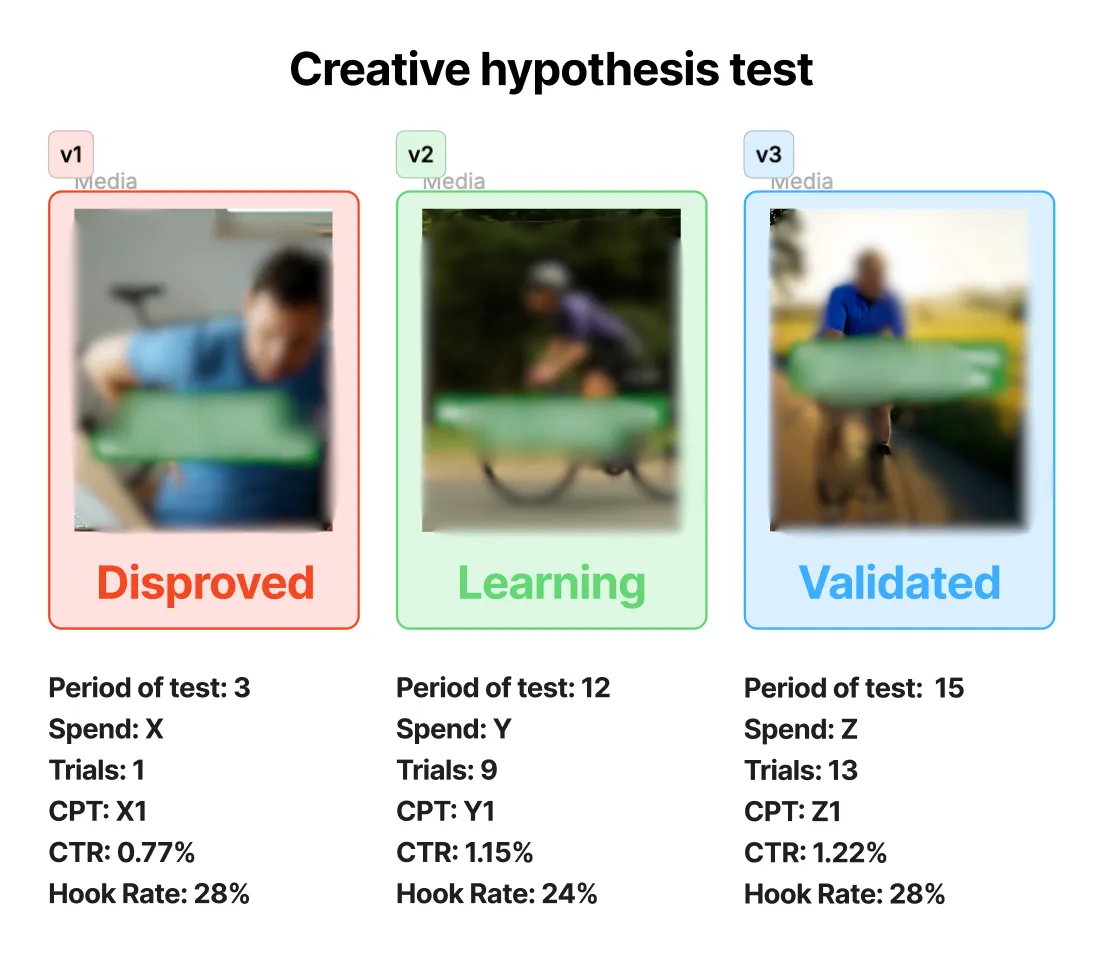
This is where strategy can extend the productive lifespan of the underlying concept by 5-10x across multiple iterations. Instead of discarding a fatigued winner and starting over, a strategy-led system decomposes it into components (hook, angle, message, visual device, format, persona, offer, and funnel alignment) and iterates each deliberately. Every iteration is a fresh hypothesis in a matrix where a test can only do three things: validate an idea, disprove it, or teach you something that sharpens the next one. That is the difference between blind competitor-reference production and a research system.
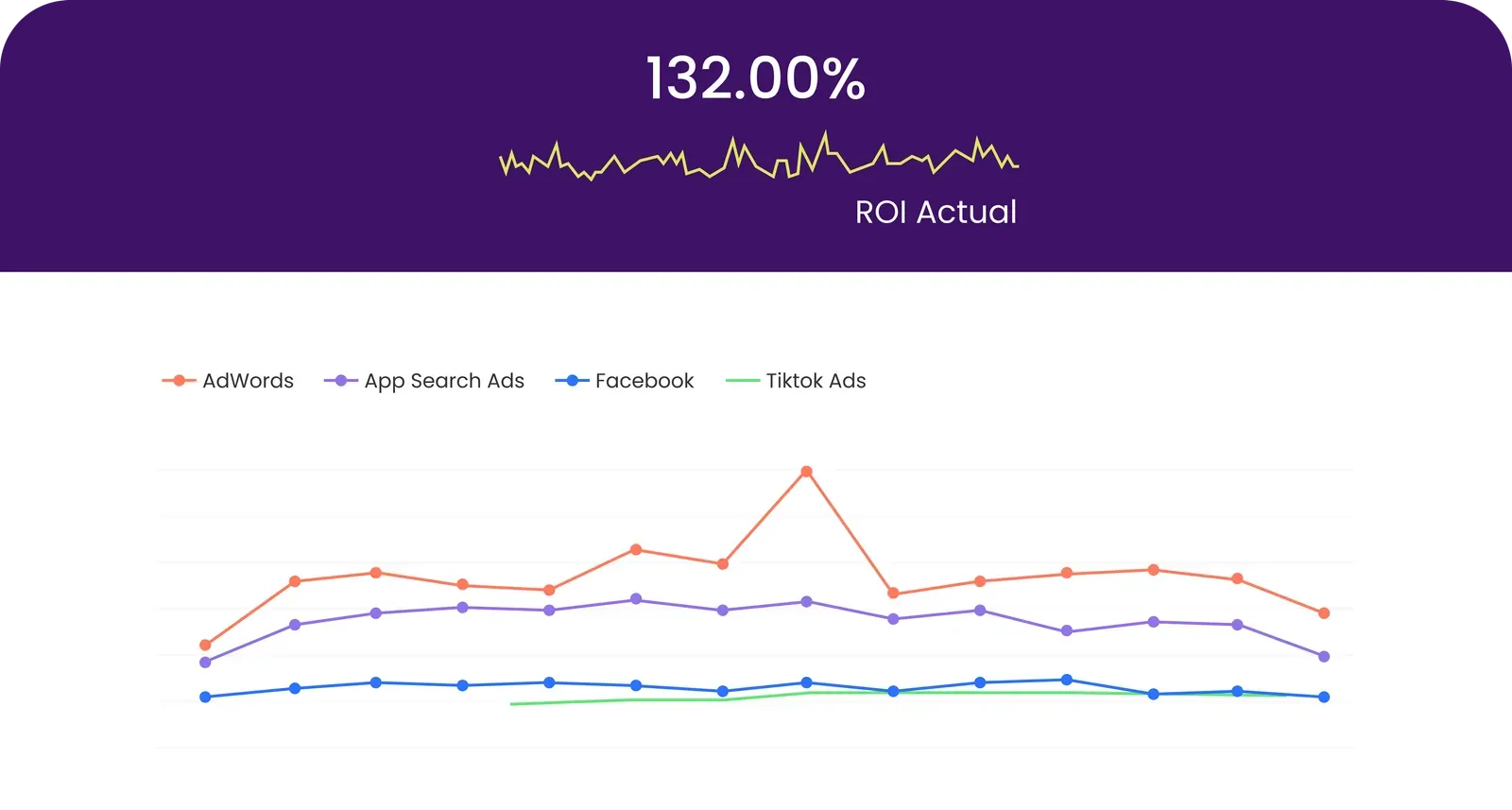
Drops is a useful illustration of the system working in the field, not because the creative pipeline was the sole cause of the result, but because it was one central pillar of it. When we rebuilt Drops' paid UA, the programme combined a fix to SKAN measurement, a campaign restructure around positive-return spend, and a scalable creative testing framework, and non-organic acquisition grew 40x over 3 months. The creative testing system is the part that generalises: it is what let the account keep finding and refreshing winners as spend scaled, rather than burning through a single lucky concept. The infrastructure came first; the growth was downstream of it.
What senior teams should actually change
If creative is the lever, the implication for how you resource and measure it is concrete, and it is mostly organisational.
Fund creative strategy as a system, not a headcount line.
The instinct to scale creative by hiring more producers optimises the wrong variable. The output that moves performance is validated hypotheses, and that comes from research and testing infrastructure, not raw production capacity.
Measure hit-rate efficiency and winner lifespan, not asset count.
"We shipped 200 ads this quarter" is an activity metric. "Our concept-to-winner rate improved and our winners now last twice the spend" is a growth metric. Track the second.
Move creative upstream of media buying.
When the algorithm reads the creative to place the ad, creative decisions are targeting decisions. A creative brief informed by audience research and a differentiated value proposition is now a media-buying input, not an afterthought.
None of this requires abandoning automation; it requires feeding it well. The teams that will compound are the ones that treat the machine as a distribution engine and invest their human edge where it still counts.
Conclusion
The mechanics of media buying changed, and the growth lever moved with them. Creative strategy is the new growth lever in performance marketing, not because ads suddenly matter more, but because automation absorbed every other lever, leaving creative as the only input the marketer still controls. Three things follow for a senior team: creative is now a strategic input, not a production output; volume is noise, but deliberate variation is signal; and the return shows up as hit-rate efficiency and extended winner lifespan, not asset count.
That is why creative strategy is a system you invest in, not a cost line you scale by headcount. If your team is producing more ads than ever and still watching winners fatigue faster than you can replace them, the problem is not output; it is the absence of a system that turns each test into a learning. That is exactly the gap Applica Agency's Creatives Production practice is built to close. Let's talk!