On March 3, 2026, Apple began showing more than one ad in App Store search results, a rollout that started in the UK and Japan, reaches every Apple Ads market by the end of the month, and appears on iOS 26.2 or later. Apple has long cited a figure of around 65% of downloads following a search, which is why those results are getting more crowded with paid placements, and why mining UA data for ASO, pulling insight from your user acquisition (UA) campaigns into your App Store Optimization (ASO), is no longer optional.
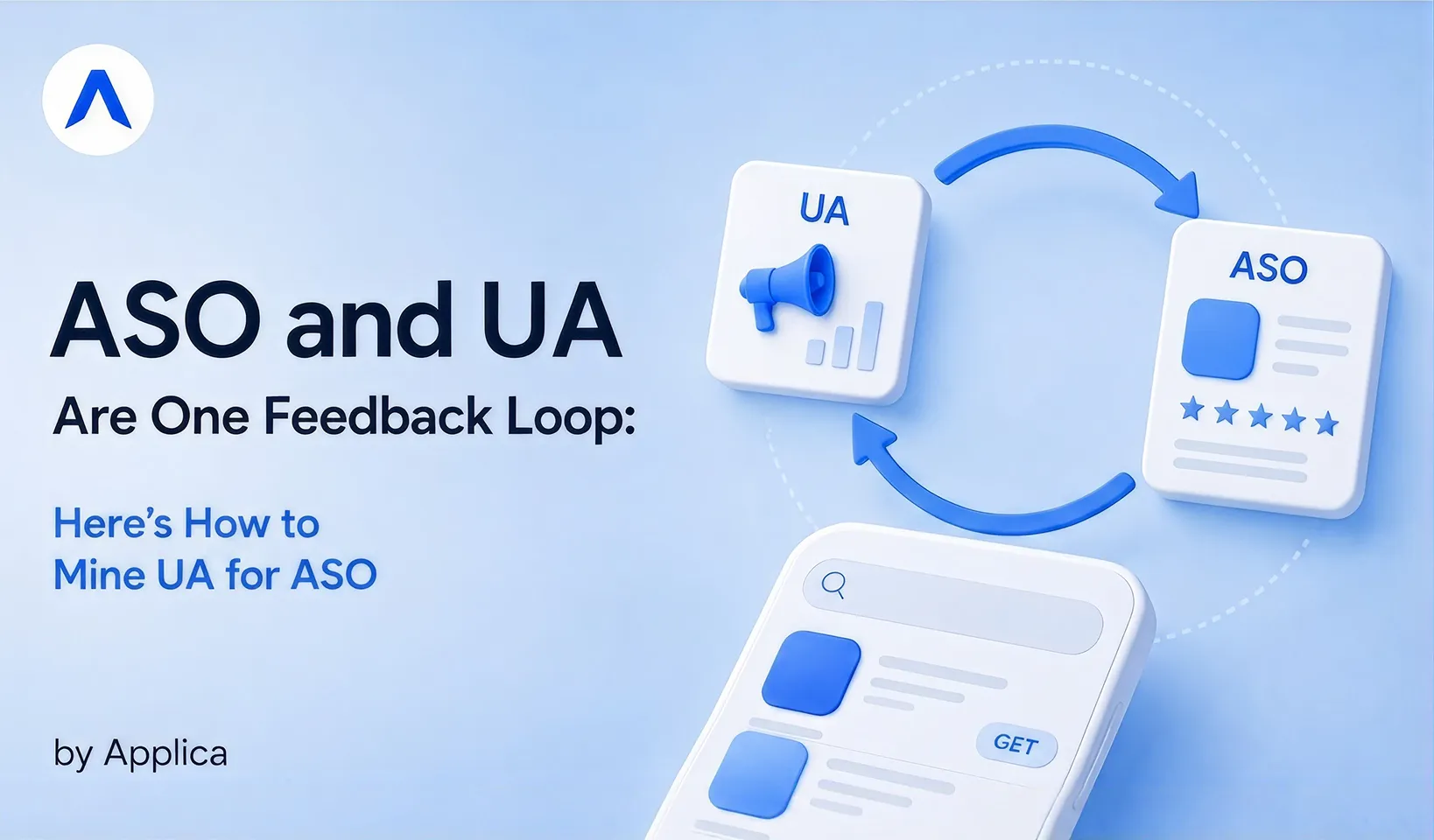
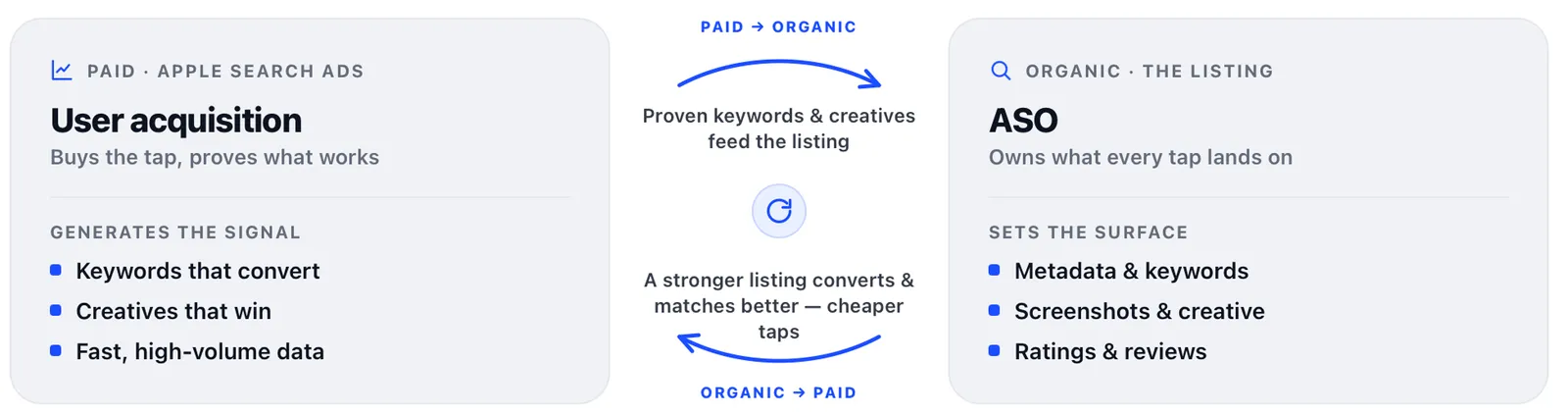
Here's the frame worth committing to: ASO and user acquisition are actually one feedback loop, not two separate channels, because the traffic volumes, creatives and conversion data your paid campaigns generate are the highest-signal input your ASO has, and strong ASO is what makes paid efficient.
Most teams never open that input. Your paid campaigns are a continuously running experiment on real users, and the winners of that experiment are exactly what your organic listing otherwise has to guess at. This piece covers the three UA signals worth mining for ASO, how to operationalise the loop, and why Apple's 2026 auction makes the loop compound rather than optional.
Why ASO and user acquisition are one feedback loop, not two channels
Most companies run ASO and UA as separate functions: different owners, different dashboards, different weekly meetings. The App Store doesn't observe that boundary. A paid tap and an organic tap land on the same product page, compete in the same search results, and feed the same ranking signals.
The org chart splits them; the auction and the listing don't
When a user searches, Apple shows paid and organic results side by side, drawn from one listing and one relevance model. Apple's own ad-placement documentation describes sponsored slots sitting directly above organic results for the same query. That means the metadata, screenshots, and reviews your ASO team owns are also what your paid ad converts against. Optimise one and you move the other, whether or not the two teams ever talk.
Strong ASO makes paid efficient
Relevance isn't only an organic-ranking input. In Apple Search Ads (ASA), how well your listing matches a query influences whether your ad is even eligible for it, and practitioners consistently observe that better-matched listings compete more efficiently on cost per tap (CPT). Run it the other way and the same logic holds: the keywords and creatives your paid campaigns prove out are the fastest, highest-signal input your organic listing has. This is the loop, and it's why ASO and user acquisition behave as one system, not two channels.
What does "mining UA data for ASO" actually mean?
Mining UA data for ASO is the practice of extracting the keywords, creatives, and conversion signals your paid campaigns generate, then feeding the proven winners back into your organic store listing. Paid media is, among other things, a live experiment on real users at real scale. The outputs of that experiment (which terms convert, which creative wins, which intent pays) are precisely what ASO otherwise has to infer.
There are three UA signals worth mining, each mapping to a specific ASO action.
Paid search-term and keyword-conversion data → metadata
Your Apple Search Ads search-term report shows the actual queries that triggered and converted your ads, not estimated volume, but observed, paying demand. Terms that convert in paid are strong candidates for your title, subtitle, and keyword field, where they can influence organic keyword ranking. Apple's keyword best-practice guidance treats the search-term report as a primary discovery surface for exactly this reason.
Winning creatives → screenshots and Custom Product Pages
The creative concepts that win on Meta, TikTok, or Google are messaging tests you have already paid to run. A hook that lifts tap-through in a paid feed frequently lifts conversion as an App Store screenshot or a Custom Product Page (CPP)built for that audience. The store listing is the last screen before install; aligning it with the message that earned the click is one of the highest-leverage moves in ASO.
Conversion-by-intent → who the listing should serve
Not every install is worth the same. Paid data segments demand by intent, which keyword clusters and audiences actually start trials and pay, so your listing can be built for the users who convert rather than the ones who merely tap.
Three UA signals and the ASO action each one unlocks
| UA signal (input) | Where it lives | ASO action it unlocks |
|---|---|---|
| Search-term & keyword-conversion data | Apple Search Ads search-term report | Promote proven-converting terms into title, subtitle, keyword field |
| Winning ad creatives | Meta / TikTok / Google campaigns | Port winning hooks into screenshots and Custom Product Pages |
| Conversion-by-intent | Paid keyword clusters & audience segments | Build the listing for the intent that actually pays |
How do you mine Apple Search Ads and paid keyword data for ASO?
You mine Apple Search Ads for ASO by moving proven-converting search terms out of your paid reports and into your organic metadata, in a repeating cycle. The mechanics are unglamorous, and that is the point: the edge is in running the loop consistently, not in any single clever keyword.

From search-term report to exact match to metadata
The workflow is a funnel. Broad and search-match ad groups surface new queries; the search-term report reveals which of those actually convert; strong converters graduate into exact-match ad groups with tailored bids; and the terms that keep paying get written into title, subtitle, and keyword field. Across accounts, we see a consistent pattern: when paid-validated terms are fed systematically into metadata, organic performance on those terms can lift by roughly 38%, not from adding more keywords, but from adding the right ones, already proven against real demand.
Once we began running recurring tests on Apple Ads through Custom Product Pages, we learned which visuals and messaging convert best for a given user intent and geo, then fed that straight back into our ASO strategy. That feedback loop reshaped how we approach organic.
© Luisa Ronchi, Head of Marketing at Applica
At Applica Agency, our operating sequence treats Apple Ads as a signal engine first and a traffic source second: a live testing surface that returns a keyword-level read in weeks, where organic or native page testing takes a month or more. We break down the paid-search-specific auction mechanics in ASO vs Apple Search Ads: Why They're One System, Not Two Channels; this piece stays on the broader UA-to-ASO loop.
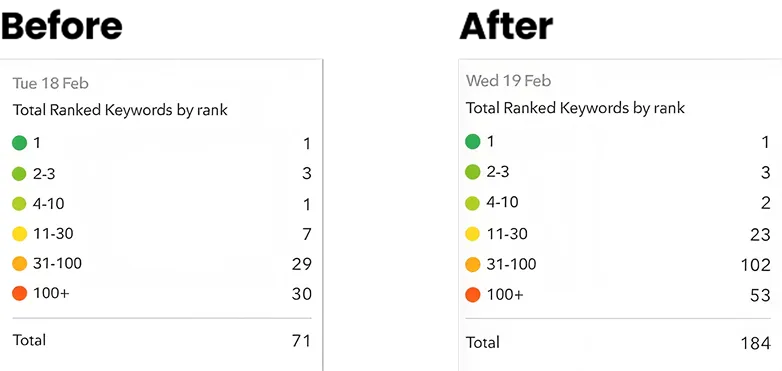
Every keyword is an intent: why "cheap installs" poison ASO
Not assumptions, but observed conversion should decide which terms you adopt. Bidding for volume on a term like "free" floods you with installs that rarely start a trial, let alone pay, and installs that never convert teach your listing nothing useful about who to serve. Treat every keyword as a user intent: the term that pays tells you which audience to build the page for. This is the discipline that separates mining UA data for ASO from simply copying your highest-volume paid keywords. Our team works through this live in the Beyond UA: Using Apple Ads as Your App Store Testing Enginesession.
Turning paid creative winners into store conversion
Creative is where the UA-to-ASO loop pays out fastest, because a winning ad and a winning screenshot solve the same problem: communicate value in three seconds to someone deciding whether to install.
The creative that wins on Meta often wins in the store
Teams spend weeks polishing product-page screenshots while a better-performing asset already sits in their Meta or TikTok account, the creative that won the paid test. Ported into the store listing or a Custom Product Page, those proven concepts frequently beat the in-house version. Across our accounts, paid creative winners adapted into store creative contribute meaningfully to listing conversion, on the order of a 25% contribution where the paid-to-store message is genuinely aligned. Applica's position, argued in our guide to A/B testing creatives for ASO, is that creative is now a primary conversion lever on the store, not a cosmetic layer.
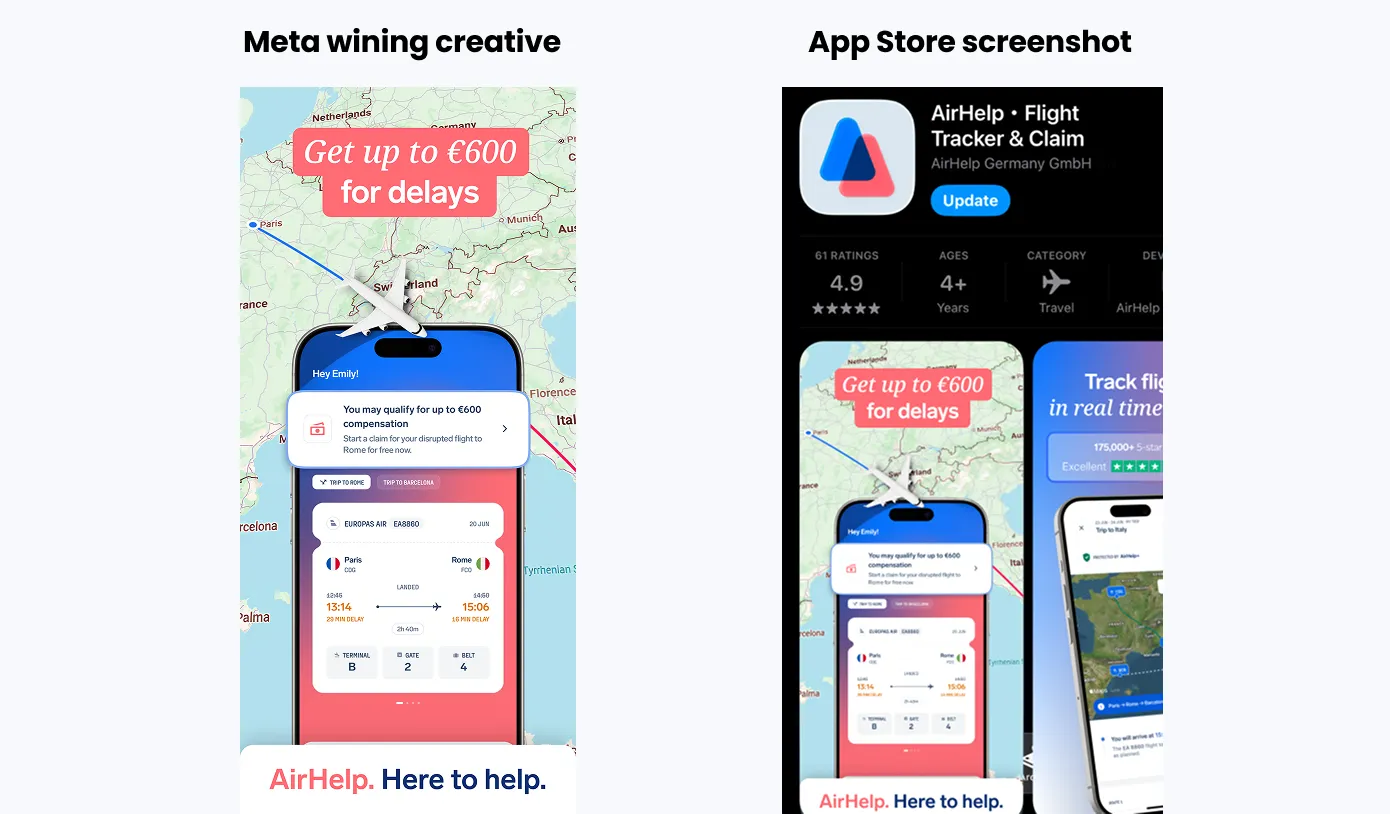
Grade CPP and screenshot tests on revenue, not tap-through
Here is the trap that ships the wrong winner. Two product pages can post identical cost per install (CPI) and identical tap-through rate (TTR) while one quietly collapses on revenue, because one set of screenshots showed the value users only get after they pay. Same traffic, same headline numbers, completely different money. If you grade a CPP test on the click, you will promote the page that looks good and loses. The same principle drives App Store conversion-rate optimisation through creative A/B testing: judge store experiments on the metric that pays. ASO and user acquisition are one feedback loop precisely because the same revenue truth governs both.
Why ASO now gates paid, and why the loop compounds
Apple's 2026 expansion to two search-ad slots changes the stakes of that loop. More paid placements per query means more competition for the same high-intent searches, and a listing that does not convert cannot be rescued by simply increasing bids or buying more slots (you can’t directly control that).
Relevance is an eligibility gate and a competitiveness factor, not a discount you can buy
It is worth being precise here, because the mechanism is widely misdescribed. Apple does not publish a Google-style quality or relevance score. Apple's own guidance on keyword bids describes an auction that weighs both your bid and how relevant your ad is to the search, and an ad has to be relevant enough to be eligible in the first place. That makes relevance an eligibility gate and a competitiveness factor, not a fixed discount you can buy: a listing that genuinely matches a query is more likely to be eligible for it and tends to compete more efficiently, while your bid still does much of the ordering work. The practical implication is unchanged: you cannot bid your way past a listing that does not match the search. Across our accounts we have observed roughly 20% better paid efficiency once ASO relevance is strengthened; we treat that as an observed cross-account pattern, not a deterministic formula.
Operating the loop: one team, one listing, one auction
The teams that compound treat paid and organic as a single operation with a shared listing and shared learnings, not two budgets defending turf. A navigation app we worked with cut its cost per purchase by 64%, alongside a 5% lower cost per acquisition (CPA) and 11% lower CPT, by running ASO and paid UA as one funnel rather than two channels. The gains did not come from a single tactic; they came from letting paid data direct organic decisions and letting a stronger listing lower paid costs. That is the loop, operating on purpose.
Making mining UA data for ASO a repeatable system
The difference between a team that occasionally borrows a keyword from paid and one that compounds is cadence. Mining UA data for ASO is not a project you finish; it is a monthly loop with named owners on both sides of it.
Give the loop an owner and a cadence
The most common failure is not analytical; it is organisational. Search-term reports get pulled once, a few keywords get added, and the ritual quietly dies because nobody owns the handoff. Put a standing monthly review on the calendar where the UA lead brings the converting search terms and winning creatives, and the ASO lead decides what enters the metadata and the store creative. The paid side sets the hypothesis; the organic side ships the validated version: one listing, one shared backlog, one review.
Respect statistical validity before you act
Speed is the advantage of paid as a testing surface, but it is not a licence to act on noise. A single conversion does not make a keyword worth writing into your title. Wait for enough subscriptions on a term before you treat its intent as real; a workable rule of thumb is not to touch a keyword's weighting until you have seen roughly 100 subscriptions attributed to it. Below that threshold you are reading variance, not signal. The same discipline applies to creative: a screenshot that wins one week on a thin sample is a candidate, not a decision.
Let the loop reach into the roadmap
The highest form of mining UA data for ASO is not a metadata edit at all: it is a product signal. When a Custom Product Page built around a new feature converts poorly across enough impressions, that is evidence about demand, not just creative. The same test that tells your ASO team which screenshot to ship can tell your product team which feature to prioritise, or drop. That is the loop at its most valuable: paid data flowing from the auction all the way into the roadmap, in users' own words, before a line of code ships.
Close the loop before the auction makes it expensive
ASO and user acquisition are one feedback loop, not two channels, and Apple's 2026 auction only tightens the coupling. The takeaways are practical: mine your Apple Search Ads search-term report and feed proven-converting terms into metadata; port your paid creative winners into store screenshots and Custom Product Pages, then grade those tests on revenue rather than tap-through; and treat relevance as the eligibility gate it is, because a stronger listing is what makes every paid slot cheaper to win. Run the loop deliberately and paid and organic compound instead of competing.
If your ASO and UA teams are still operating from separate dashboards, and your paid search-term reports are not shaping your metadata, that is where the leak is. Let's close it: explore Applica Agency's App Store Optimization service, or bring in the performance marketing side of the loop.