Retention and re-engagement get treated as one topic and they are two. Retention is keeping a user before they drift. Re-engagement is getting them back afterwards. The tactics differ, the costs differ, and doing the second well does not compensate for failing at the first.
This covers both, in that order, because the order matters.
Part one: keeping users
How to tell whether your retention rate is good
Retention benchmarks published as single numbers are close to useless, because retention varies enormously by category, by business model and by how the user arrived.
Three comparisons are worth more than any benchmark:
Against yourself, over time. Is this cohort better than last quarter's?
Against acquisition source. Organic users almost always retain better than paid. A blended figure hides which channel is bringing users who stay.
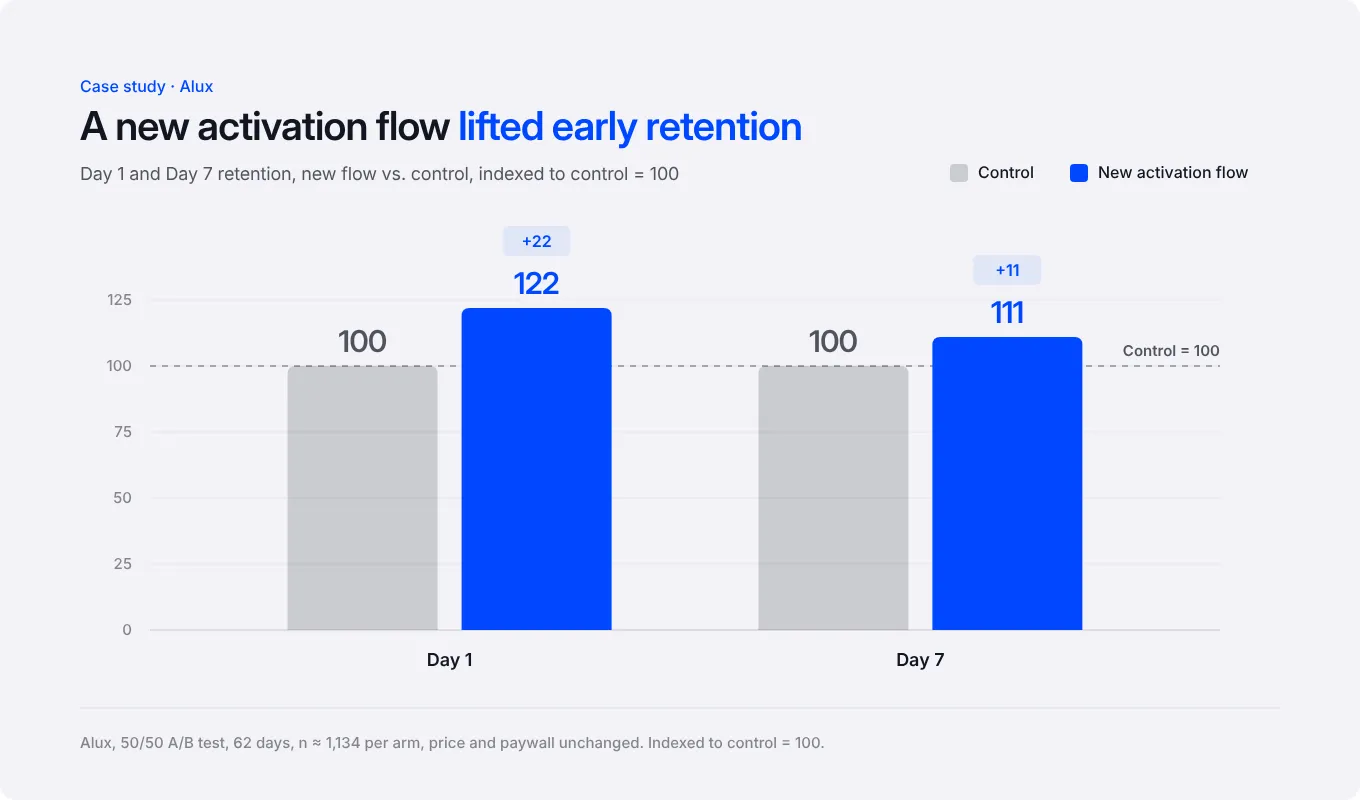
Against activation. Users who reached your activation event versus those who did not. If the gap is small, your retention problem starts earlier than you think, in user activation. On Alux the intro series new users were funnelled into by default brought them back at roughly half the day 7 rate of users who started anywhere else. Rebuilding that first experience lifted day 1 retention by 22% and day 7 retention by 11% in a 50/50 test, with price and the paywall held constant.
The retention metrics that matter
Day 1, day 7, day 30 retention. The standard curve. Day 1 is largely a first-time experience problem, day 7 is a habit problem, day 30 is a value problem.
Churn rate. The inverse, and the more useful framing for subscription apps, where the question is cancellation rather than absence.
Stickiness, daily over monthly actives. How often your monthly users actually show up. Low stickiness with decent retention usually means the product is useful occasionally, which is a different business than it is usually planned as.
Cohort retention by acquisition source and by campaign. The one that changes spending decisions, and the one most often missing.
Strategies that keep users
Track user behaviour continuously, not at review time. Retention problems announce themselves in behaviour weeks before they appear in the retention curve. The signals are reduced session length, skipped core actions and lengthening gaps between sessions.
Fix onboarding before anything else. Early churn is mostly an onboarding and first-session problem, and no amount of lifecycle messaging later recovers a user who never understood the product. See first-time user experience.
Put support inside the app. A user who hits a problem and has to leave the app to find help often does not come back. In-app support converts a churn moment into a resolved one.
Personalise what the user sees. Content, recommendations and reminders shaped by actual behaviour, not by the segment the user was assigned on day one.
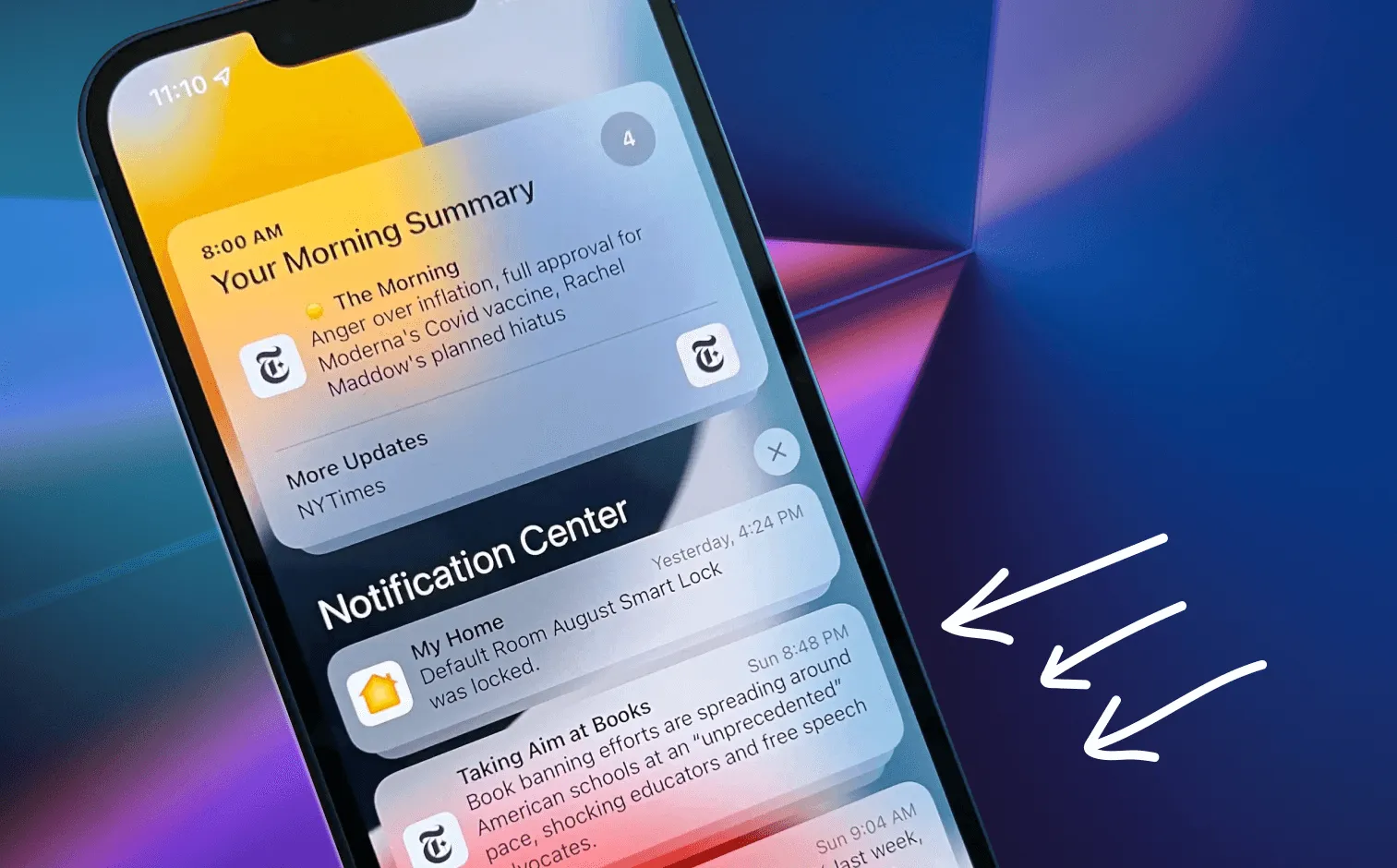
Use push notifications as a service, not a schedule. The distinction that matters: a notification that tells the user something they wanted to know retains them, and one that exists to hit a cadence target trains them to disable notifications. Once disabled, your cheapest retention channel is gone permanently.
Gamification where the behaviour deserves repetition. Streaks, progress and milestones work when the underlying action is genuinely worth repeating. Applied to an action with no intrinsic value, they produce short-lived engagement and resentment.
Reward programmes that reward retention, not installs. Benefits that accrue with continued use give the user something to lose by leaving.
Continuous improvement
Retention is not a project. The cohorts move, the market moves, and a retention curve that was acceptable last year is a decline this year. The teams that hold retention treat it as a standing workstream with an owner, not as a quarterly initiative.
Part two: winning users back
Re-engagement and retargeting are not the same thing
Re-engagement is bringing back a user who already has your app installed, using channels you own: push, email, in-app messaging.
Retargeting is paid media aimed at lapsed users, and it costs money per attempt.
The practical consequence: exhaust the owned channels before you pay for the same user twice. Most teams do this in the wrong order, because the paid version is easier to launch.
What works to bring users back
Update the app icon. Underrated and nearly free. A refreshed icon makes a dormant app visible again on a crowded home screen, which is sometimes the entire barrier.
Master push, specifically for lapsed users. Different content from retention push. A lapsed user needs a reason to return, not a reminder that they are absent. Reference what they left behind, not how long they have been gone.
Deep link everything. A re-engagement message that lands on the home screen asks the user to find the thing again. One that lands on the exact screen removes the work. This single change usually moves re-engagement conversion more than the copy does.
Track the events that let you segment lapse. "Inactive for 14 days" is a weak segment. "Started a workout plan and stopped at week two" is a message that writes itself.
Pick the ad format for the context. For retargeting, formats that show what the user left behind outperform brand-style creative, because the job is recall rather than persuasion.
Personalise the ads with the same behavioural data. A retargeting ad showing a generic value proposition to someone who already used the app is paying to tell them something they know.
When to stop
Not every lapsed user is worth recovering. Users who never activated are usually cheaper to replace than to resurrect, because they never found the value in the first place and nothing about that has changed. Concentrate recovery spend on users who did activate and then drifted.
Conclusion
Retention is built before the user lapses and recovered afterwards, and the first is cheaper than the second every time. Fix activation and onboarding, use owned channels before paid ones, segment by what the user actually did, and treat notification permission as the finite resource it is.
If you are choosing where to start, start with the retention curve split by acquisition source. It usually reveals that the problem is narrower than it looked.
FAQ
What is a good retention rate for a mobile app?
Published benchmarks are close to useless because retention varies enormously by category and business model. Three comparisons are more informative: your own cohorts over time, retention split by acquisition source, and retention of activated versus non-activated users. The third is the most diagnostic, because a small gap means the problem starts before retention.
What is the difference between re-engagement and retargeting?
Re-engagement uses channels you own, such as push, email and in-app messaging, to bring back users who still have the app installed. Retargeting is paid media aimed at lapsed users and costs money per attempt. Use the owned channels first, since retargeting pays again for a user you already acquired.
How often should you send push notifications?
There is no safe cadence, because the question is relevance rather than frequency. A notification that tells the user something they wanted to know retains them; one sent to meet a schedule teaches them to disable notifications altogether. Treat notification permission as finite, because once revoked it is rarely given back.
Which users are worth trying to win back?
The ones who activated and then drifted. Users who never reached value in the first place are usually cheaper to replace than to recover, since nothing has changed about the reason they left. Segmenting recovery spend on this line alone tends to improve its economics more than any creative change.
Does gamification improve retention?
When the underlying action is genuinely worth repeating, yes. Streaks and progress work by making an existing habit visible. Applied to an action with no intrinsic value, gamification produces a short spike in engagement followed by churn, and it makes the product feel manipulative.